
A clean-record 40-year-old driver in Clarksville pays roughly $191 per month, or $2,296 per year, for full coverage, while liability-only costs about $60 per month. Treat those figures as a starting point, not a ceiling, because your age, driving record, vehicle, ZIP code, and coverage choices can move the quote substantially.
That's the number I'd put in front of a Clarksville driver before we discuss discounts or policy limits. It gives you a realistic benchmark for the local market, but it doesn't tell you whether the cheapest quote leaves your household exposed after a serious crash. Good insurance shopping means matching the price to the risk you carry.
Table of Contents
- What Drivers in Clarksville Actually Pay for Auto Insurance
- Tennessee Minimum Coverage Requirements Every Clarksville Driver Should Know
- Coverage Options That Go Beyond the Legal Minimums
- Local Factors That Drive Clarksville Auto Insurance Rates
- Discounts and Savings Strategies That Stack in Clarksville
- A Practical Roadmap to Affordable Coverage
- How Select Insurance Group Helps Clarksville Drivers
What Drivers in Clarksville Actually Pay for Auto Insurance
A driver sitting across my desk with a clean record and a typical commuter car should expect Clarksville quotes to land near the local benchmark, not at some mysterious statewide average. Recent market snapshots place full coverage for a clean-record 40-year-old driver at about $191 monthly, or $2,296 annually, while liability-only coverage runs around $60 monthly, or $716 annually. The same benchmark puts Tennessee's full-coverage average near $187 per month, or $2,238 per year, so Clarksville is broadly aligned with the state rather than sitting far outside it. See the Clarksville auto insurance pricing benchmark
The local benchmark
| Coverage Level | Monthly Premium | Annual Premium |
|---|---|---|
| Full coverage | About $191 | About $2,296 |
| Liability-only | About $60 | About $716 |
Those figures describe one driver profile. They aren't a promise for a Fort Campbell service member, a new driver, a household adding a teenager, or someone with a recent at-fault accident. Insurers price the individual policy, not the city label.
Clarksville's own ZIP-to-ZIP spread is relatively narrow for this benchmark driver, with full-coverage estimates running from about $190 to $193 per month. That matters because it tells you not to blame every price difference on your address. If two neighbors receive very different quotes, the larger causes are often their driving records, vehicles, deductibles, coverage limits, credit-based insurance tier where permitted, or household drivers.
The decisions behind the quote
Start by deciding whether you need protection for your own vehicle or only protection for damage you cause to others. A financed or newer vehicle usually makes the full-coverage conversation unavoidable, while an older vehicle with limited value may justify a closer look at liability-only coverage.
Then compare the actual policy, not just the monthly payment. Check liability limits, uninsured-motorist protection, deductibles, exclusions, rental coverage, and claim procedures. A cheaper quote is useful only when it still protects the people and property you can't afford to lose.
Practical rule: Use the Clarksville benchmark to challenge an unusually high quote, not to assume every driver should pay the same amount.
Tennessee Minimum Coverage Requirements Every Clarksville Driver Should Know
Tennessee requires auto liability coverage commonly summarized as 25/50/25: $25,000 of bodily injury liability per person, $50,000 of bodily injury liability per accident, and $25,000 of property-damage liability per accident. The state uses an at-fault system, so the driver responsible for a crash generally pays for the resulting damages through available insurance and personal assets. Review Tennessee's minimum coverage and at-fault insurance environment
What 25/50/25 really means
The first limit applies to injuries suffered by one person. The second sets the total bodily-injury limit for everyone injured in the accident. The third applies to property damage, including another vehicle, a fence, or a building.
These limits satisfy Tennessee law, but they leave little room after a serious Clarksville crash. Several injured people, extended treatment, lost income, and multiple damaged vehicles can push a claim beyond the policy limits. Once the insurer pays its limit, the injured party may pursue you for the remaining amount.
That exposure matters more in an at-fault state. If you cause a collision on a busy Clarksville road, your policy responds only up to the limits you selected. The legal minimum keeps you from driving uninsured, yet it may leave your savings, home equity, and future income exposed.
The uninsured-driver problem
Tennessee also has an uninsured-driver rate of 21.3%, or roughly one in five drivers. A properly insured Clarksville driver can still be hit by someone with no insurance available to cover medical bills or vehicle damage. Local crash-risk patterns make uninsured-motorist protection a practical part of the quote discussion, not an afterthought.
My recommendation is direct: do not choose bare-minimum coverage without first pricing uninsured and underinsured motorist protection. Ask for quotes at higher liability limits as well. Compare the added premium with the assets and income you would need to protect, then select limits that fit your household rather than stopping at the legal floor.
Review Tennessee-specific policy guidance in this Tennessee auto insurance resource. Ask the agent to show each limit and deductible on the quote so you can see exactly what changes the price.
Coverage Options That Go Beyond the Legal Minimums
The phrase full coverage sounds precise, but it isn't a single standardized product. It usually refers to a combination of liability, collision, and other protections selected for the vehicle and household.
Liability is the foundation. If you cause a multi-vehicle wreck on Wilma Rudolph Boulevard, liability coverage addresses the injuries and property damage you're legally responsible for, up to the policy limits. It doesn't repair your own vehicle, and weak limits can leave personal assets exposed after the policy limit is exhausted.
Collision covers damage to your vehicle after impact with another vehicle or object. If you slide into a mailbox on a slick winter morning, collision coverage may pay for covered repairs after your deductible. This type of protection handles many non-collision losses, including hail damage, theft, falling objects, and a deer strike on I-24.
The coverages worth examining
| Coverage | What It Pays For | Clarksville Example |
|---|---|---|
| Liability | Injuries and property damage you cause | You cause a multi-vehicle crash on Wilma Rudolph Boulevard |
| Collision | Damage to your vehicle from a collision | Your car slides into a mailbox during winter weather |
| Comprehensive | Covered non-collision damage | Hail damages the roof or a deer strikes the vehicle on I-24 |
| Uninsured motorist | Covered injuries or damage caused by an uninsured driver, subject to policy terms | A hit-and-run driver leaves you with vehicle damage and medical bills |
| Medical payments | Covered medical expenses for occupants, subject to policy terms | You need immediate treatment while other payment sources are being sorted out |
The backstop many drivers overlook
Uninsured-motorist coverage deserves serious attention in Tennessee. It can serve as the backstop when the other driver has no insurance or disappears after a hit-and-run, subject to the policy's terms and limits. It isn't a substitute for liability coverage, but it protects you from relying entirely on the other driver's ability to pay.
Medical payments coverage can help with covered medical expenses for you or your passengers. It may provide a useful bridge while health insurance, liability claims, or other payment questions are being resolved. Ask how the coverage coordinates with your health plan before choosing the limit.
For a plain-language comparison of the two most common starting points, review this full-coverage versus liability guide. My recommendation is simple: don't buy “full coverage” by label. Buy the specific protections your vehicle, passengers, assets, and driving habits require.
Local Factors That Drive Clarksville Auto Insurance Rates
A Clarksville quote is built from several pieces. Some are personal and changeable, such as your driving history and vehicle choice. Others are harder to change, such as age, territory, and the insurer's underwriting rules.
The city's benchmark driver sees only modest variation across Clarksville ZIP codes, with estimates clustered around the same general monthly range. That doesn't mean address is irrelevant. It means the address effect for this particular profile is narrower than many drivers assume. Your exact garaging address still matters because insurers use territory information to evaluate claims patterns, traffic exposure, theft risk, and weather conditions.
What moves the number
Driving history usually deserves the first review. Tickets, at-fault crashes, and serious violations can make a policy materially more expensive than the clean-record benchmark. A driver with a recent incident shouldn't expect the same quote as a driver with no incidents, even if both live on the same street.
Age and experience also matter. Younger drivers generally face less favorable pricing because insurers have less driving history to evaluate. Older drivers may see changes as their risk profile and driving patterns change. Don't add a household driver without asking how the new driver affects the entire policy.
Vehicle choice can be more powerful than people expect. Repair costs, safety equipment, theft exposure, replacement value, and performance characteristics all influence the premium. If you're buying a vehicle, get an insurance quote before signing the purchase documents.
Credit-based insurance factors, where allowed and used by the insurer, can also affect the quote. Improving payment habits and reviewing reports for errors may help over time, but don't delay necessary coverage while waiting for a score change.
What you can control
You can control how accurately you report the garaging address, whether you choose a higher deductible you can afford, which vehicle you keep, and whether you maintain a clean record. You can also ask whether an approved defensive-driving course changes eligibility or whether a telematics program fits your driving habits.
Security matters too. If you're looking for practical vehicle-protection ideas beyond the policy itself, this Kansas City car theft prevention guide offers general prevention concepts that can be adapted to your own parking routine.
Don't expect an agent to erase a legitimate risk factor. The useful conversation is about separating fixed factors from adjustable ones and finding the least expensive change that doesn't weaken necessary protection.
Discounts and Savings Strategies That Stack in Clarksville
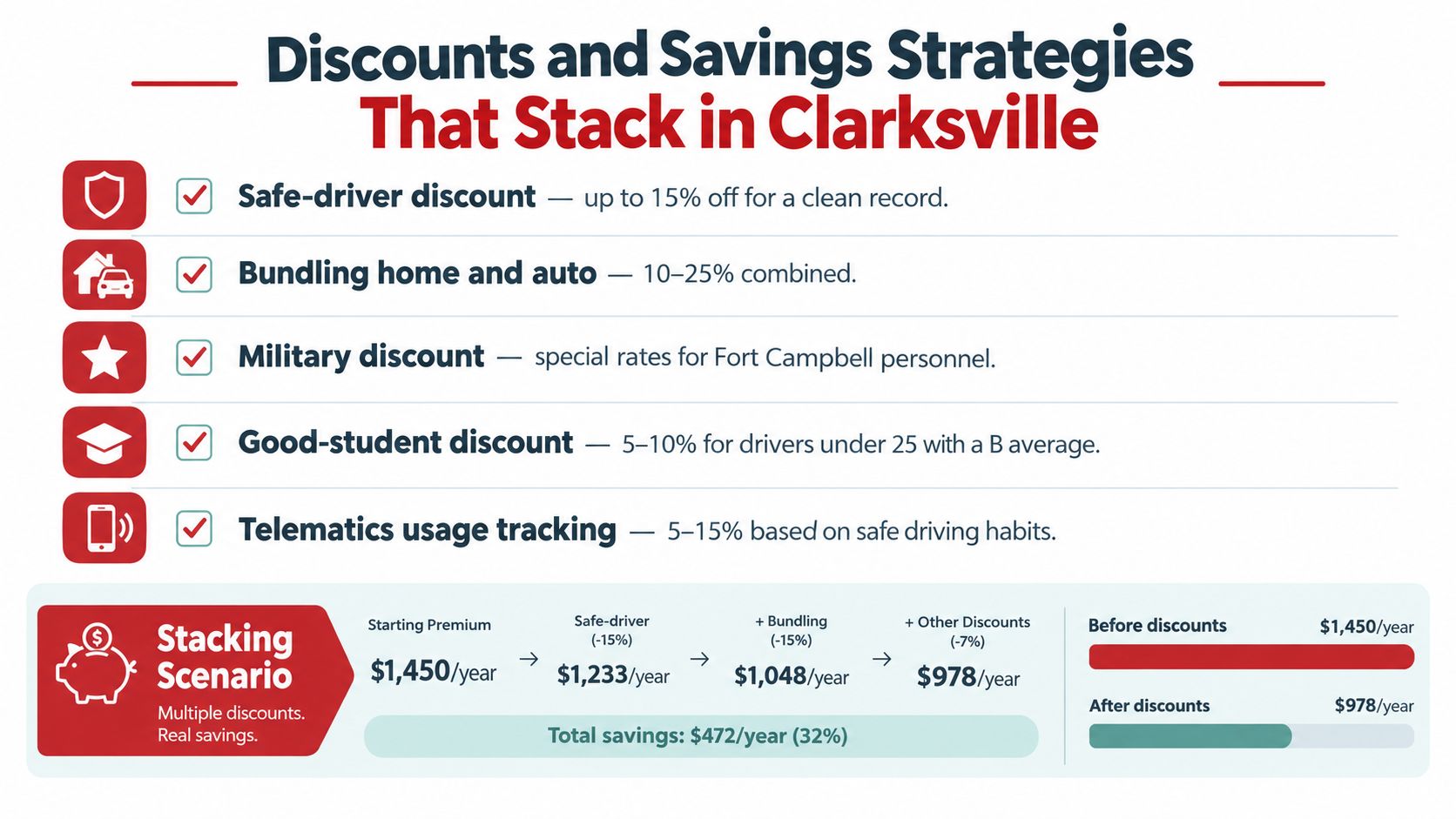
Discounts should be treated as a policy audit, not a sales slogan. Ask about every category, provide the required documentation, and confirm the final credits on the declarations page. A discount that appears in a conversation but not on the issued policy doesn't reduce your bill.
Start with the discounts you can document
A clean driving record may support a safe-driver discount, depending on the carrier's rules. Keep any approved course certificate and ask when the discount begins and how long it remains active.
Households that insure more than one policy may qualify for a multi-policy credit. Compare the combined price and coverage, though. Bundling can simplify billing, but it isn't automatically cheaper if one policy becomes overpriced.
Military-related eligibility is particularly relevant around Fort Campbell. Ask what documentation the insurer accepts, such as current military identification or other proof of eligibility. Don't assume every carrier applies the same rules to active-duty personnel, veterans, spouses, or dependents.
A qualifying student may receive a good-student credit. The insurer may request current transcripts or another academic record, so keep the documentation current rather than waiting for a renewal dispute.
Telematics programs evaluate driving behavior through an approved tracking arrangement. They may suit a careful driver who is comfortable with the program's data practices, but read the terms before enrolling. Ask what behavior is measured and whether poor results can affect pricing or eligibility.
Don't count savings before the carrier confirms them
The discount categories above may stack, but the order and combination vary by carrier. Some credits apply only to particular coverage portions, some cannot combine, and some disappear when the driver or vehicle no longer qualifies.
Use this short checklist during the quote:
- Safe driving: Ask whether your record or an approved course qualifies.
- Household policies: Compare the bundled total with separate-policy pricing.
- Military status: Provide acceptable proof before binding coverage.
- Student eligibility: Keep transcripts or required forms ready.
- Telematics: Read the participation and privacy terms.
- Declarations page: Confirm every approved credit after issuance.
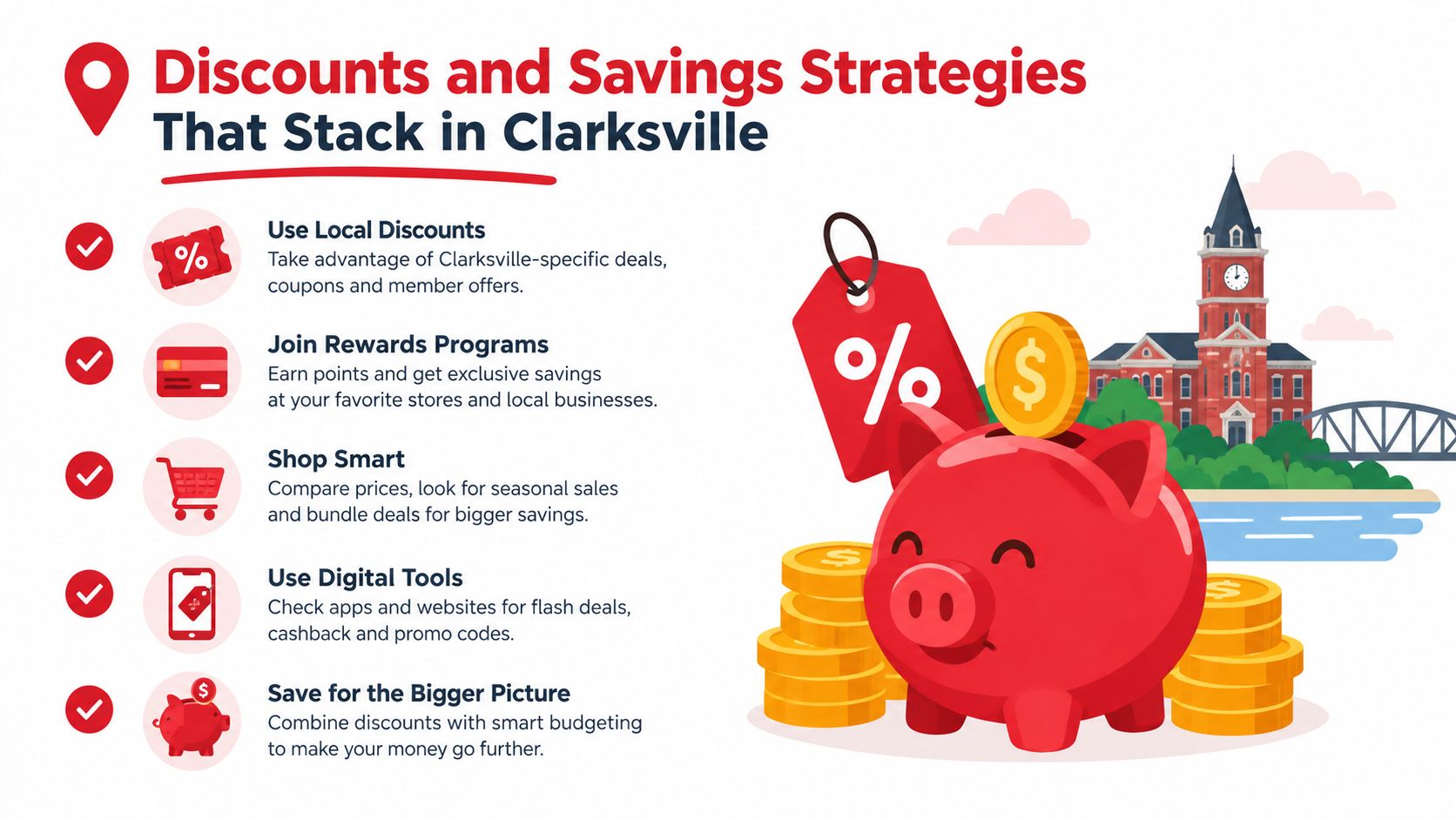
The honest expectation is not that every driver will qualify for every discount. The goal is to avoid paying an unreviewed premium because nobody asked about your household, service status, student status, driving record, or willingness to participate in a program.
A Practical Roadmap to Affordable Coverage
Affordable coverage comes from making the right decisions in the right order. Don't begin by chasing the lowest advertised monthly payment. Begin by making sure every quote describes the same driver, vehicle, limits, deductibles, and usage.
Seven decisions to make
Gather your records. Pull your current declarations page, vehicle identification information, driver details, and recent driving history. Accuracy prevents a low preliminary quote from becoming a higher price after underwriting.
Choose the coverage tier. Decide whether liability-only protection is reasonable for the vehicle and your finances, or whether collision and full coverage are necessary. The cheapest reasonable answer is the one that protects you from a loss you couldn't comfortably absorb.
Request competing quotes. Get quotes from multiple carriers and include a Tennessee-licensed independent agency in the comparison. One application can reveal whether your current insurer is competitive without forcing you to sacrifice coverage.
Compare line by line. Put liability limits, uninsured-motorist limits, deductibles, rental reimbursement, roadside assistance, exclusions, and vehicle-use details next to one another. A lower monthly payment may just reflect thinner protection or a higher deductible.
Apply discounts before binding. Confirm eligibility and submit certificates, transcripts, military documentation, or other required proof before the policy becomes active.
Set deductibles and uninsured-motorist limits deliberately. Choose a deductible you could pay after a stressful loss. Choose uninsured-motorist protection based on the risk of being left with bills after a crash caused by someone else.
Review at every renewal. Recheck drivers, mileage, vehicles, garaging address, discounts, deductibles, and limits. A policy that fit last year may not fit after a move, vehicle change, household change, or claim.
That last review is where many households recover value. If the vehicle is older, reassess physical-damage coverage. If a driver moved out, remove them when appropriate. If your record improved, ask whether the policy now qualifies for better pricing.
If you decide to move, use this guide to switching auto insurance companies and avoid canceling the old policy before the new one is active. A gap can create financial trouble and make future underwriting more difficult.
How Select Insurance Group Helps Clarksville Drivers
Buying directly can work for a driver who already knows the exact limits, endorsements, exclusions, and carrier appetite needed. Most households don't have that information in front of them, and a single-carrier conversation can show only one version of the market.
A Tennessee-licensed independent agency can collect one household profile and compare options from multiple carriers. That matters for very different Clarksville households: a Fort Campbell soldier with relocation concerns, a young driver near Tiny Town Road, or a retired teacher in Sango may each need a different balance of price, limits, deductibles, and service.
Select Insurance Group, Inc. offers access to multiple carrier quotes, Tennessee auto coverage options, and bilingual English-Spanish support. Language support is practical, not cosmetic. Drivers should be able to ask what uninsured-motorist coverage does, understand a deductible, and review exclusions before they sign.
Help after the policy starts
The relationship also matters after purchase. A local agency can help update a vehicle, add or remove a driver, review a bundle, and identify filing requirements such as an SR-22 when applicable. During a claim, an agent can help explain the process, document the loss, and push for a clear response when a hit-and-run or collision becomes difficult to manage.
No agency can control every claim decision or guarantee the lowest premium. What an independent advisor can do is keep the comparison active instead of leaving you with one renewal price and no context. That includes reviewing the policy when your household, vehicle, address, or driving record changes.
Have these items ready before requesting a personalized quote:
- Current declarations page: It shows your existing limits, deductibles, vehicles, and listed drivers.
- Driver's license information: Every household driver should be disclosed accurately.
- Vehicle identification number: The VIN helps produce a quote tied to the actual vehicle rather than a general model description.
Bring those documents and ask for a coverage comparison, not just a price. The right Clarksville auto insurance decision is the one that lowers unnecessary cost without turning a serious crash into a household financial crisis.
Select Insurance Group, Inc. offers Tennessee auto insurance quotes, coverage comparisons, bilingual guidance, and policy support for Clarksville drivers. Visit Select Insurance Group, Inc. with your declarations page, driver's license information, and vehicle VIN ready, and request a personalized, no-obligation review.