
Tennessee requires motorcycle liability minimums of $25,000 for one person, $50,000 per accident, and $25,000 for property damage, but it doesn't require collision, medical-payments, or additional liability coverage. A Clarksville rider can therefore meet the law and still face major personal bills after a crash.
You might be riding along Wilma Rudolph Boulevard, commuting toward Fort Campbell, or heading out of town on a clear weekend morning with a policy that feels reassuringly cheap. Then a driver turns across your lane, your motorcycle needs repairs, and you discover that liability insurance pays for damage you cause to others, not automatically for your injuries or your own bike.
That gap is the central issue in Clarksville motorcycle insurance. Tennessee sets a legal floor, not a complete financial safety net. The state minimum is useful and mandatory, but it shouldn't be confused with a recommendation for every rider. The property-damage minimum also rose from $15,000 to $25,000 for coverage required after December 31, 2022, as explained in this overview of Tennessee motorcycle insurance requirements.
This guide gives you the practical framework I use when reviewing a motorcycle policy: what Tennessee requires, which coverage gaps matter, what affects your rate, how to compare quotes, and how Clarksville's local risk profile should influence your choices.
Table of Contents
- Why Clarksville Riders Need More Than the Legal Minimum
- Tennessee Motorcycle Insurance Requirements Explained
- Coverage Types Every Clarksville Rider Should Compare
- What Drives Your Motorcycle Insurance Rate
- How to Get and Compare Motorcycle Insurance Quotes
- Local Considerations for Clarksville Riders
- Getting Covered With Select Insurance Group
Why Clarksville Riders Need More Than the Legal Minimum
A cheap policy can get you on the road legally, then leave you paying for a damaged motorcycle after an at-fault crash. Tennessee's 25/50/25 liability requirement covers certain injuries and property damage you cause. It does not require collision, broad, or medical-payments coverage. Meeting the law and protecting yourself are separate decisions.
Take a Clarksville commute toward Fort Campbell. Another vehicle turns into your lane, your motorcycle needs major repairs, and you suffer injuries that keep you from work. If the other driver is at fault and carries enough insurance, that policy may respond. An uninsured driver, an underinsured driver, or a hit-and-run leaves your recovery tied to the coverage you chose before the crash.
Your motorcycle can be damaged even when you did nothing wrong. Your injuries can also create medical bills, lost income, and other costs that state-minimum liability coverage does not automatically handle.
Practical rule: Buy insurance for the loss you could not comfortably pay yourself, not just for the proof-of-insurance document you must carry.
Clarksville's crash-hotspot conditions make that rule practical, not theoretical. Busy roads, changing traffic, and commuting routes around the city expose riders to collisions with larger vehicles. Statewide motorcycle-crash history also shows that serious outcomes are a real coverage concern. Those figures describe a broader historical pattern, not a current annual count for Clarksville, but they support choosing limits and protections with the aftermath in mind.
Your motorcycle, finances, riding habits, and tolerance for risk should shape the policy. An older bike and substantial savings may justify a different setup from a newer financed motorcycle. Daily commuters, frequent passengers, and riders who depend on their bike for transportation should examine their gaps closely.
Do not accept “full coverage” as a complete answer. Ask what the policy includes, what it excludes, which deductibles apply, and whether the limits protect your assets after a serious collision. This explanation of full coverage and liability insurance provides useful context, but your declarations page and endorsements control the protection you purchased.
Tennessee Motorcycle Insurance Requirements Explained
A rider can satisfy Tennessee law, leave a Clarksville intersection after a crash, and still face bills far beyond the policy limit. The state's 25/50/25 liability requirement establishes legal responsibility, not complete financial protection.
What the 25/50/25 limits mean
The first $25,000 covers bodily injury to one person in an accident you cause. The $50,000 limit applies to bodily injury involving multiple people in one accident. The final $25,000 covers property damage you cause, including damage to another motorcycle, car, fence, or other property.
These limits apply to covered liability for harm you cause to others. They do not pay your medical expenses or repair your motorcycle just because you were involved in a collision. A serious crash on a busy Clarksville route can use a bodily-injury limit quickly through medical treatment, rehabilitation, lost income, and related damages.
Tennessee does not require motorcycle collision coverage, protection for non-collision losses, or motorcycle-specific personal-injury protection. The coverages work differently:
- Liability coverage pays covered injuries and property damage you cause to other people.
- Collision coverage generally pays for damage to your insured motorcycle after a covered impact, subject to the deductible and policy terms.
- Other-than-collision coverage generally covers theft, weather damage, animal collisions, and other covered non-collision events.
- Medical-payments coverage can help with eligible medical expenses for covered occupants, subject to its limit and terms.
- Uninsured or underinsured-motorist coverage can help protect you when the at-fault driver has no insurance or insufficient limits, subject to the policy.
A cheap liability policy can meet the statute while leaving the rider exposed to damage, medical costs, and income loss after a real crash.
Legal responsibility isn't the same as financial protection
State-minimum coverage may suit a rider who knowingly accepts substantial out-of-pocket risk. It is a poor fit for someone who could not replace the motorcycle, pay medical bills, or absorb lost income after a collision. Clarksville riders should choose limits based on their assets, motorcycle value, commuting needs, and ability to handle a major loss.
Tennessee motorcycle insurance guidance reports more than 2,000 motorcycle crashes statewide in a typical year, and lenders may require full coverage for a financed motorcycle even though state law requires only financial responsibility, according to this Tennessee motorcycle insurance guidance.
For registration or other administrative needs, Ticket Shield registration insurance help can help organize proof of coverage. It does not replace a policy review. Confirm that the motorcycle, permitted riders, limits, deductibles, and selected protections appear correctly on the policy.
Read the declarations page before assuming you are protected. “Liability only” identifies what the policy covers and what it leaves to you. Ask an agent to explain every exclusion, endorsement, and deductible that could affect a Clarksville claim.
Coverage Types Every Clarksville Rider Should Compare
A crash on a busy Clarksville route can leave two separate bills: damage to your motorcycle and injuries that liability coverage does not pay for. The state minimum addresses only your responsibility to other people. Compare each protection below against the cost of replacing your bike, treating an injury, and recovering from a driver with inadequate insurance.
| Coverage Type | What It Protects | Required in Tennessee? | Who Needs It |
|---|---|---|---|
| Liability | Injuries and property damage you cause to others | Yes, at the state minimum | Every rider who operates on public roads |
| Collision | Damage to your motorcycle after a covered crash with another vehicle or object | No | Riders who could not comfortably repair or replace the bike |
| Other-than-collision, often called comprehensive | Theft, weather damage, animal collisions, and other covered losses unrelated to a crash | No | Riders concerned about theft, storms, or storage-related risks |
| Uninsured or underinsured motorist | Covered injuries and, where selected, other losses caused by a driver with too little or no insurance | No | Riders who want protection from another driver's insurance gap |
| Medical payments | Eligible medical expenses for covered injuries, subject to the selected limit | No | Riders who want first-party medical protection beyond liability |
| Roadside assistance | Towing and specified roadside services under the policy | No | Commuters and riders traveling rural roads or longer distances |
Start with liability, then protect the motorcycle
Set liability limits according to the harm you could cause, not just the minimum printed on a state form. Higher limits give a covered claim more room before the remaining financial burden reaches you personally. Liability still will not repair your motorcycle or pay your own medical expenses, so raising it alone leaves important gaps.
Collision handles the bike-versus-object loss. Depending on the policy wording, it can apply when the motorcycle hits another vehicle, overturns, or strikes an object. Other-than-collision coverage addresses a separate group of risks. Theft, severe weather, and an animal collision can damage or remove the motorcycle without another driver being involved.
Protect yourself from other drivers
Uninsured and underinsured-motorist coverage deserves serious attention in Clarksville. A careful rider can still be injured by someone without insurance or with limits that fall short of the medical costs, recovery time, and other losses from a serious crash. This protection answers a specific question: how much coverage responds when the responsible driver cannot pay enough?
Medical-payments coverage adds another source for eligible medical expenses. Tennessee does not require motorcycle-specific personal-injury protection. Ask how your health insurance, medical-payments limit, and other available resources would respond after a motorcycle crash, then identify the remaining shortfall.
Check custom equipment and settlement terms
Review the motorcycle itself, not only its title or base model. Confirm whether accessory and custom-part coverage is included, whether the insurer settles losses using replacement cost or actual cash value, and whether helmets, riding apparel, luggage, and communication systems carry separate sublimits. Custom paint, upgraded parts, and added equipment can make restoration cost more than the motorcycle's basic description suggests. Get those items listed accurately before a claim, because an undocumented upgrade is harder to value after the crash.
What Drives Your Motorcycle Insurance Rate
A rider commuting toward Fort Campbell can receive a very different premium from a neighbor who takes the same model out only on weekends. Insurers price the rider, the motorcycle, and the circumstances surrounding its use, not just the motorcycle's purchase price.
The motorcycle and the rider
The motorcycle's type, engine size, value, repair profile, and theft exposure all affect underwriting. A powerful sport-oriented motorcycle may receive different pricing from a standard, touring, or smaller-displacement bike. Purchase price matters, but the likely cost of repairing or replacing the bike matters too.
Age and riding experience shape the risk profile. A new rider is evaluated differently from someone with a long, clean riding history. Claims, violations, policy cancellations, and lapses in coverage can affect both eligibility and price. Give the insurer accurate information. A low quote built on incomplete details can lead to an unwelcome correction when the policy is reviewed or a claim occurs.
Run the motorcycle according to its actual use. Annual mileage, regular commuting, passenger use, and storage changes all matter. A bike ridden daily toward Fort Campbell has more road exposure than one used occasionally for recreation. Understating that use may reduce the quote, but it can weaken the policy's value when the loss involves facts the application did not disclose.
Location, security, and policy design
Garaging location affects how an insurer evaluates theft, weather, and access risk. Locked garage storage, secure facilities, and an approved anti-theft system may support better underwriting, although eligibility and discounts vary by carrier. Ask which devices qualify and whether documentation is required.
The deductible sets the tradeoff between premium and out-of-pocket cost after a covered loss. A higher deductible can reduce the bill. Choose it only if you can pay it promptly without delaying repairs or creating a financial emergency.
Statewide crash data reinforces why Clarksville riders should examine coverage limits, not just chase the lowest rate. The Tennessee Department of Transportation reports 805 motorcycle fatalities and 3,602 serious injuries from 2018 through 2022, with motorcyclists accounting for 13% of statewide traffic fatalities and serious injuries, as reported in the Tennessee strategic highway safety update. The same update cites national research that motorcyclist fatalities occur nearly 22 times more frequently than passenger-vehicle occupant fatalities in crashes. A 25/50/25 state-minimum policy may produce a cheaper quote, but it can leave a Clarksville rider exposed after a severe crash. Compare the premium with the protection it buys.
How to Get and Compare Motorcycle Insurance Quotes
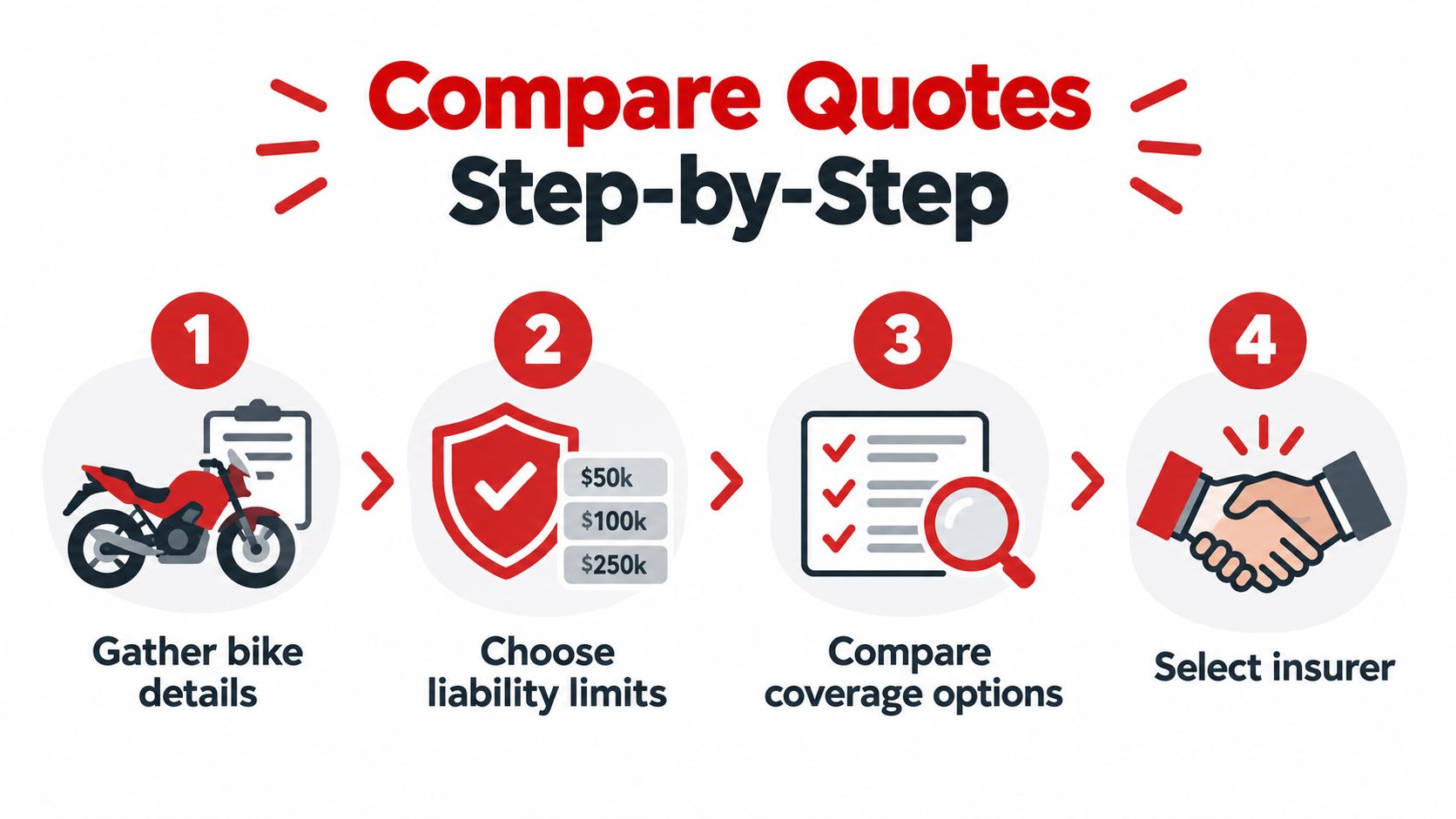
A good quote comparison starts before you call anyone. Decide what you want to compare, then require each quote to use the same assumptions.
Gather the information first
Have the motorcycle's year, make, model, vehicle identification details, purchase information, financing status, and intended use available. Add the rider's license information, riding experience, claims history, storage address, annual mileage, and any safety-course records.
Don't hide the practical details. If you commute, carry a passenger, use saddlebags, or have custom equipment, disclose it. The cheapest quote is meaningless if it was built around a motorcycle or usage pattern that doesn't match reality.
Set the comparison points
Choose a liability target before requesting quotes. At minimum, compare the state-required option with a higher-limit option so you can see what additional protection costs. Select collision and full-coverage deductibles deliberately, rather than accepting different deductibles from different carriers and calling the results comparable.
Then ask each insurer the same questions:
- Motorcycle damage: Does collision apply to the bike's current value, agreed value, or another settlement basis?
- Non-collision losses: Are theft, weather damage, and animal collisions covered under other-than-collision coverage?
- Injury protection: What medical-payments and uninsured or underinsured-motorist options are available?
- Equipment: Are custom parts, helmets, apparel, luggage, and communication equipment covered, and are there sublimits?
- Discount eligibility: Do approved safety courses, mature-rider status, bundled policies, anti-theft devices, or a claims-free history affect the premium?
- Service details: How are claims reported, documents delivered, payments handled, and policy changes requested?
A safety course can also improve riding habits, even when a carrier's discount rules differ. Ask for the exact eligibility requirements and keep the completion documentation.
Compare the result, not just the price
Put the quotes side by side with limits, deductibles, exclusions, endorsements, and payment terms visible. A quote with a lower premium may carry lower liability limits, omit collision, use a higher deductible, or exclude the accessories you care about.
Use this motorcycle insurance quote guide as a practical checklist, then request written confirmation of any coverage an agent describes verbally. Before signing, verify the named insured, motorcycle, garaging address, permitted riders, lienholder, limits, deductibles, and effective date.
Local Considerations for Clarksville Riders
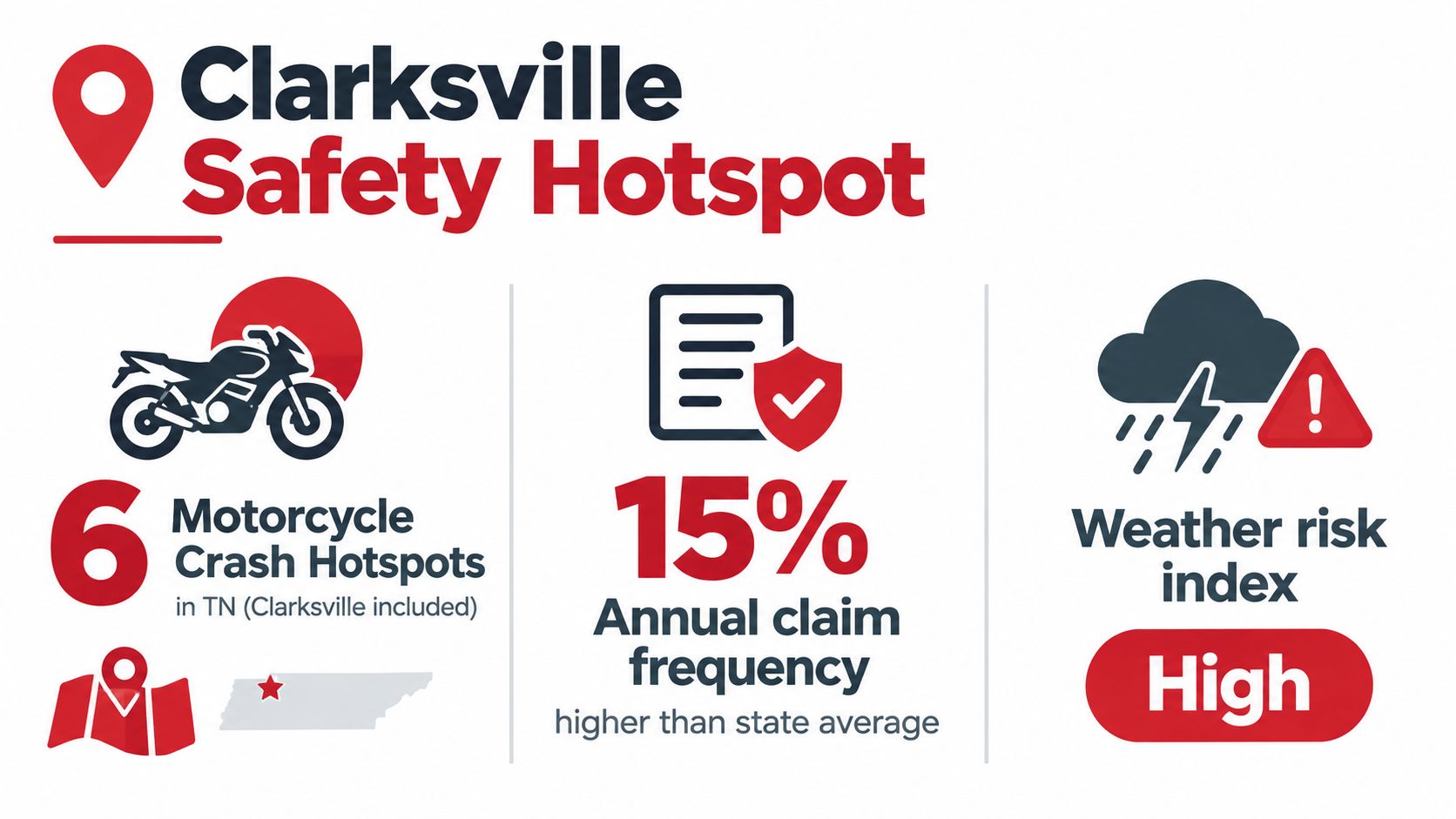
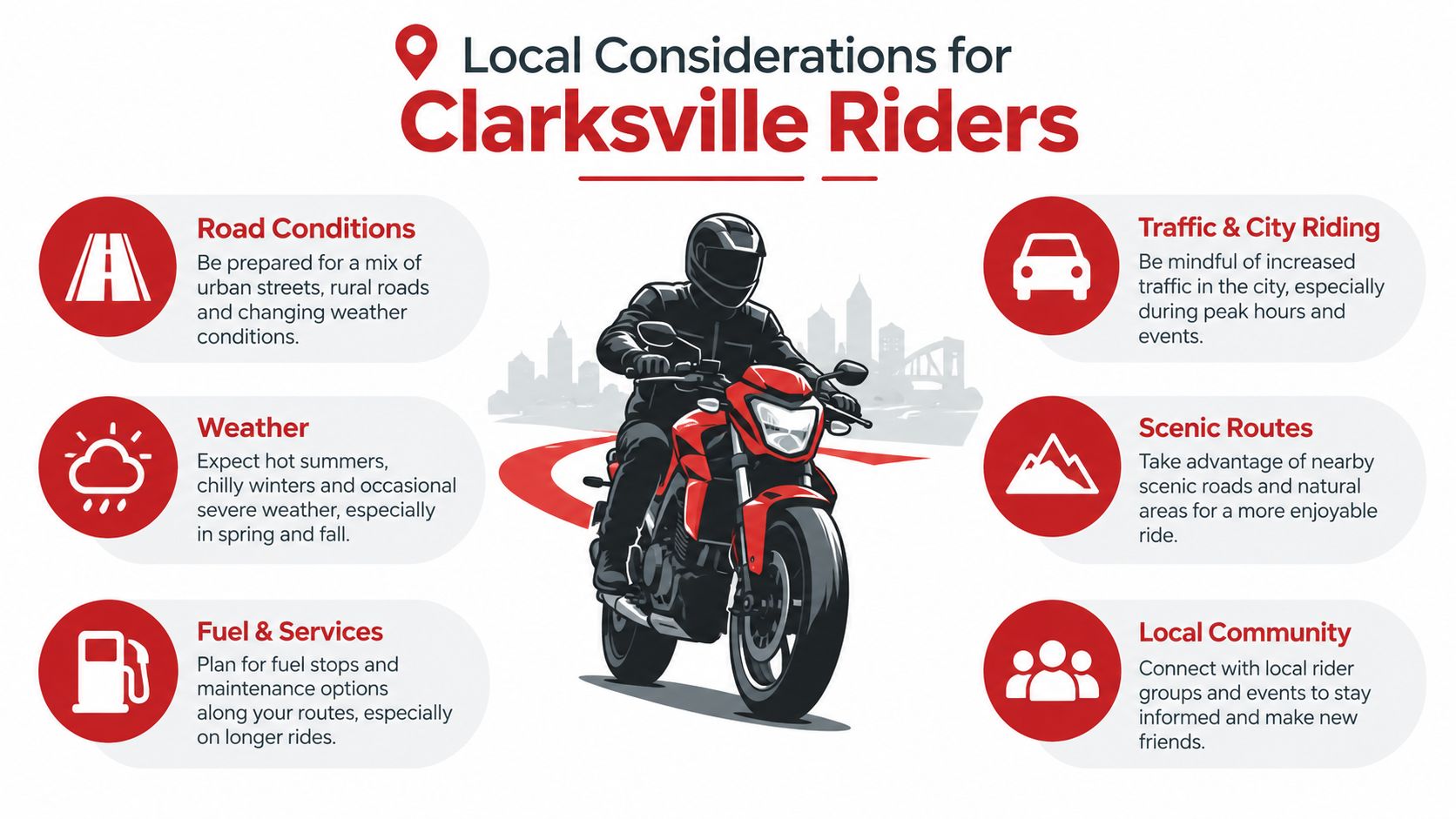
A short ride through Clarksville can put you near military traffic, busy commercial corridors, rural roads, and changing weather in the same policy period. Clarksville is not just another Tennessee ZIP code for motorcycle-risk purposes. Federal transportation research identified the city as one of six motorcycle-crash hotspot areas in the state, alongside Memphis, Nashville, Johnson City, Chattanooga, and Great Smoky Mountains National Park. The statewide research recorded 14,677 motorcycle crashes from 2016 through 2020, and riders were killed in 5.1% of those crashes, according to the federal transportation research report.
Those figures do not predict a particular crash, but they show why state-minimum liability limits can leave a Clarksville rider exposed. Before accepting a cheaper quote, compare uninsured and underinsured-motorist protection, medical-payments coverage, and liability limits. A serious injury can create costs far beyond Tennessee's legal 25/50/25 minimum.
Match coverage to the way you ride
Your route and riding frequency should influence the policy. Regular commuting around Fort Campbell creates more exposure than occasional weekend use. Commercial corridors bring turning vehicles, merging traffic, and frequent changes in traffic flow. Rural Montgomery County routes raise a different concern. If your motorcycle breaks down far from a repair facility, roadside assistance may prevent a costly transportation problem.
Storage matters, too. A secured garage, covered storage arrangement, and anti-theft equipment can reduce the chance of theft or weather damage. Ask whether the insurer requires a specific storage setup or documentation before assuming a security feature qualifies for a discount.
Weather protection deserves a close review. Comprehensive coverage generally addresses covered non-collision losses, including certain weather-related damage. Check exclusions and deductibles carefully. Comprehensive coverage does not mean every storm, flood, or other event is automatically covered.
Treat safety as part of the insurance conversation
Tennessee requires motorcycle operators and passengers to wear crash helmets that meet applicable federal standards. State safety guidance identifies Tennessee Code Annotated §55-9-302 and specifies DOT-certified helmets. Statutory provisions also reference the federal helmet standard 49 CFR 571.218 and recognize limited exceptions.
Keep documentation for any approved safety course. Ask how training, riding experience, age, safety devices, anti-theft systems, and claims history affect eligibility or discounts. Helmet compliance can reduce injury severity, but it does not repair your motorcycle, pay third-party liability claims, cover passenger injuries, or replace protection against an uninsured driver.
Getting Covered With Select Insurance Group
Comparing motorcycle insurance alone can become a slow exercise in calling carriers, repeating the same information, and trying to identify why one quote differs from another. An independent agency can handle that comparison in one conversation and show how limits, deductibles, exclusions, and optional coverage change the result.
Select Insurance Group serves Tennessee and other Southeast states and compares instant quotes from 20 to 40 leading carriers. That model gives a Clarksville rider a practical way to review multiple options without contacting each carrier separately. The agency has over 30 years of experience, offers bilingual service, and provides free, no-obligation quotes.
The important advantage is not merely convenience. An agent can help identify whether a quote is liability-only, whether a financed motorcycle has the coverage a lender expects, and whether accessories or equipment need a separate endorsement. The agency also provides tools for document uploads, payments, policy updates, and claim support.

Don't choose a Clarksville motorcycle policy by premium alone. Ask for comparable limits, confirm the coverage that protects your own bike and injuries, and make sure the policy reflects how and where you ride.
Select Insurance Group, Inc. offers free, no-obligation motorcycle insurance quotes by comparing coverage options from multiple carriers, with bilingual guidance for Tennessee riders. Visit Select Insurance Group, Inc. to request a quote and review protection that goes beyond Tennessee's legal minimum.