
A standard $1 million per occurrence general liability policy typically costs $500 to $2,500 annually, although premiums vary by industry, location, and claims history. The right policy for a Clarksville business depends less on the certificate in your file than on whether the actual coverage matches your work, contract, permit, and potential claims.
You may be comparing quotes after a customer, property owner, or general contractor asked for proof of insurance. The certificate arrived quickly, the limit looks acceptable, and the project is ready to start. That's where many business owners stop checking.
A certificate of insurance is useful evidence, but it isn't the policy. It may not show whether completed operations are covered, whether the required additional-insured wording is attached, or whether the aggregate has already been reduced by earlier claims. In Clarksville's construction and service sectors, that distinction can decide whether a routine accident becomes a manageable insurance claim or a direct business expense.
Table of Contents
- Why Clarksville Businesses Face Real Liability Risks
- What General Liability Insurance Actually Covers
- Coverage Limits, Costs, and Premium Factors
- Common Exclusions and Policies You Also Need
- How to Get and Verify Your Quote in Clarksville
- Which Clarksville Industries Need General Liability Most
Why Clarksville Businesses Face Real Liability Risks
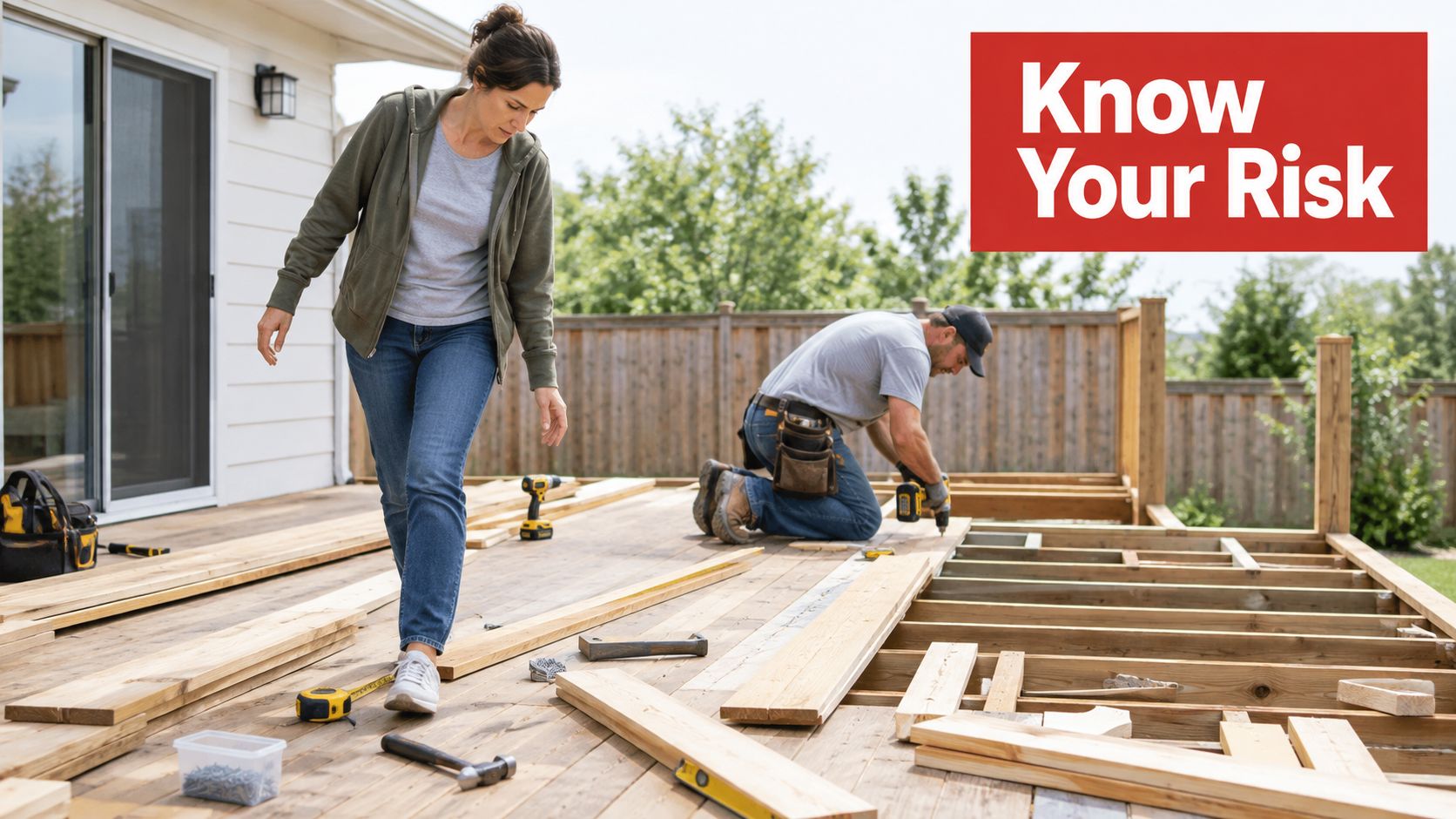
A Clarksville deck contractor wraps up a backyard job and leaves loose boards and tools near the walkway. Later, a visitor trips, gets hurt, and files a claim. The contractor can show a certificate of insurance, but that does not answer the questions that matter when money is on the line. Was the work being done classified correctly. Does the policy respond to completed work. Did the contract require additional-insured status or specific wording that was never added?
That gap catches business owners all the time. Having a certificate and having the right coverage for the job, permit, or contract are not the same thing.
The same problem shows up outside construction. A retail employee mops a floor and skips the warning sign. A service tech scratches or cracks a client's flooring while moving equipment. A restaurant customer says a meal caused an injury. An office publishes marketing that triggers an advertising injury allegation. None of these events are rare. They grow out of normal daily operations.
The local exposure is broad
Clarksville has a wide mix of business activity, according to this business profile. That matters because liability claims do not stay neatly tied to one storefront or one office. They can start at a retail counter, on a job site, in a warehouse, at a customer's property, or after work is finished and everyone has gone home.
I see owners focus too heavily on the certificate because it is the document a customer asks for first. The harder questions come later, after the accident. Was this location disclosed. Was this type of work included. Did the policy carry the endorsements the contract required. Was the claim tied to ongoing operations or completed operations? Those details decide whether the carrier steps in or the business writes the check.
Practical rule: Treat general liability as operating infrastructure, not paperwork you purchase only when a customer requests a certificate.
If you are mapping job sites, customer locations, subcontractor relationships, or lease requirements, review broader Clarksville commercial insurance guidance with that exposure in mind. Start with a simple test. Who could get hurt, whose property could be damaged, and what part of your work could still cause a claim after your crew leaves?
What General Liability Insurance Actually Covers
Commercial general liability, or CGL, is designed to respond to covered third-party claims involving bodily injury, property damage, and certain personal or advertising injuries. It also commonly includes defense costs, subject to the policy's terms, exclusions, limits, and conditions. It doesn't replace every other business policy.
Four coverage areas to identify
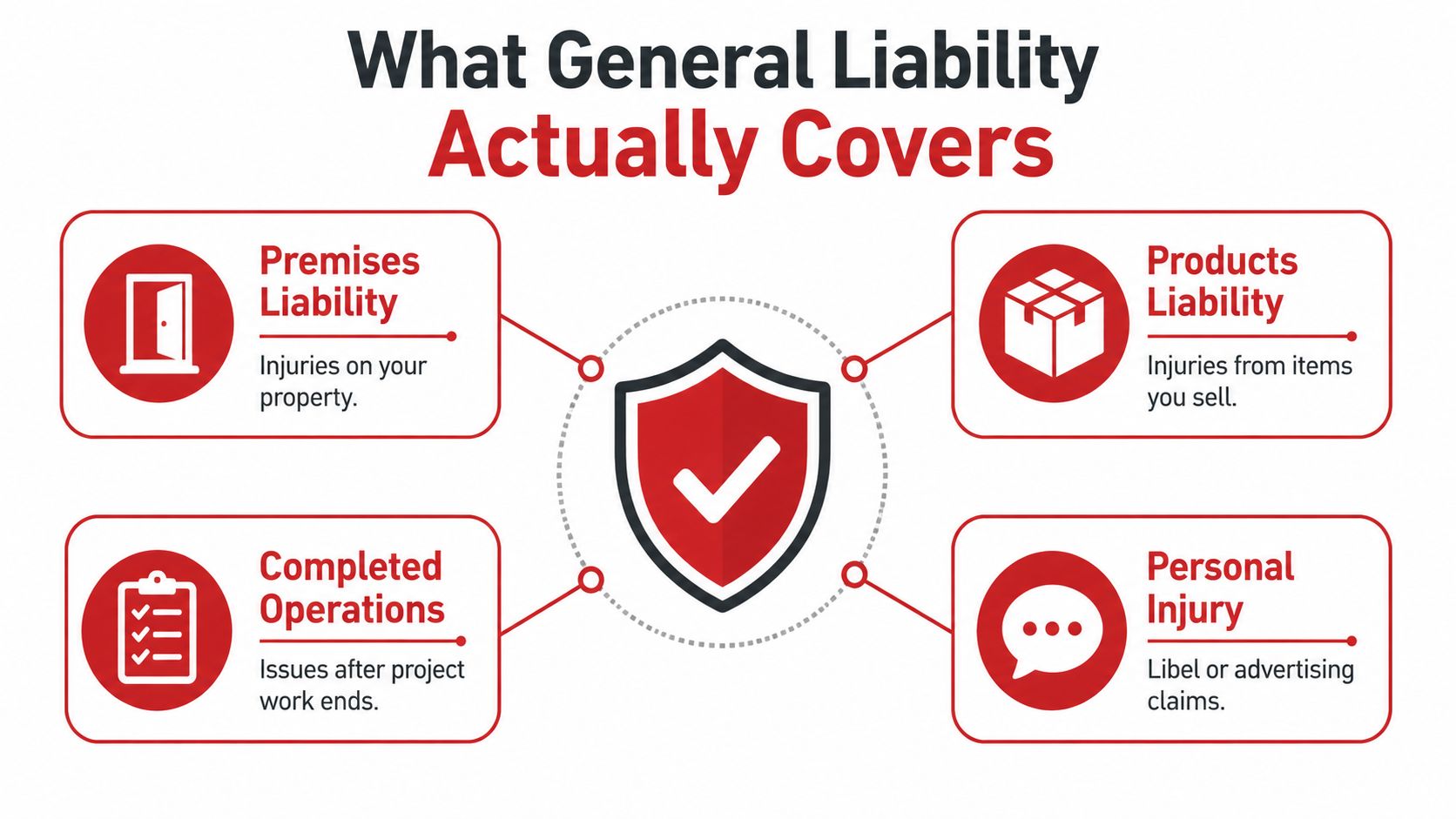
Premises and operations liability applies to many third-party injuries or property-damage claims connected with your location or ongoing work. A customer who slips inside a shop, a visitor injured in an office, or a client whose wall is damaged during installation may fall into this category, depending on the facts and policy wording.
Products liability addresses covered claims alleging that a product your business sells or supplies caused bodily injury or property damage. A retailer, food business, distributor, or manufacturer should ask how its products are classified and whether sales made away from the insured premises are included.
Completed operations becomes important after a contractor, installer, groundskeeper, or repair business finishes its work. If a completed installation later contributes to covered property damage or bodily injury, the policy's completed-operations provisions and exclusions become central. A certificate that only displays a limit doesn't explain this protection.
Personal and advertising injury can apply to certain allegations such as libel, slander, or specified advertising offenses. A marketing or professional-services business may have lower physical-injury exposure than a contractor, but its communications can still create liability concerns.
Medical payments coverage may address certain minor injuries without requiring the claimant to establish fault, subject to the policy's conditions and limits. It's not health insurance, and it won't turn a general liability policy into a substitute for workers' compensation, commercial auto, professional liability, or property coverage.
Match the policy to the activity
A landscaping company should discuss fence damage, work at customer premises, and completed operations. A restaurant should discuss customer access, food operations, and leased-premises conditions. A marketing firm should examine advertising injury wording and separately evaluate professional errors and omissions.
The accurate question isn't “Do I have general liability?” It's “Does my policy respond to the ways my business can injure someone, damage property, or create a covered claim?”
Coverage Limits, Costs, and Premium Factors
A lot of Clarksville owners buy limits that satisfy a bid packet, permit file, or landlord request, then assume the policy is set. That is where trouble starts. A certificate can show $1 million per occurrence with a $2 million annual aggregate, but that alone does not confirm the policy matches the job, the contract language, or the exposure created by the work itself.
Tennessee procurement guidance describes CGL for state vendors on an occurrence form equivalent to ISO CG 00 01, including premises and operations, products and completed operations, bodily injury, property damage, personal and advertising injury, and certain insured contractual liability provisions. If your work touches public contracts, vendor agreements, or construction terms, it helps to review Tennessee general liability requirements for state vendors and contractors before treating a certificate as the final answer.
The per-occurrence limit is the most the policy may pay for one covered occurrence, subject to the policy terms. The aggregate is the total cap for covered claims during the policy period. After one or two claims, the remaining protection can be lower than the certificate suggests. I have seen businesses focus on the printed limit and miss the harder question, whether enough limit is still available when a new claim lands.
What a quote actually reflects
A standard policy may fall within the $500 to $2,500 annual range, but that is a rough budgeting reference, not a promise. The same city can produce very different premiums because underwriters price the actual risk in front of them, not a generic Clarksville average.
They usually look at factors such as:
- Industry classification: A professional office presents a different bodily injury profile from roofing, remodeling, manufacturing, or excavation.
- Revenue and payroll: More activity usually means more jobs, customers, products, and chances for a claim.
- Physical premises: A storefront or warehouse open to visitors creates a different exposure from a home-based office.
- Completed operations: Installation, repair, maintenance, and construction can generate claims after the work is finished.
- Claims history: Prior losses can change pricing, deductibles, and carrier appetite.
- Contract requirements: Additional insured wording, higher limits, waivers, and project-specific terms can all affect the quote.
Clarksville has a broad business base, from manufacturing and logistics to health care, retail, education, government, and office-based services. That mix is one reason a manufacturer shipping product through several locations and a consultant working mostly off-site should not expect the same underwriting result.
For contractors, the floor is set by Tennessee licensing rules, not by what a contract may later require. The state's published minimums are $100,000 for home-improvement contractors and contractors authorized up to $500,000, $500,000 for limits from $500,001 to $1.5 million, and $1 million for limits from $1.5 million to unlimited under the state contractor insurance requirements. Those numbers are minimums. They do not automatically satisfy a project owner, lease, or subcontract, and they do not guarantee the policy is built for the claim you are most likely to face.
Common Exclusions and Policies You Also Need
General liability is one layer of a business insurance program. It generally addresses covered third-party bodily injury and property damage, but it isn't a warranty for your own workmanship, a substitute for vehicle insurance, or a blanket promise to pay every business loss.
A contractor can meet a permit checklist and still have a serious gap. If an employee is injured, workers' compensation is the relevant coverage. If a subcontractor causes damage and has no valid insurance, the contractor may face a contractual or legal problem that a generic certificate didn't reveal. If defective work must be removed and redone, general liability may not pay the cost of correcting the insured's own faulty work, subject to the policy language and the surrounding damage.
A practical claim-scenario matrix
| Scenario | Policy or response to examine | Why the distinction matters |
|---|---|---|
| A customer slips inside a retail shop | General liability | The claim concerns a third party injured during a business visit. |
| An employee is injured while framing a wall | Workers' compensation | Employee injuries are handled separately from ordinary third-party liability. |
| A company van damages another vehicle | Commercial auto | Business vehicle accidents aren't handled by CGL as a replacement for auto coverage. |
| A contractor damages a client's existing wall | General liability, contract terms, and exclusions | Coverage depends on the damaged property, work status, cause, and policy wording. |
| A designer's professional error causes financial loss | Professional liability | Pure financial loss and professional negligence may fall outside CGL. |
| A fire damages the contractor's own tools | Commercial property or inland marine | CGL isn't designed to insure the business's own equipment. |
| Runoff contaminates a neighboring property | Pollution coverage | Environmental exposures often require specialized terms and underwriting. |
| A subcontractor's employee is injured | Workers' compensation, subcontractor insurance, and contract review | Certificates must be verified, and responsibility may depend on the relationship and facts. |
A higher limit won't fix the wrong coverage trigger, an excluded operation, or an endorsement that was never added.
Owners should review what workers' compensation insurance covers alongside their CGL program. Contractors may also need commercial auto, tools and equipment coverage, builders-risk protection, pollution coverage, or professional liability. Landlords and service providers face their own combinations of premises, contractual, and professional exposures.
How to Get and Verify Your Quote in Clarksville
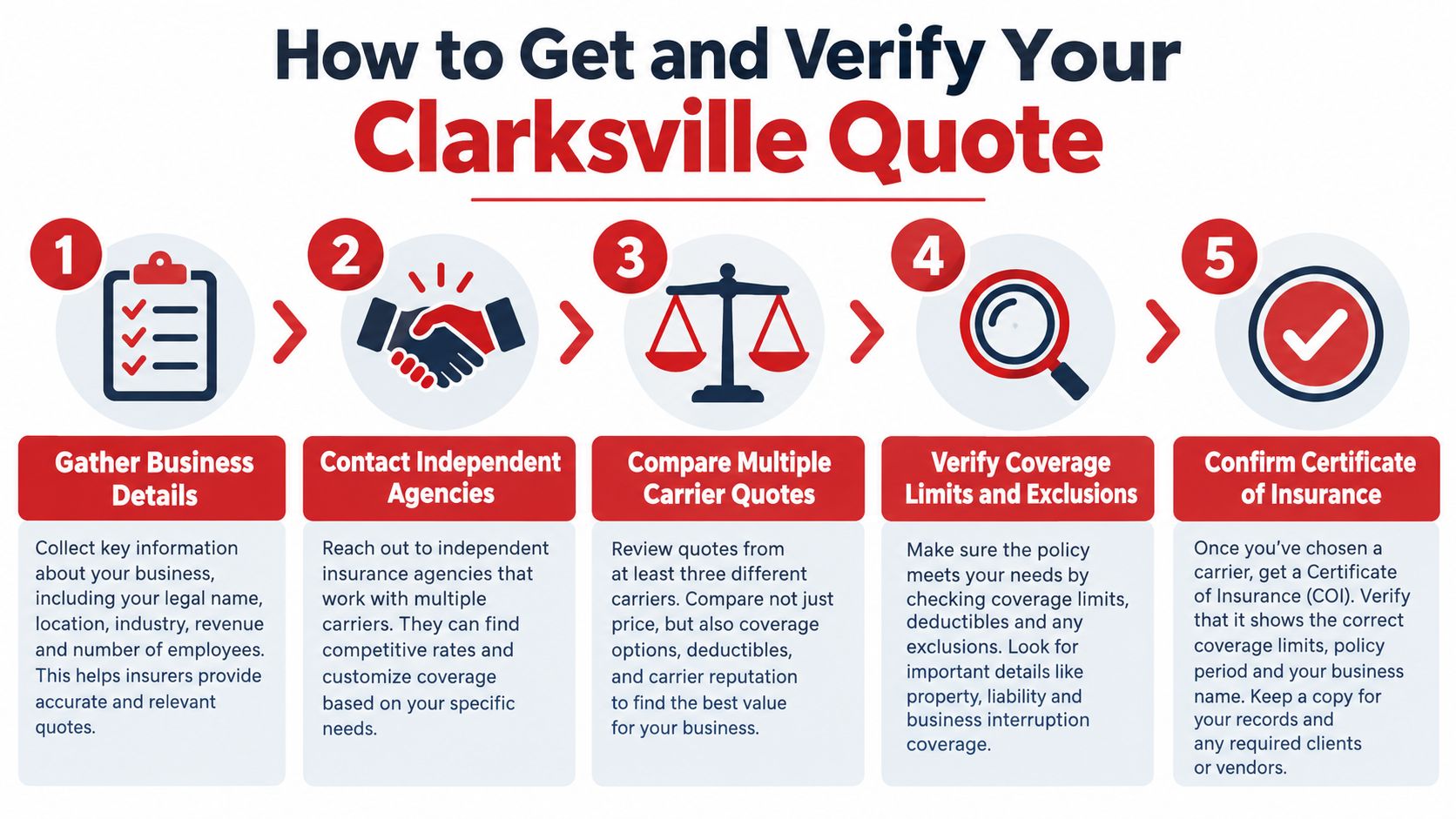
Start with a complete description of the business, not just its legal name and estimated revenue. Explain where work occurs, what employees do, whether subcontractors are used, which products are sold, what vehicles are used, and whether customers visit the premises. An incomplete application can produce a cheaper quote that doesn't accurately describe the risk.
Use a quote process that tests the details
An independent agency can compare terms from multiple carriers instead of presenting one company's appetite as the only option. Select Insurance Group, Inc. states that it compares commercial coverage from multiple carriers and provides bilingual assistance, which can help Spanish-speaking owners review technical documents in the language they understand best.
Request the contract or permit insurance requirements before binding. Clarksville's permitting guidance requires a current liability certificate, applicable minimum limits, and an acceptable certificate holder, while applicable applications may also require workers' compensation documentation through the city's permitting information. For projects valued at $25,000 or more, Tennessee licensing requirements apply, making early verification particularly important.
Check the policy, not only the certificate
Use this checklist before work begins:
- Confirm the named insured: The legal business name should match the contracting party.
- Check dates: The policy must be active for the work period, not merely issued for an earlier project.
- Verify limits: Compare per-occurrence and aggregate limits with the contract.
- Review operations: Confirm that the described classification includes the actual work.
- Inspect endorsements: Look for completed operations, additional insured wording, waiver requirements, and primary or noncontributory terms when required.
- Ask about exclusions: Pay attention to subcontractors, roofing, excavation, pollution, residential work, and designated operations.
- Check vehicles: Ask whether hired and non-owned auto coverage is needed for employee or rented vehicle use.
- Validate subcontractors: Collect current certificates and verify that subcontractor operations and indemnity obligations are addressed.
For owners hiring contractors, a practical guide to verifying a contractor license can complement insurance verification. Licensing, permits, certificates, endorsements, and inspections answer different questions. None should be treated as a substitute for the others.
Which Clarksville Industries Need General Liability Most
Contractors usually need the most careful review because their exposure continues after a job appears finished. Tennessee's licensing thresholds establish minimum CGL requirements, but a contractor should also test completed operations, subcontractor work, contractual liability, tools, vehicles, and project-specific limits. A deck builder, commercial electrician, grounds maintenance professional, and general contractor may all need general liability, yet their exclusions and endorsements can differ sharply.
Retailers, restaurants, and customer-facing service businesses should focus on premises controls. Wet floors, crowded aisles, loading areas, food service, and customer property create everyday third-party exposure. A written incident process, prompt reporting, safe housekeeping, and a policy that accurately describes the premises can matter as much as the headline limit.
Match coverage to the work performed
Manufacturers and logistics businesses should examine products liability, loading and unloading, customer property, warehouse operations, and completed shipments. Health care and wellness providers need to separate premises and bodily-injury exposure from professional negligence. Technology companies and professional offices may face fewer physical accidents, but advertising injury, contractual obligations, and professional errors can still require careful treatment.
Commercial construction also creates a documentation issue before a project starts. A property owner planning work such as building a dental clinic should verify the general contractor's license, current insurance, subcontractor documentation, and project requirements rather than relying on a single certificate.
Clarksville's history helps explain this variety. River commerce, rail connections, manufacturing, logistics, hospitality, professional services, and technology have all shaped the local economy as outlined in this Clarksville history overview. Each sector creates different premises, products, completed-work, and visitor risks.
The best quote is the one that reflects the work you perform and the contracts you sign. A bilingual consultation can help business owners compare limits, exclusions, endorsements, and complementary policies before a permit deadline or claim forces the issue.
Select Insurance Group, Inc. can compare general liability and related commercial coverage for Clarksville businesses, including workers' compensation, commercial property, and commercial auto. Visit Select Insurance Group, Inc. to request a free, no-obligation quote review and discuss your certificate, contract, or permit requirements with a bilingual specialist.