
You're probably staring at a lease, a dispatch app, and a renewal notice all at once, trying to answer one basic question, do I need bobtail insurance in Florida or am I already covered? If you're leased onto a carrier and you're rolling a tractor without a trailer, the wrong answer can put your own assets in the blast radius of a claim.
The problem isn't the trailer alone. It's when the carrier's primary liability applies, when it doesn't, and what your lease says about dispatch, deadhead, and personal use. Florida's liability rules and the federal rules don't give you a special bobtail carveout, they set the floor, and the policy language decides whether you've bought the gap coverage you think you bought.
Table of Contents
- A Tuesday Morning on I-4 and Why Bobtail Coverage Exists
- What Bobtail Insurance Actually Covers
- Bobtail vs Non-Trucking Liability vs Primary Coverage
- Florida Liability Rules and the Federal Floor
- Typical Limits, Exclusions, and What Moves the Price
- How to Get a Quote and What to Ask Before You Bind
- Common Questions Florida Drivers Ask About Bobtail Coverage
A Tuesday Morning on I-4 and Why Bobtail Coverage Exists
A Florida owner-operator leaves a Tampa yard before sunrise, headed solo toward a Jacksonville pickup. The tractor's moving, but the trailer isn't attached yet, and he's not under dispatch in the way the lease defines it. If he clips a car in that window, the carrier's primary policy may sit out the claim, and that's where bobtail insurance exists.
That's the part drivers learn the hard way after an accident. Florida's commercial-vehicle exposure is real, with 47,197 commercial-vehicle crashes statewide in 2023, plus 12,394 injuries and 330 fatalities in the reported category (Florida crash reporting). Those totals aren't bobtail-only incidents, but they show why a gap in liability coverage is a personal problem, not an accounting detail.
The five decisions that matter
The driver in that Tuesday-morning situation has to make five decisions fast, and only a few get the first one right.
- What the coverage is: It's liability protection for the tractor when the carrier's primary policy isn't on the hook.
- How it differs from non-trucking liability: The trailer question is not the whole story.
- When Florida rules apply: Weight, operating authority, and intrastate versus interstate status all matter.
- What limit to buy: The number has to fit the lease and the exposure, not a marketing brochure.
- How to bind it correctly: The lease language and policy wording have to line up before the wheel ever turns.
If you want a plain-English fault overview for a truck crash claim, the write-up on truck crash fault explained is a useful companion. The point is simple. Bobtail coverage is a separate purchase because the risk is separate.
What Bobtail Insurance Actually Covers
Bobtail insurance is liability coverage for a tractor moving without a trailer when the carrier's primary liability may not apply. That's the clean definition. The messy part is that the policy trigger usually turns on purpose and dispatch status, not just whether the trailer is hooked up.
Configuration and purpose are not the same thing
A lot of drivers treat “bobtail” and “non-trucking liability” like they're perfect synonyms. They overlap, but they're not identical in practice. A tractor can be bobtailing while going to a pickup, heading to fuel, or moving to a repair shop, and those trips can still be business-related even without a trailer.
Practical rule: If the accident happens during a work move, don't assume the “no trailer” fact saves you. The lease and the policy definitions decide whether the claim belongs to bobtail, non-trucking liability, or the carrier's primary coverage.
That's why the underwriting question is not "Is the trailer attached?" It's "Is the tractor under dispatch, off dispatch, or being used for personal reasons?" A policy can say bobtail on the front page and still carve out personal errands, terminal runs, or shop trips if the wording is narrow.
Three operating statuses to separate
Think of the truck like three lanes on a Florida highway.
- Dispatched business use: The carrier's primary liability is supposed to respond.
- Off-dispatch, non-trucking use: A bobtail or non-trucking form may respond if the policy says it does.
- Personal use: The policy may be narrower than drivers expect, and that's where denials happen.
For a side-by-side explanation of truck liability layers, the internal guide on truck liability coverage is worth keeping handy. The takeaway is blunt. The trailer question alone never tells you if you're covered.
Bobtail vs Non-Trucking Liability vs Primary Coverage
A leased Florida owner-operator usually has three different liability layers in the mix, and the mistake is treating them like one blended policy. They aren't. Each one responds to a different operating status, and each one can leave a gap if the lease is sloppy or the wording is loose.
Who pays depends on who is in control
Primary commercial motor-carrier liability is the carrier's active operating policy. It is the layer that follows dispatched work, and it's the one tied to federal operating authority. Bobtail coverage is the gap-filler for a tractor without a trailer when the carrier's policy may not apply. Non-trucking liability is the broader label often used for off-dispatch or personal-use driving.
That distinction matters because a claim can get bounced around. If the driver was dispatched, the bobtail form may deny it. If the driver was on a personal errand and the policy excludes that use, the same form may deny it again. The claim file doesn't care what the salesman called the policy, it cares what the lease, declarations page, and exclusions say.
| Policy Type | When It Applies | Who Typically Buys It | Key Exclusion |
|---|---|---|---|
| Primary Commercial Liability | During dispatched carrier work | Motor carrier | Off-dispatch and personal use |
| Bobtail Liability | Tractor without trailer, outside dispatch, if covered by form | Owner-operator or leased driver | Dispatch, cargo, physical damage |
| Non-Trucking Liability | Off-dispatch or personal use, depending on wording | Owner-operator | Business use and active hauling |
Direct advice: If the lease says the carrier is primary only while dispatched, treat every off-dispatch mile like your personal exposure until your own policy says otherwise.
The old “trailer attached or not” myth causes lazy buying. A tractor can be empty and still be on a business run. A tractor can be hooked to a trailer and still be off dispatch. The policy language wins, not the shape of the rig at the moment of loss.
Florida Liability Rules and the Federal Floor
Florida does not assign owner-operators a special bobtail limit. Instead, commercial vehicles follow a financial-responsibility schedule under Florida Statutes §627.7415 (Florida statute). Your lease, dispatch status, and the truck's use must line up with that requirement. Interstate operations may also fall under federal minimums.
The state schedule that applies to your truck
Florida's minimum liability requirement is based on gross vehicle weight. The statute requires $50,000 per occurrence for vehicles weighing at least 26,000 pounds but less than 35,000 pounds, $100,000 for vehicles weighing at least 35,000 pounds but less than 44,000 pounds, and $300,000 for vehicles weighing 44,000 pounds or more. If the vehicle is subject to federal DOT rules under 49 C.F.R. part 387, the federal financial-responsibility amount applies rather than only the state schedule.
A bobtail policy does not replace the carrier's required liability structure. It addresses a defined operating gap. If you cross state lines under federal authority, federal responsibility rules govern the motor carrier's operating minimums, while your bobtail coverage must fit around the lease and primary policy (FMCSA insurance filing requirements).
The federal floor changes the conversation
For interstate for-hire carriers moving ordinary non-hazardous property, the commonly cited federal minimum is $750,000 of public-liability coverage under 49 CFR §387.9. That requirement applies to the carrier's public operating authority, not automatically to your bobtail limit.
Set the bobtail limit at the higher of the lease requirement and the operation's real exposure. Then confirm that it coordinates with the carrier's primary liability policy and your intrastate or interstate status. The broader Florida trucking insurance guidance provides additional context for aligning those policies.
Typical Limits, Exclusions, and What Moves the Price
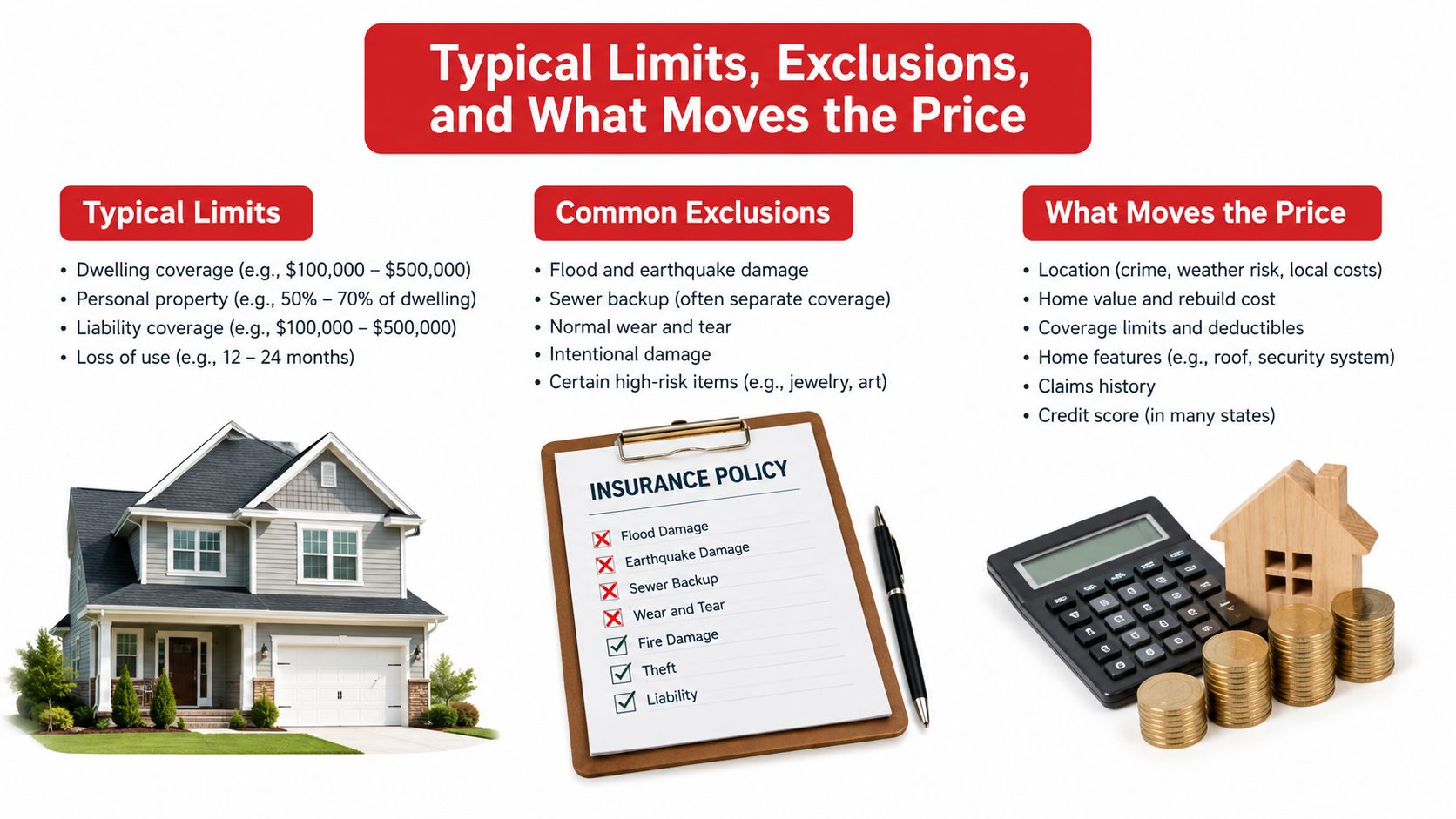
Florida quotes for bobtail coverage usually come in a wide spread because underwriters aren't just pricing a tractor, they're pricing how disciplined the operation is. The number on the quote matters, but the exclusions matter more. A cheap policy that denies the common claim scenarios is just expensive paper.
The exclusions that actually burn drivers
The usual problem areas are easy to name and easy to miss:
- Physical damage to the tractor: Bobtail liability doesn't repair your truck.
- Cargo loss: No trailer, no cargo coverage from this form.
- Active dispatch: If the load is being hauled under the carrier's authority, the bobtail layer may not apply.
- Business use beyond off-dispatch: Deadhead trips, repositioning, terminal runs, or repair-shop travel can be excluded depending on wording.
- Personal or household use: Some forms are narrow and don't like social or family use at all.
If you want a practical look at broader trucking cost control, the discussion on fleet management cost strategies is useful for the budget side. The insurance takeaway is simpler. A policy that excludes the trip you take is the wrong policy, no matter how low the price is.
What underwriters look at before they quote
They care about operating radius, CDL experience, MVR history, CSA profile, the commodity hauled by the carrier, and where the tractor lives. A truck based in a high-traffic Florida metro gets a different risk read than one parked in a quieter area. They also care about whether the operation is cleanly leased, because sloppy lease wording creates messy claims.
The best way to lower the cost is to stop creating claim ambiguity.
Deductible choices matter too, but don't let that distract you from the main point. Physical-damage coverage is a separate purchase, and if you finance the tractor, you usually don't get to ignore it just because you bought bobtail liability. Bobtail protects against third-party liability gaps, not your own equipment.
How to Get a Quote and What to Ask Before You Bind
Bring the right paperwork first, or you'll get a sloppy quote. A strong underwriter wants the CDL, MVR, loss runs, lease agreement, the carrier's primary liability summary, and tractor details. If you're missing those, the quote can still get written, but it won't be reliable enough to trust at binding time.
The questions that should be answered in writing
Before you bind, force these answers onto the record:
- When does dispatch begin and end?
- Are deadhead miles covered, or excluded?
- What permissive-use rules apply?
- Is the carrier's policy primary during dispatch?
If the lease and the declarations page don't say the same thing, assume you've got a gap. That's how claims get denied, shifted, or delayed while everyone argues about who controlled the tractor.
For owner-operators shopping their own setup, the internal page on owner-operator semi truck insurance is the right place to start organizing the file. For a single leased driver with a clean record, an independent Florida agency can usually turn around a quote fast once the paperwork is complete. For a small fleet, the conversation expands to certificates, contract wording, and whether the master policy and the lease are coordinated correctly.
What the timeline usually looks like
Once the lease, loss history, and vehicle data are in hand, most quotes come back in one to three business days. Don't drag this out. A day spent guessing is a day you can't prove the coverage stack is aligned.
Common Questions Florida Drivers Ask About Bobtail Coverage
Deadheading home after a delivery is the first question drivers ask because it feels like obvious “work time.” The answer depends on how the policy defines off-dispatch use and what the lease says about the end of the load. If the truck is still within carrier control, the bobtail form may not be the layer you want.
Driving to fuel or a repair shop creates the same problem. Those trips are often business-related even without a trailer, so the policy wording has to be read against the actual trip purpose, not the empty fifth wheel. If the trip is tied to carrier work, the dispatch language controls the outcome.
If you're leased on but running a separate account under your own authority, don't guess. The authority in force at the time of the trip matters more than the truck's label on the lease. That's the exact moment where coverage can split between your own policy and the carrier's program.
Bobtail and non-trucking liability are not always the same thing when a policy is tested at claim time. If you just want to drive the truck on weekends, the policy has to say it covers personal use, not just empty miles. The declarations page, exclusions, and lease all need to agree.
Keep this checklist on the cab file today. Review the lease, confirm the dispatch wording, request the covered territory in writing, and save the declarations page with the policy. That's the fastest way to catch a bad fit before a loss exposes it.
Select Insurance Group, Inc. helps Florida owner-operators and fleets compare trucking coverage, including bobtail and other liability layers, so the policy lines up with the lease instead of fighting it at claim time. If you need a straight answer on how your dispatch status, vehicle weight, and operating authority affect the coverage you should buy, visit Select Insurance Group, Inc. and request a quote review.