
You finally get the keys. The porch catches the evening breeze, the marsh looks exactly the way you hoped it would, and for a moment it feels like you bought a piece of Charleston life the right way. Then the insurance paperwork lands in your inbox and the mood changes. You start seeing terms like named storm deductible, wind exclusion, flood policy, and separate coverage forms. That's usually when new coastal homeowners realize they're not buying one simple policy.
That confusion is normal. Coastal home insurance Charleston SC isn't built like inland homeowners coverage. On the Lowcountry coast, the question isn't just “How much is my premium?” It's “What exactly is covered, what is carved out, and what would I have to pay myself after a storm?”
Most mistakes happen because people assume their homeowners policy covers “storm damage” in one clean package. In Charleston, that assumption can leave major holes. A home can be protected against fire and theft, partially restricted for wind, and completely uncovered for flood unless the policies are built correctly from the start.
The good news is that the market is more workable than many buyers expect. There are more private options than there used to be, and that gives homeowners room to compare structure, deductible choices, and pricing instead of defaulting to a last-resort option.
Your Guide to Protecting Your Charleston Dream Home
A lot of Charleston buyers arrive at the same point. They've made peace with higher maintenance, salt air, and storm prep. What still catches them off guard is that insurance on the coast is less like buying a single product and more like assembling a protection plan.
A new owner in Mount Pleasant, James Island, West Ashley near the water, or one of the barrier island communities often starts with a simple expectation. They want one policy for the house. That works in many inland markets. It often doesn't work cleanly near the coast.
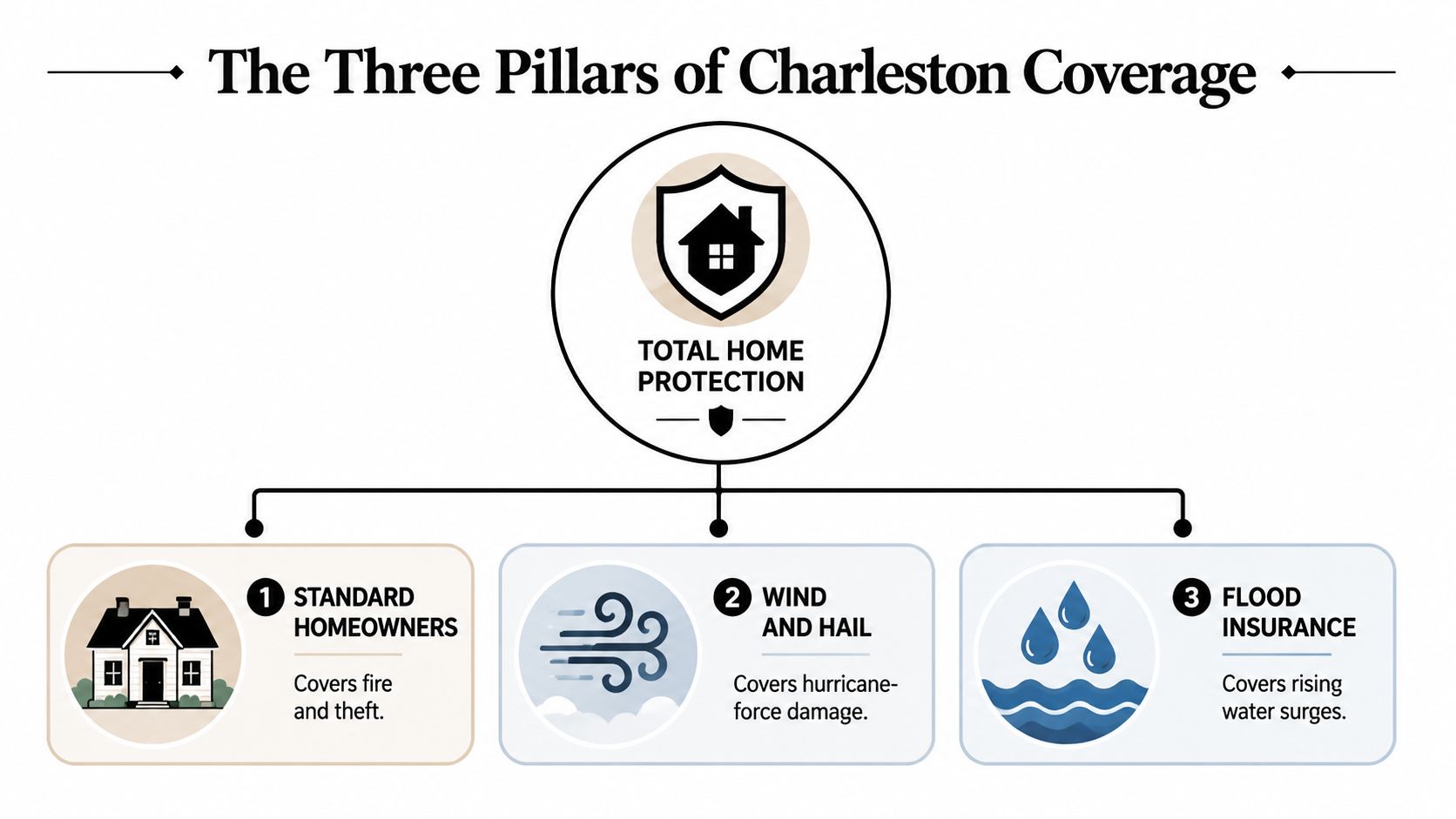
The practical reality is that your protection usually needs to account for three separate loss categories:
- Standard homeowners losses like fire, theft, liability, and certain water damage from covered causes
- Wind and hail losses tied to tropical systems and severe coastal weather
- Flood losses from rising water, storm surge, or inundation
Coastal insurance works best when you treat it like a system, not a single form.
That shift in mindset matters. Once you stop asking for “a home insurance quote” and start asking how the home, wind, and flood pieces fit together, the process gets clearer. You can compare options intelligently, spot dangerous exclusions, and avoid paying for overlap you don't need.
Charleston homeowners don't need scare tactics. They need plain language, realistic examples, and someone who understands what causes claim problems on the coast. That means reading deductibles carefully, checking whether wind is included or carved out, and never assuming flood comes with the homeowners policy.
Why Charleston Home Insurance Is Fundamentally Different
Charleston coastal coverage works like a three-legged stool. If one leg is missing, the whole thing becomes unstable. You may still have insurance on paper, but you won't have a complete protection strategy.
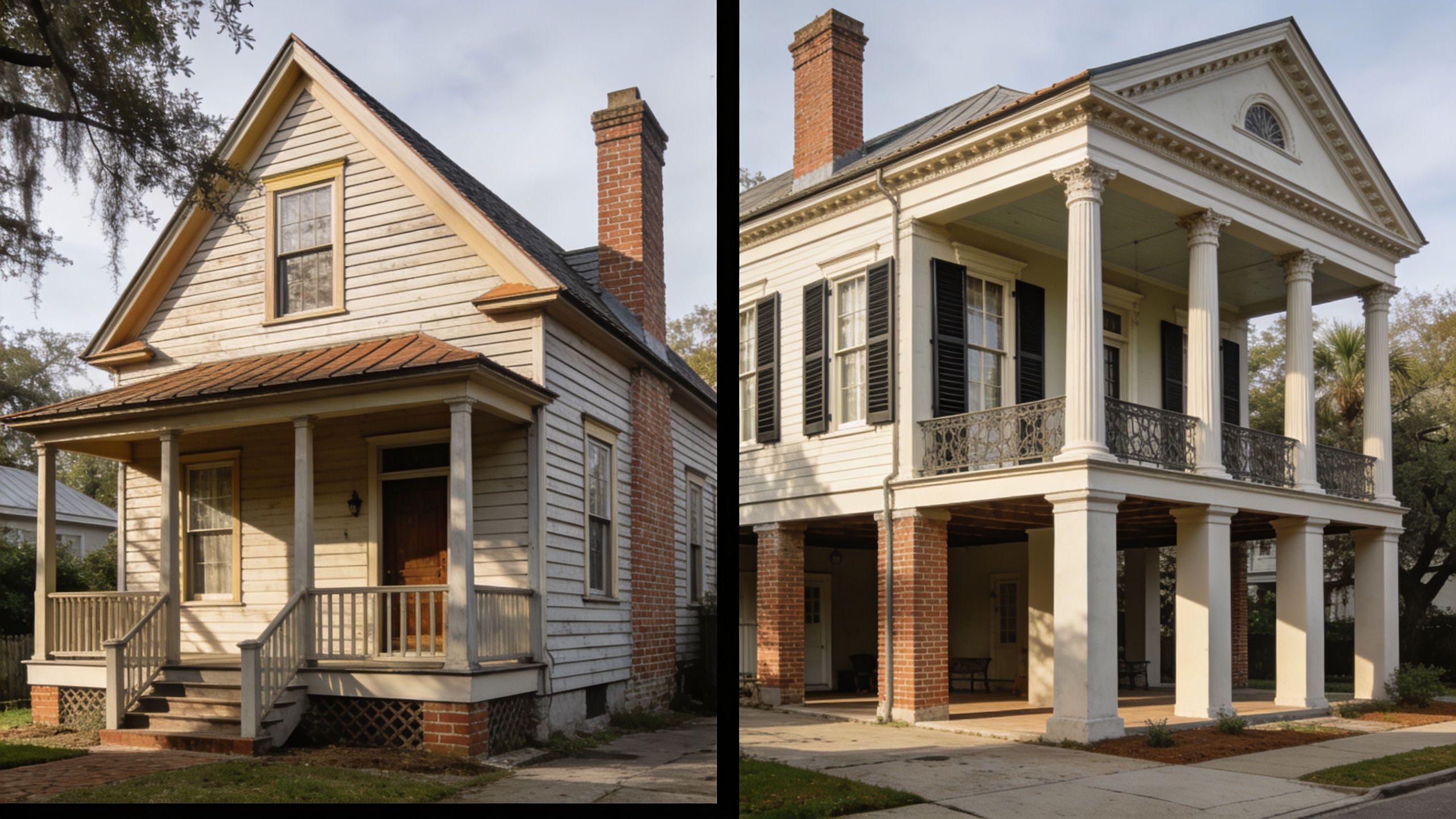
The first leg is standard homeowners coverage
This is the familiar part. A traditional homeowners policy is built to handle core property and liability risks. Think kitchen fire, theft, a fallen tree from a covered peril, or someone getting injured on your property.
That policy still matters on the coast. It's the foundation for dwelling coverage, personal property, liability, and living expense protection after certain covered losses. But it doesn't do everything, and that's where many Charleston buyers get tripped up.
The second and third legs are wind and flood
On the coast, insurers often separate the weather risks people care about most. Wind may be included with special deductibles, limited, or written through a separate policy. Flood is the biggest blind spot of all.
Standard homeowners policies explicitly exclude flood coverage, which is a serious gap in a flood-prone market like Charleston. After Hurricane Florence in 2018, South Carolina coastal claims topped 20,000, and flooding accounted for 70% of damages not covered by standard policies, according to guidance on South Carolina homeowners insurance gaps.
If water rises from outside the home and enters the structure, don't assume your homeowners policy will respond. That's usually a flood claim, not a homeowners claim.
Why this matters in day-to-day decisions
A homeowner can look fully insured at closing and still be exposed in the most common coastal loss scenarios. That happens when:
- Wind isn't reviewed carefully and the buyer assumes storm damage falls under the same deductible as other losses
- Flood is skipped entirely because the buyer isn't required by a lender to carry it
- Policies are quoted separately but not coordinated so deductibles, exclusions, and limits don't line up
Charleston doesn't forgive casual insurance planning. The homes are valuable, the weather risk is real, and rebuilding after a coastal loss is complicated. The right approach is layered protection, with each policy filling a specific role.
Deconstructing Your Coverage The Three Essential Policies
The easiest way to understand coastal home insurance Charleston SC is to stop thinking in terms of “my insurance policy” and start thinking in terms of three jobs that need to be done. Each policy handles a different job. None of them replaces the others.
Homeowners policy
Your homeowners policy is the general contractor of the insurance package. It handles the broad, everyday exposures that have nothing to do with rising water and may or may not include wind in the way you expect.
This policy usually addresses things like:
- Dwelling damage from covered perils such as fire
- Personal property losses after covered events like theft
- Personal liability if someone is injured and you're legally responsible
- Loss of use when a covered claim makes the home temporarily unlivable
What it doesn't do is just as important. It does not replace flood insurance, and it shouldn't be assumed to solve every storm-related loss automatically.
Wind and hail coverage
This is the policy or policy component that Charleston homeowners need to inspect line by line. In some cases, wind and hail is embedded in the homeowners form with a separate named storm deductible. In others, it's handled through a separate market.
Years ago, many coastal owners leaned more heavily on the state's residual market. That's changing. The South Carolina Wind and Hail Underwriting Association has seen a 66.7% drop in policy count since its 2011 peak, and Charleston County alone shed more than 7,000 policies, a sign that the private market is offering more options for coastal wind coverage, according to the 2025 South Carolina coastal property report.
That matters because a healthier private market usually means more room to compare:
- deductible structures
- eligibility rules
- coverage forms
- premium differences
- whether one carrier can package home and wind together
A wind quote isn't just about price. It's about how the deductible triggers, how the policy defines storm loss, and whether the rest of your insurance package fits around it.
Flood insurance
Flood insurance handles a peril your homeowners policy leaves out. On the coast, that makes it less of an optional extra and more of a core planning decision.
For many Charleston homes, the comparison is between NFIP flood coverage and private flood insurance. The better fit depends on the property, loan requirements, desired limits, and how the rest of the package is being built. Some homeowners prefer the familiarity of the NFIP route. Others want to look at private flood options when flexibility matters.
Here's the practical takeaway. Your flood quote should never be treated as an afterthought after the home policy is bound. It needs to be part of the quoting conversation from the beginning, right alongside home and wind.
How the three policies should work together
A solid package should answer three plain questions:
| Coverage piece | Main role | Main gap if missing |
|---|---|---|
| Homeowners | Covers core property and liability risks | You're exposed to common non-flood, non-specialized losses |
| Wind and hail | Covers coastal wind-related loss subject to policy terms | Storm damage may be excluded, limited, or badly misunderstood |
| Flood | Covers rising water and inundation | Water damage from flood can become an uninsured loss |
If one piece is weak, the entire plan is weaker than it looks on the declarations page.
The Real Cost Understanding Deductibles and Premiums
A Charleston buyer can feel fully insured at closing and still be underprepared for the first named storm. The reason is simple. The annual premium gets attention, but the deductible structure decides how much cash you may need on short notice when wind or flood damage hits.
That matters even more here because coastal insurance is usually built across three separate policies. You are not evaluating one price tag. You are evaluating a home premium, a wind setup, and a flood premium, along with the out-of-pocket amount attached to each one.
Why hurricane deductibles catch homeowners off guard
A standard homeowners deductible is usually a fixed dollar amount. Hurricane deductibles often work as a percentage of the dwelling limit instead.
In Charleston, that difference is not small. A percentage deductible can turn a policy that looks affordable on paper into a policy that requires a large check after a storm. On a $500,000 home, a 5% windstorm deductible means the homeowner pays $25,000 before coverage begins for that storm loss, as explained in this Charleston-area hurricane deductible overview.
I explain it to clients this way. A percentage deductible works like a gate, not a co-pay. Until you cover your share first, the claim money does not start flowing.
Hurricane deductible out-of-pocket cost example
| Insured Home Value | 2% Deductible | 5% Deductible |
|---|---|---|
| $500,000 | $10,000 | $25,000 |
That is why the cheapest quote is often the most expensive mistake.
The deductible question that belongs in every quote review
Buyers often ask, “What is the annual premium?” They should also ask, “Which policy applies to this loss, and what deductible comes with it?”
That second question matters because the answer may change depending on whether the damage came from wind, from flood, or from a non-storm property loss. A clean quote review should show all three policies side by side, with each deductible spelled out in plain English. If that comparison is missing, you are not really comparing quotes.
Practical rule: If paying the deductible would strain your emergency reserves, the lower premium may be a poor fit for your household.
What drives premiums on the Charleston coast
Premiums vary widely here because carriers are pricing storm exposure, rebuilding cost, and policy structure at the same time.
Several factors usually move the number up or down:
- Location and storm exposure affect how a carrier prices wind and water risk
- Roof age and construction details can change both eligibility and rate
- How the package is built matters, especially if wind is written separately from the home policy
- Deductible selection shifts cost between the annual premium and your claim-time responsibility
- Coverage limits affect both premium and the dollar impact of a percentage deductible
The private market has become more competitive than many homeowners expect, but only if the quote is built correctly. One carrier may look expensive on the home policy and very reasonable on wind. Another may be the opposite. The savings show up when an independent agent shops the full package instead of treating home, wind, and flood as separate errands.
Premium alone does not tell you what the policy will cost you
Two Charleston homes can carry similar annual premiums and leave their owners in very different positions after a hurricane. One policyholder may face a deductible that is manageable from savings. The other may discover too late that the lower premium came with a much larger storm deductible and a weaker overall setup.
That is the part many new coastal homeowners miss. Insurance cost is not just what you pay each year. It is what you pay each year, plus what you may have to absorb yourself when the weather turns against you.
How to Lower Your Coastal Home Insurance Costs
A Charleston buyer closes on a house near the water, sees one premium that looks manageable, and assumes the insurance problem is solved. Then the wind quote arrives, flood gets added late, and the total jumps. I see that pattern all the time. The owners who keep costs under control usually do one thing differently. They shop the full three-policy setup early and make the house easier for coastal underwriters to say yes to.

Start with what the underwriter will inspect first
On the Lowcountry coast, roof age can matter almost as much as the rest of the application. An older roof can limit which private carriers will even quote the home. A newer roof, with permit records and clear photos, often opens more doors.
Opening protection matters too. Shutters, impact-rated openings, strengthened garage doors, and documented wind-mitigation work can improve both eligibility and price. The key word is documented. If the carrier cannot verify the upgrade, it often will not credit it.
This part is practical, not glamorous. Spend money first on the features that reduce storm loss and improve insurability. Cosmetic projects rarely help your premium. Roof, openings, drainage, and mitigation paperwork often do.
Choose deductibles with a plan
Deductibles are one of the few parts of the package you can actively shape. Charleston homeowners can use these options to save a little on premium, though they may take on far more risk than they intended.
A standard deductible handles the smaller, more routine claims. A hurricane or wind deductible is a different animal on the coast. It can be a percentage of the dwelling limit, which means the out-of-pocket number rises with the value of the home. On a higher-value property, that deductible can feel less like a speed bump and more like writing a second check right after the storm.
The right move is to match the deductible to your actual cash reserves, not your optimism. If a storm hit next month, could you comfortably fund that amount and still handle temporary housing, tree removal, or other costs that do not always get reimbursed the way people expect?
Quote the package together, even if the policies end up with different carriers
Charleston owners often leave money on the table through their insurance choices. They shop homeowners coverage, then look at wind later, then treat flood like a closing requirement. That approach often produces a mismatched package with avoidable gaps, missed credits, or an expensive wind placement that wipes out any savings from the home policy.
A coordinated quote review works better because the three policies affect each other in real life:
- Homeowners eligibility can depend on roof age, updates, and prior losses
- Wind pricing can change sharply based on distance to water, construction, and mitigation details
- Flood cost can shift with elevation-related factors and prior flood history
- Credits and exclusions only make sense when you compare all three policies side by side
One carrier may be competitive on the homeowners policy and weak on wind. Another may solve the wind piece but offer a poor fit for the main home policy. The goal is not one bill. The goal is a package that holds together at a fair total cost.
Avoid the cost-cutting moves that usually backfire
A few decisions create problems again and again:
- Buying the cheapest home policy without checking the wind setup
- Letting flood wait until the lender asks for it
- Assuming required coverage is enough coverage
- Choosing a high hurricane deductible without keeping that amount in reserve
- Failing to provide mitigation documents, roof records, or prior declarations pages
I tell new coastal homeowners to treat insurance like rebuilding a dock after a storm. The lowest bid is rarely the best value if the pilings are wrong. Coastal insurance works the same way. Lower costs come from a stronger house, cleaner documentation, and a properly quoted three-policy package through an independent agent who can compare the private market instead of forcing each policy into a separate errand.
How to Find the Best Insurance Quotes in Charleston
Shopping Charleston insurance well is less about filling out more forms and more about approaching the market in the right order. The goal isn't to get “a quote.” The goal is to get a quote package that makes sense across homeowners, wind, and flood.
Gather the right information before quoting
A clean submission gets better traction with coastal carriers. Before you start, have these details ready if available:
- Property details: Year built, roof age, updates, square footage, and any known prior loss history
- Mitigation information: Shutters, impact protection, roof improvements, and other storm-hardening features
- Flood-related documents: Any prior flood policy information and elevation-related documentation if applicable
- Current declarations pages: If you already have coverage, these help compare apples to apples
This step matters because coastal underwriting is detail-sensitive. Missing information can produce weak quotes, delayed approvals, or misleading comparisons.
Why an independent approach matters more now
The Charleston coastal market is not as frozen as many homeowners assume. Approved rate filings show average coastal premium increases slowing, and legislative reforms are bringing more private insurers back to the coast, according to the Independent Insurance Agents and Brokers of South Carolina discussion of the coastal market.
That shift changes the shopping strategy. In a tight market, you may have very few places to go. In a stabilizing market, comparison becomes more valuable because different carriers can view the same home very differently.
An independent agency can matter here because it can compare multiple carriers rather than forcing every property into one company's appetite. Select Insurance Group, Inc. is one example of that model, offering South Carolina homeowners access to quotes from multiple carriers through one process.
What to ask during the quote review
Don't stop at “What's the premium?” Ask for plain answers to the issues that decide whether the policy works.
Use questions like these:
- Is wind included in this homeowners policy, or written separately?
- What deductible applies for a named storm or hurricane loss?
- Is flood being quoted at the same time, or am I still exposed?
- What endorsements or exclusions should I pay attention to?
- If I choose the cheaper option, what am I giving up?
The best quote review sounds less like a sales pitch and more like a contractor walking you through a blueprint.
How homeowners leave money on the table
The biggest pricing mistakes usually come from process, not bad luck. Homeowners overpay when they go direct to one carrier, compare non-matching quotes, or let closing deadlines force quick decisions.
A better method is simple. Gather the property facts, quote all three policy categories together, compare deductible exposure alongside premium, and make sure the final package matches the actual way coastal losses happen in Charleston.
Secure Your Peace of Mind on the Coast
Owning a home in Charleston comes with trade-offs you can see and trade-offs you can't. You expect salt air, higher maintenance, and storm prep. Insurance is the less visible part, but it's the one that can do the most financial damage if it's built incorrectly.
The core lesson is straightforward. Coastal home insurance Charleston SC is usually a three-policy decision, not a one-policy purchase. Your homeowners policy handles the everyday foundation. Wind coverage deals with the coastal storm threat. Flood coverage fills the gap that standard homeowners insurance leaves open.
The second lesson is just as important. Deductibles deserve as much attention as premiums. A policy that looks affordable at renewal can become expensive very quickly after a named storm if the out-of-pocket share is larger than your emergency reserves.
Charleston homeowners do best when they plan early, document the home well, and compare the full package instead of shopping each piece in isolation. That approach won't remove coastal risk, but it will make the risk understandable and manageable.
If you want a second set of eyes on your current Charleston home, wind, and flood setup, Select Insurance Group, Inc. can help you review the moving parts and compare practical quote options without an obligation to buy.