
Clarksville homeowners can expect an average annual premium around $4,185, or about $349 per month, but your actual cost depends heavily on the home's replacement cost, coverage limits, deductibles, and flood exposure. A policy that looks inexpensive may only insure less of the house or leave rising-water damage outside the policy.
Clarksville home insurance has become a coverage decision, not just a price-shopping exercise. Tennessee homeowners are dealing with higher premiums, severe-weather exposure, and a flood risk that standard homeowners insurance generally doesn't cover. The right policy should reflect what it would take to rebuild your home, replace your belongings, protect your finances, and address water risks around the Cumberland River corridor.
The most useful approach is to compare quotes on equal terms. Keep the dwelling limit, deductible structure, roof coverage, liability limits, and flood protection consistent before deciding which premium offers the better value.
Table of Contents
- Understanding Clarksville Home Insurance Costs
- Essential Homeowners Coverage Types Explained
- Navigating Clarksville-Specific Flood Risks
- Maximizing Your Policy with Replacement Cost
- How to Get and Compare Insurance Quotes
- Smart Strategies to Lower Your Premiums
Understanding Clarksville Home Insurance Costs
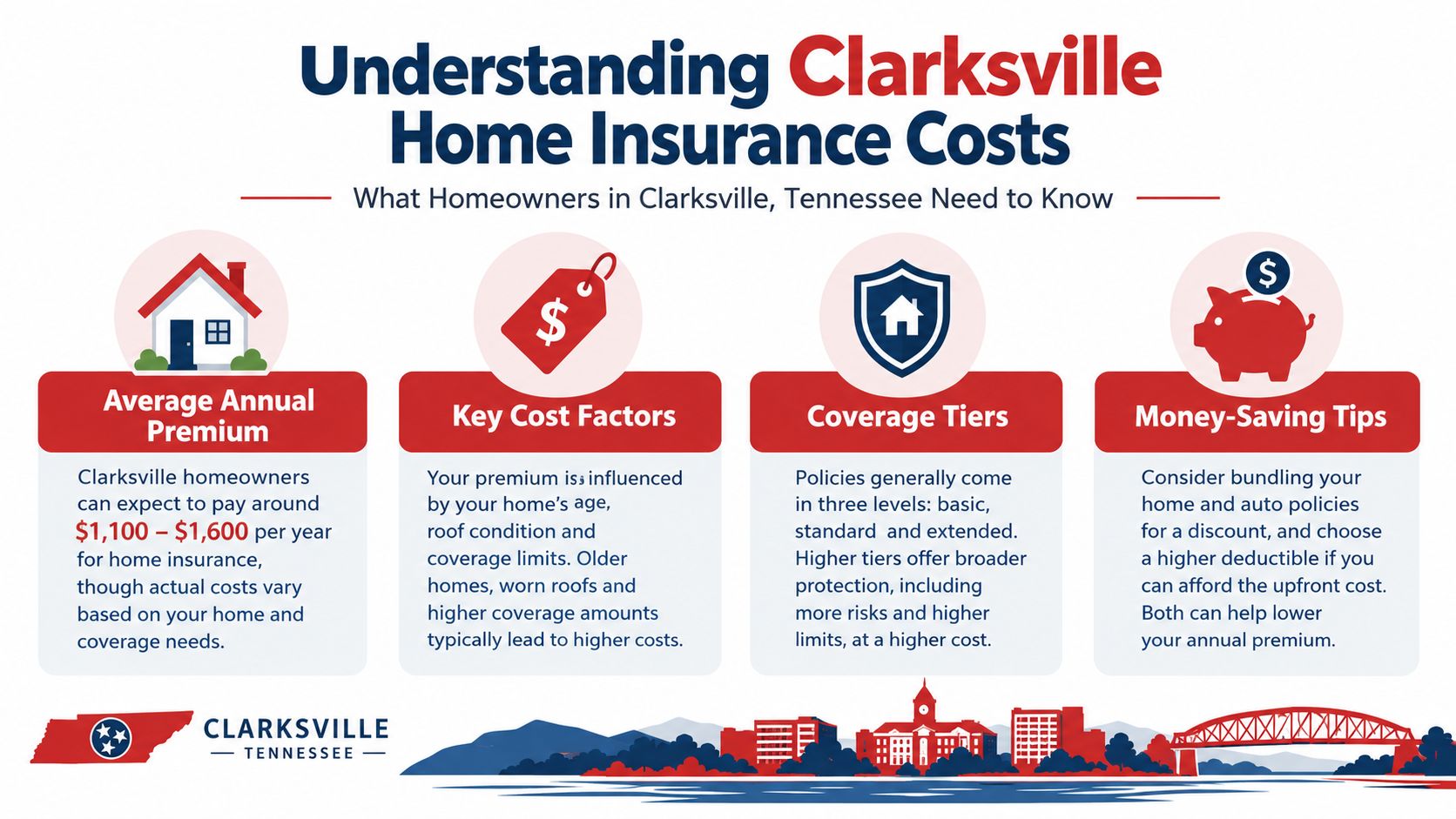
The $4,185 typical annual premium for Clarksville provides a useful starting point for 2026 planning, but it isn't a promise of what every household will pay. That figure, reported as about $349 per month, belongs beside the property details that drive underwriting, including the home's age, roof condition, construction features, location, claims history, and selected dwelling limit. A newer home with a sound roof and modest rebuilding needs can produce a very different quote from an older property with higher replacement costs.
The broader Tennessee market helps explain why local prices deserve careful scrutiny. One industry summary reported an average HO-3 premium of $1,368 per year in 2021, which was 5.6% higher than the prior year. A separate 2026 analysis estimated the average Tennessee premium for a $400,000 home at $3,757 per year, or about $313 per month, and reported that statewide rates had increased about 43% from 2019 to 2025. These are different benchmarks, based on different property and policy assumptions, so they shouldn't be treated as competing quotes. They show how much the underlying market has moved.
Why two Clarksville quotes can look far apart
MoneyGeek's Tennessee data places Clarksville around $2,917 annually on average, while also identifying Tennessee as the 17th most expensive state for home insurance. That contrast isn't necessarily an error. A local average can look moderate while statewide weather losses, tornadoes, severe storms, and flooding continue to put upward pressure on rates.
Dwelling limits are one of the largest reasons premiums diverge. A 2026 Tennessee analysis found average annual premiums of $1,790 for $100,000 in dwelling protection compared with $4,959 for $500,000. The figures aren't a Clarksville-specific quote, but they demonstrate why “cheap” coverage may reflect a smaller insured structure rather than a better deal.
Before comparing insurers, ask each one to show:
- Dwelling limit: Does it reflect a realistic rebuild estimate rather than the home's sale price?
- Deductibles: Is the deductible affordable after a major storm?
- Roof terms: Does the policy use replacement cost or actual cash value for the roof?
- Water exclusions: Is flood insurance separate from the homeowners policy?
- Limits and endorsements: Are valuables, detached structures, and additional living expenses adequately addressed?
For a second local reference point, review the coverage structure described in Tennessee home insurance guidance, then ask an agent to explain every difference between that framework and your proposed policy. The goal isn't to chase the lowest number. It's to identify the quote that still works when repair costs, deductibles, and excluded perils become real.
Essential Homeowners Coverage Types Explained
A homeowners policy works best when you understand what each coverage is supposed to do. The declarations page may show one total premium, but the contract is built from separate protections that respond to different losses.
Start with the house itself
Dwelling coverage pays toward repairing or rebuilding the insured structure after a covered loss, subject to the policy terms and limit. It generally applies to the main house and permanently attached components, such as attached garages. The limit should be based on the cost to rebuild with similar materials and quality, not just on the property's market value.
Other structures coverage addresses qualifying detached structures, such as a detached garage, shed, or certain fencing. If you have improvements that would be expensive to rebuild, don't assume the standard limit is automatically sufficient. Ask how the policy treats each structure and whether a scheduled or increased limit is available.
Protect the contents and your finances
Personal property coverage helps replace or repair covered belongings, including furniture, clothing, electronics, and household equipment. Inventorying your possessions before a loss makes the claims process easier. Photograph rooms, save receipts for significant purchases, and ask about special limits for jewelry, collectibles, firearms, business property, or high-value equipment.
Personal liability coverage protects you when a covered incident creates a legal or financial claim against you. A guest's injury, damage caused to another person's property, or an incident involving the premises can create costs far beyond the physical damage to your house. The policy's exclusions matter, so treat liability as a risk-management decision rather than an afterthought.
Additional living expenses can help with eligible temporary housing and related costs when a covered loss makes the home uninhabitable. Ask what expenses qualify, how documentation works, and whether the limit is appropriate for your household's needs.
Practical rule: Never compare a premium without comparing the coverage limits and exclusions beside it.
Water damage and fallen trees also create confusion. A burst pipe may be treated differently from rising floodwater, and a tree claim can depend on what caused the tree to fall, what was damaged, and what the policy excludes. For a plain-language discussion of one commonly misunderstood situation, review this resource on homeowners insurance for fallen trees. Use it as a prompt for questions, then rely on your own policy wording and agent's explanation.
Navigating Clarksville-Specific Flood Risks
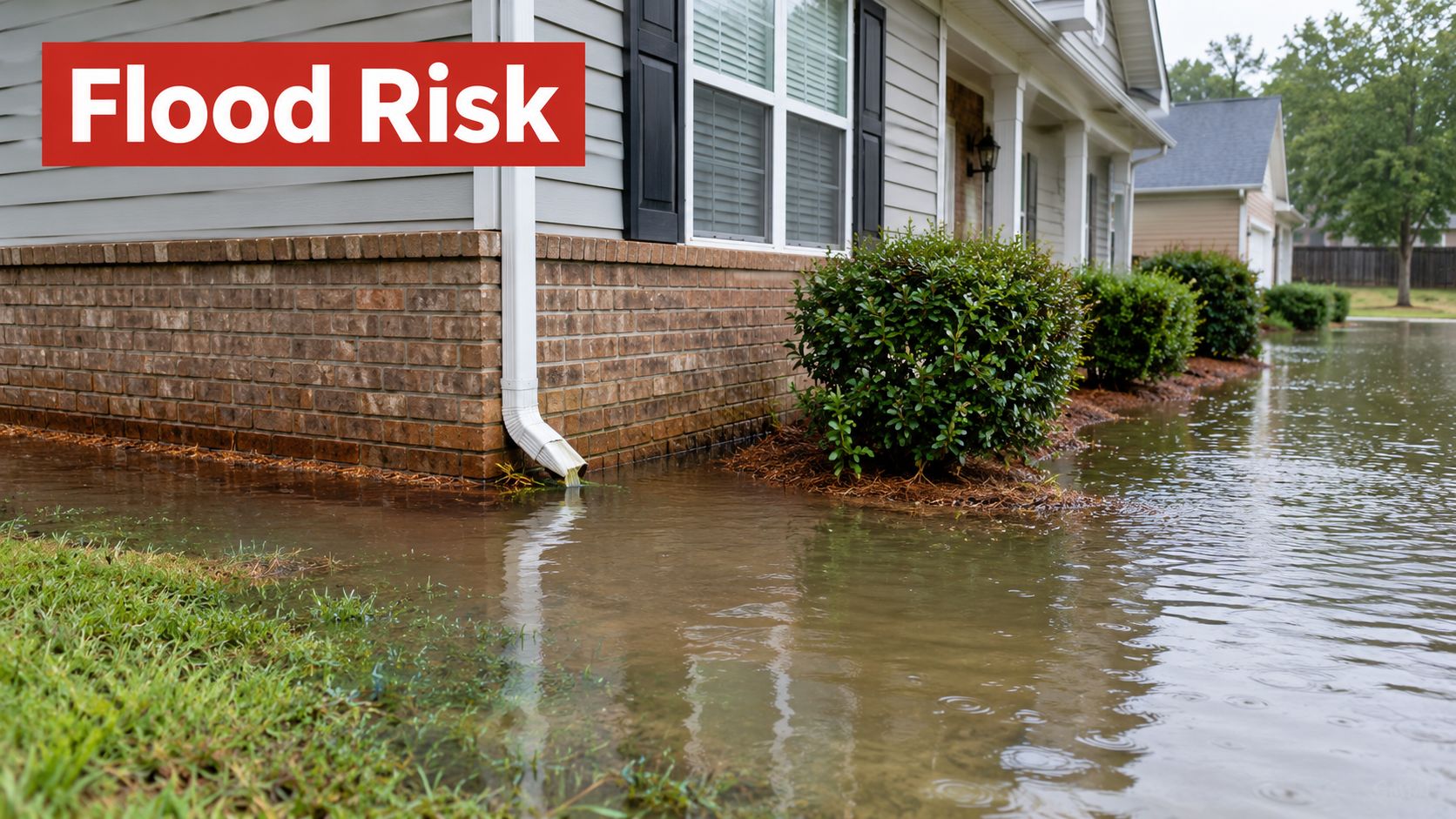
The most important coverage distinction for many Clarksville homeowners is simple: standard homeowners insurance doesn't cover flood damage. Water entering from rising rivers, overflow, or other external flooding isn't treated the same way as a sudden internal plumbing failure. Buying a homeowners policy and assuming all water losses are included can leave a serious gap.
Clarksville sits near the Cumberland River corridor, and low-lying properties can face water-loss exposure that a normal home policy won't address. Tennessee guidance recommends separate flood insurance for homes exposed to river overflow and other rising-water hazards. The practical implication is local. A homeowner should evaluate the property's drainage, elevation, nearby waterways, and floodplain status rather than relying only on a general statement that the house is in Tennessee.
Flood zone status isn't the whole decision
Clarksville confirms that it participates in the National Flood Insurance Program, and property owners can buy NFIP coverage. Lenders may require flood insurance for properties in mapped floodplains, but any Clarksville property owner can purchase it voluntarily. The city also makes the important point that reduced risk still means some risk. Being outside a mapped high-risk area doesn't mean flood damage is covered by the standard homeowners policy, and it doesn't eliminate the value of evaluating separate protection. (Clarksville's flood information and NFIP guidance)
A local review should answer more than “Am I in a flood zone?” Ask:
- Water source: Could river overflow, creek overflow, storm runoff, or flash flooding affect the lot?
- Lender requirement: Does the mortgage company require a separate flood policy?
- Building exposure: Are mechanical systems, finished areas, storage, or important equipment located near ground level?
- Policy design: What does the flood policy cover for the building and contents, and what exclusions apply?
- Waiting and documentation: When does coverage become effective, and what records should you keep?
Independent Clarksville risk reporting gives a directional annual NFIP premium estimate of around $2,091 and associates mapped exposure with Zone A and Zone AE. That isn't a quote for your property, and flood pricing depends on property-specific characteristics and selected coverage. It does show why flood protection can materially change the total insurance budget, particularly when a base homeowners premium already approaches the local average.
Flood insurance also deserves comparison rather than automatic acceptance. NFIP coverage and private flood coverage can differ in limits, exclusions, claims handling, and eligibility. Ask an agent to place the options side by side, and don't cancel an existing policy until replacement coverage is active and its terms are understood. Homeowners researching broader flood assessment questions can also consult this guide to properties at risk of flooding in Phoenix. The geography differs, but the inspection mindset is useful: assess the property's actual water pathways instead of treating a map label as the entire risk analysis.
For homeowners who also insure property elsewhere in Tennessee, keeping the same questions in view can help. A separate Nashville homeowners insurance overview may provide useful comparison points, but Clarksville's river corridor and individual lot conditions still require a local review.
Maximizing Your Policy with Replacement Cost
A house can sell for one amount and cost a different amount to rebuild. Those figures answer different questions. Market value reflects what a buyer may pay for the land, location, demand, and existing structure. Replacement cost estimates what it would take to repair or rebuild with similar materials and quality, without subtracting depreciation.
Tennessee's consumer guidance makes that distinction central. Replacement cost is the amount needed to rebuild or repair with similar materials and quality without deducting depreciation. Actual cash value, by contrast, reduces the payment for age and wear. (Tennessee replacement cost and actual cash value guidance)
Why the dwelling limit matters
Suppose a roof has aged, interior finishes show wear, and built-in components need replacement after a covered loss. A replacement-cost settlement can be designed around the cost of comparable new materials, subject to the policy conditions. An actual-cash-value settlement may account for depreciation, leaving the homeowner to fund more of the difference.
That distinction affects more than roofs. It can influence flooring, cabinetry, siding, appliances, drywall, and other components that depreciate over time. If your dwelling limit is too low, even replacement-cost wording may not make the policy adequate. If the policy applies actual cash value to certain property, you need to know that before a claim, not after an adjuster calculates the payment.
Use a practical rebuild review:
- Describe the structure accurately. Record square footage, stories, attached features, foundation type, roof shape, exterior materials, interior finishes, and upgrades.
- Separate land from construction. The land may influence market value, but it doesn't need to be rebuilt after a covered structural loss.
- Document improvements. Keep permits, invoices, photos, and contractor records for renovations, additions, kitchens, baths, and major systems.
- Ask about special limits. Detached structures, debris removal, code-related upgrades, and high-cost materials may need careful review.
- Revisit the limit after changes. A renovation can make an old dwelling limit inadequate even if the home's market value hasn't changed in the same way.
Coverage check: The right question is not “What is my house worth?” Ask, “What would it cost to rebuild this specific structure to a similar standard after a covered loss?”
Roof claims deserve particular attention because wind and hail terms can alter the settlement. Ask whether the roof is covered on a replacement-cost basis, whether an age-related limitation applies, and whether a separate wind or hail deductible appears in the policy. For additional claim-focused discussion about replacement-cost coverage, see For The Public Adjusters' claim guidance.
A strong policy isn't necessarily the one with the largest dwelling limit. Overinsuring can raise the premium without improving protection for risks the contract doesn't cover. The better result comes from an accurate rebuild estimate, clear valuation terms, and enough documentation to support the home's features when a claim is filed.
How to Get and Compare Insurance Quotes
Accurate quotes start with accurate inputs. If you give each insurer different information, the comparison becomes a contest between assumptions rather than policies.
Prepare the property file
Gather the basics before contacting an agent:
- Property details: Address, construction year, square footage, number of floors, foundation, roof age, exterior materials, heating system, and attached structures.
- Safety features: Smoke alarms, security systems, sprinkler equipment, updated wiring, plumbing improvements, and storm-related protections.
- Financial and policy history: Current declarations page, prior claims information, mortgage details, and the date you want coverage to begin.
- Household inventory: Approximate values for furniture, electronics, clothing, tools, collectibles, and other significant belongings.
- Flood information: Flood zone details if available, proximity to waterways, drainage concerns, lender requirements, and whether separate flood coverage is already in place.
Don't guess about roof age or renovations if you can verify them. A contractor invoice, inspection report, closing file, or permit record can help an agent place the property in the correct underwriting category.
Compare the contract, not just the price
Request quotes using the same dwelling limit and comparable deductibles. Then review the declarations pages and endorsements line by line. A lower premium may result from a higher deductible, reduced personal-property protection, actual-cash-value treatment for certain components, or exclusions that matter to your home.
Pay special attention to:
- All-peril deductible: What you pay before covered damage is reimbursed.
- Wind and hail terms: Whether a separate deductible or limitation applies.
- Roof settlement: Replacement cost, actual cash value, age restrictions, and matching provisions.
- Liability limit: Whether it reflects your assets, household activities, and property risks.
- Additional living expenses: How the policy responds if the home cannot be occupied.
- Flood separation: Whether rising-water coverage must be purchased separately.
Ask for explanations in writing when a quote changes after inspection or underwriting review. Once you select coverage, save the policy, endorsements, inventory, receipts, and agent correspondence in a location you can access after a storm.
Smart Strategies to Lower Your Premiums
Lowering a Clarksville home insurance premium should start with removing waste, not removing protection. The wrong reduction leaves you with a cheaper policy that cannot rebuild the house or respond to the risks you face.
Start with the policy design. Ask whether combining eligible household policies creates a discount, whether a higher deductible would be manageable, and whether every listed limit still reflects your needs. A higher deductible can reduce the premium, but it shifts more loss cost to you. Choose an amount you could pay without delaying emergency repairs.
Make the home easier to insure
Maintenance also matters. Keep roof records, repair visible hazards, update outdated systems when practical, and document improvements. Clear information can help an agent present the property accurately, while deferred maintenance may create underwriting questions or coverage limitations.
Compare the full package, including:
- Bundling: Ask about combining home and auto coverage, then review the total cost and terms. Related Clarksville auto insurance can be included in that household review.
- Deductible selection: Test several deductible options, but don't choose one that would create financial strain after a storm.
- Coverage audit: Remove obsolete scheduled items and correct inaccurate property details, while keeping limits for current belongings and rebuilding needs.
- Flood planning: Treat separate flood coverage as a risk decision, not as an optional substitute for homeowners insurance. Lowering the base premium doesn't solve an uncovered flood loss.
- Annual review: Recheck the roof, renovations, valuables, household occupancy, and deductible whenever the property changes.
A local agent can also explain why quotes differ and identify whether the difference comes from price, exclusions, valuation, or deductible structure. Ask for a written comparison instead of accepting a single premium figure.
Select Insurance Group, Inc. offers homeowners coverage and quote comparisons for Clarksville residents, with guidance on dwelling protection, personal property, liability, additional living expenses, and related insurance needs. Visit Select Insurance Group, Inc. to request a no-obligation quote and review your homeowners and flood coverage options with an agent.