
You open your renewal and the premium is a lot higher than you expected. Or you're buying a house in San Antonio, the lender wants proof of coverage fast, and every quote looks similar until you start reading the fine print. That's usually the moment homeowners realize they don't just need a policy. They need someone who can explain why one quote costs less, why another covers more, and where the ugly surprises usually hide.
A good San Antonio home insurance agency doesn't just send numbers over email. It asks smart questions, explains what those questions mean, and helps you make a decision you'll still feel good about when a storm hits or a claim comes up. In San Antonio, that matters because the average annual cost of homeowners insurance is $2,365 for $300,000 in dwelling coverage, which is about 23% lower than the Texas average but still about 25% higher than the national average, according to Policygenius' San Antonio homeowners insurance analysis. That's a big enough expense that guessing is expensive.
Table of Contents
- Finding Your San Antonio Insurance Partner
- Independent vs Captive Agents in San Antonio
- How to Compare Quotes Beyond the Bottom Line
- Critical Questions to Vet Any Insurance Agent
- Navigating Essential Texas Coverage Options
- From Quote to Coverage Your Final Checklist
- Frequently Asked Questions
Finding Your San Antonio Insurance Partner
The right agency relationship starts before any quote is issued. It starts with the questions. If an agent asks about your roof age, past claims, whether the home has been updated, or whether you're escrowed through a mortgage company, that isn't small talk. That's how they figure out which carriers are realistic, which endorsements matter, and whether the lowest premium is usable coverage.
Why the first conversation matters
A lot of homeowners get frustrated when an agent asks for details they think should be optional. They aren't. Roof age can affect eligibility. Older plumbing or wiring can affect how a carrier views water or fire risk. Prior claims can change which markets are available. Even the way you occupy the home matters, because a primary residence is usually underwritten differently than a rental or second home.
Practical rule: If an agent gives you a quote with almost no questions asked, slow down and read that quote very carefully.
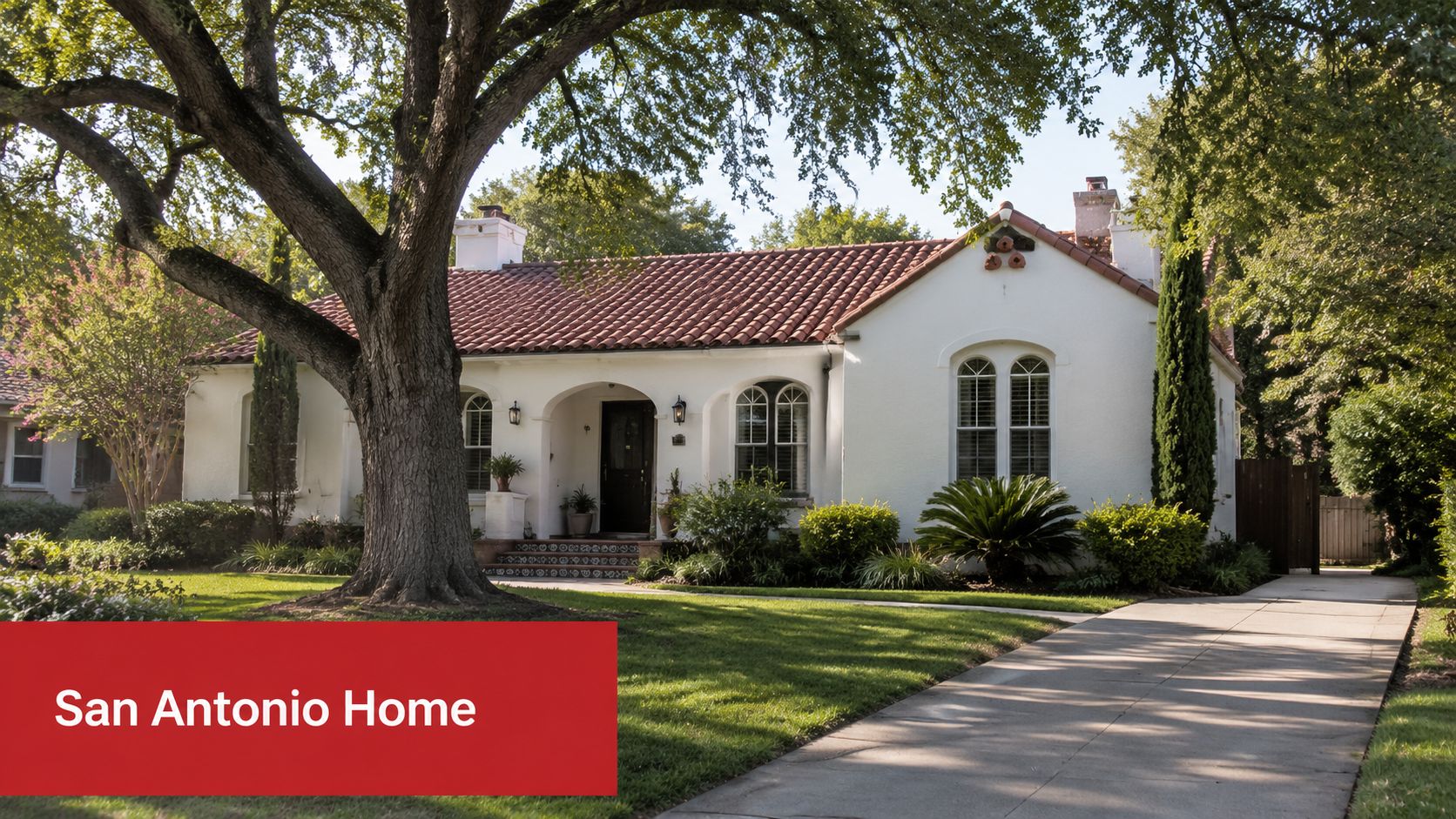
In San Antonio, homes vary a lot by age, construction style, neighborhood conditions, and storm exposure. One house can fit neatly into standard underwriting, while another needs more careful placement because of roof condition, prior loss history, or a coverage gap the owner doesn't know exists yet.
What a strong agency relationship looks like
A strong San Antonio home insurance agency does a few things consistently:
- Explains the reason behind every recommendation. If they suggest a higher deductible, they should explain the trade-off.
- Reviews the dwelling amount carefully. Market value and rebuild cost aren't the same thing.
- Flags exclusions before you buy. The worst time to learn what's not covered is after damage happens.
- Stays available after the sale. Claims questions, lender updates, and policy changes are part of the job.
A weak agency focuses on speed alone. A strong one balances speed with judgment.
That difference becomes obvious when a homeowner says, "I just want the cheapest option." Sometimes that works. Often it doesn't. The better answer is, "Let's find the lowest price that still protects the house the way it needs to be protected."
Independent vs Captive Agents in San Antonio
Some homeowners start shopping without realizing there are two very different agency models in front of them. That matters, because the model affects how many options you're seeing before you ever compare a quote.
How the two models work
A captive agent represents one insurance company. That setup can be straightforward. The systems are usually simple, the branding is familiar, and the agent knows that company's products in detail.
An independent agent works with multiple carriers. That means the agency can shop your risk with more than one insurer instead of trying to fit every homeowner into one company's guidelines. If you want a plain-English explanation of that model, this overview of what an independent insurance agency is lays it out clearly.
Here's the practical difference:
| Agent type | Main advantage | Main limitation |
|---|---|---|
| Captive | Deep knowledge of one carrier's products | Fewer options if that carrier doesn't like your risk |
| Independent | More flexibility across carriers | Quality depends heavily on how thoroughly the agency compares coverage |
Why that difference matters in practice
In a market like San Antonio, flexibility matters. Underwriting appetite can change quickly. One carrier may like newer roofs and avoid older homes. Another may be more comfortable with certain neighborhoods or construction types. Another may offer a decent premium but come with deductibles or exclusions that make the policy less attractive once you read it.
That doesn't mean captive agents are automatically a bad choice. It means you need to understand what you're getting. If the company they represent has a strong fit for your home, great. If it doesn't, your shopping process may stop too early.
The best setup is the one that gives you a real comparison, not just a fast answer.
Independent agencies tend to be especially useful when your home doesn't fit the easiest underwriting box. That includes older homes, homes with recent updates still in progress, buyers who need help comparing forms, and owners who want one person to explain several options side by side.
A homeowner usually doesn't need more quotes just for the sake of volume. They need enough market access to see meaningful differences in price, coverage structure, and underwriting fit. That's where an independent approach often earns its keep.
How to Compare Quotes Beyond the Bottom Line
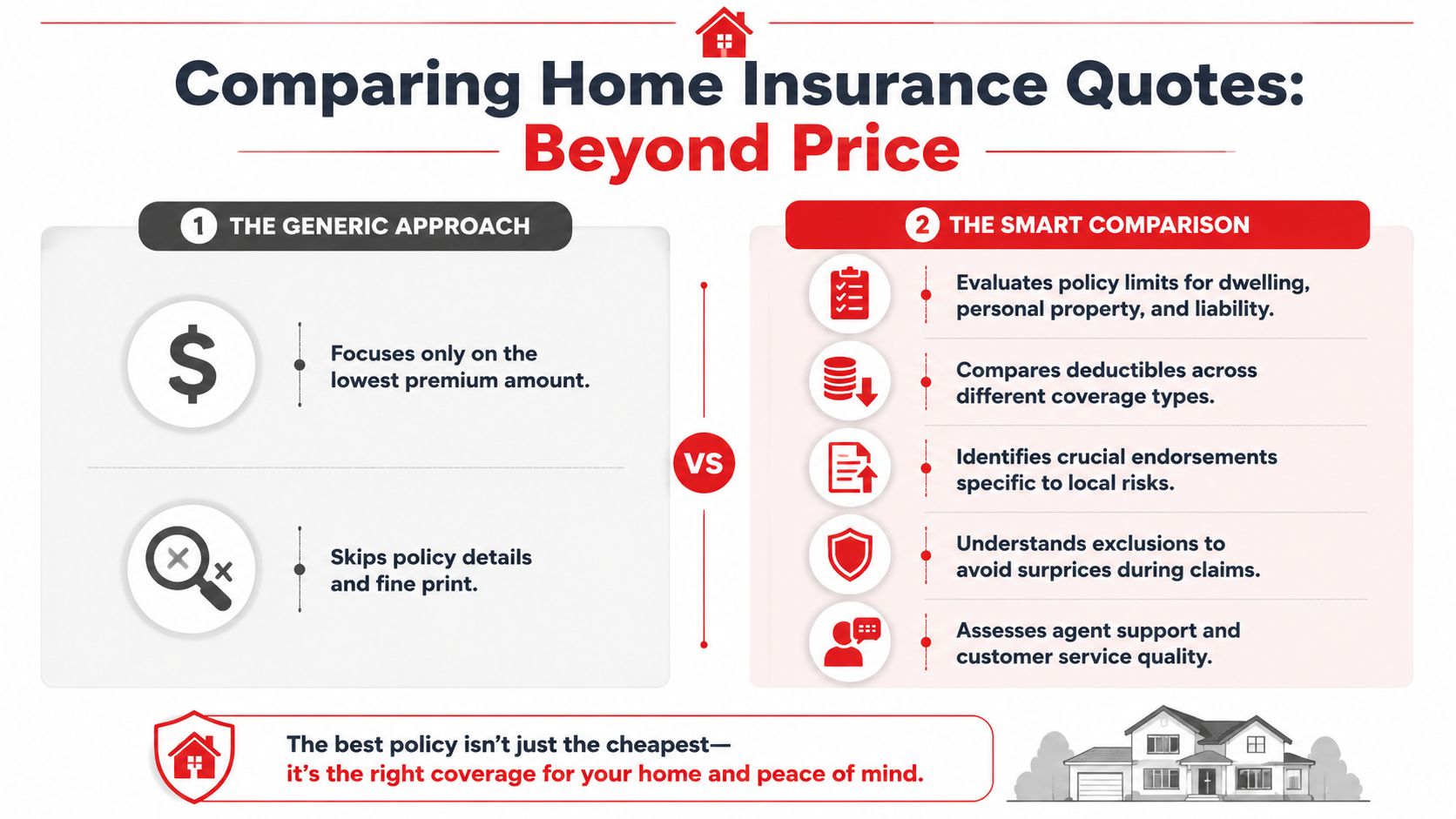
Most quote comparisons go wrong in the same place. The homeowner looks at the premium first, then assumes the lower number means better value. A professional reads the quote in the opposite order. First the structure, then the deductible, then the exclusions, then the premium.
What an agent is really checking
When an experienced agent reviews two quotes that look similar, these are the pressure points:
- Dwelling coverage: Is the house insured for an amount that makes sense for rebuilding, not just purchase price?
- Loss settlement language: Does the policy handle damaged property in a way that leaves you short?
- Deductible structure: Is there one deductible, or is wind and hail handled separately?
- Liability limits: Does the policy give you enough protection if someone is injured on the property?
- Endorsements and exclusions: What's added, and what's carved out?
That roof question homeowners hear so often is tied directly to this process. Roof age can affect premium, eligibility, and how a claim might be adjusted later. If an older roof is involved, the quote needs closer scrutiny, not less.
Where cheap quotes usually fall short
A common source of frustration involves carriers that appear affordable on the surface but are not the right fit. For San Antonio homes built before 1980, the cheapest listed carrier may not be the best value because those homes often bring higher claim risk tied to outdated systems, and many agency pages focus on low price without explaining that trade-off, as noted in Insurify's San Antonio homeowners insurance overview.
If your home is older, an agent's questions about updates are doing real work. They may ask:
- Has the electrical system been updated? Older wiring can change how a carrier views fire exposure.
- What type of plumbing is in place? Older plumbing can increase water loss concerns.
- How old is the roof? Some carriers get much stricter when a roof crosses certain age thresholds.
- Have there been renovations? Updates can improve insurability, but only if they're documented clearly.
A cheap premium can be expensive coverage if the claim settlement, exclusions, or deductible structure don't match the house.
A quick side-by-side review can help:
| Quote feature | Good sign | Warning sign |
|---|---|---|
| Dwelling amount | Agent explains how it was calculated | Agent says to just match market value |
| Roof discussion | Agent asks for age and condition | Agent never mentions it |
| Older home updates | Agent asks about wiring and plumbing | Agent treats all homes the same |
| Deductible review | Agent explains each deductible separately | Agent only highlights the premium |
When you compare quotes, ask the agent to walk line by line through the declaration page. If they can explain each major number and why it was chosen, that's usually a good sign. If they keep steering the conversation back to monthly cost alone, keep shopping.
Critical Questions to Vet Any Insurance Agent
A policy can look fine on paper and still be placed through an agency that disappears the moment you need help. That's why vetting the person matters just as much as vetting the quote.
Questions that reveal how an agency works
Ask direct questions. Good agents don't mind them.
- How do you help clients at claim time? You're listening for a real process, not "call the carrier."
- How often do you review coverage proactively? If the answer is only at renewal when you ask, that's thin service.
- What do you look at first when reviewing a home policy? Their answer tells you whether they think like an advisor or a seller.
- How do you explain deductible differences, especially for storm losses? They should be able to make this simple.
- What kinds of homes are harder to place, and why? An experienced agent will answer without hesitation.
- What documents should I keep ready to make underwriting smoother? Organized agencies usually guide this well.
Then ask a question many homeowners never think to ask: What does your retention look like?
For agencies, retention is one of the clearest signs of whether clients stay because service holds up over time. According to agency financial benchmark data from Brokerage Audit, top-tier client retention runs between 93% and 95%, while the industry average is 84% to 85%, and a rate below 90% can signal underperformance.
What the answers should sound like
You don't need polished sales language. You need clarity.
A strong answer usually sounds like this in substance: the agency explains coverage before binding, reviews renewals, helps gather claim information, and stays involved when something changes with the home or policy. A weak answer sounds vague, rushed, or overly focused on price.
If an agent can't explain their service process in plain language, don't expect the policy to become clearer after you buy it.
You can also pay attention to what they ask you in return. Good agents ask follow-up questions because they are trying to uncover risk. Poor ones rush toward a quote because speed is their sales strategy.
One more test helps. Ask them to explain one recommendation they made and one they chose not to make. That answer tells you whether they can weigh trade-offs or only push whatever is easiest to sell.
Navigating Essential Texas Coverage Options
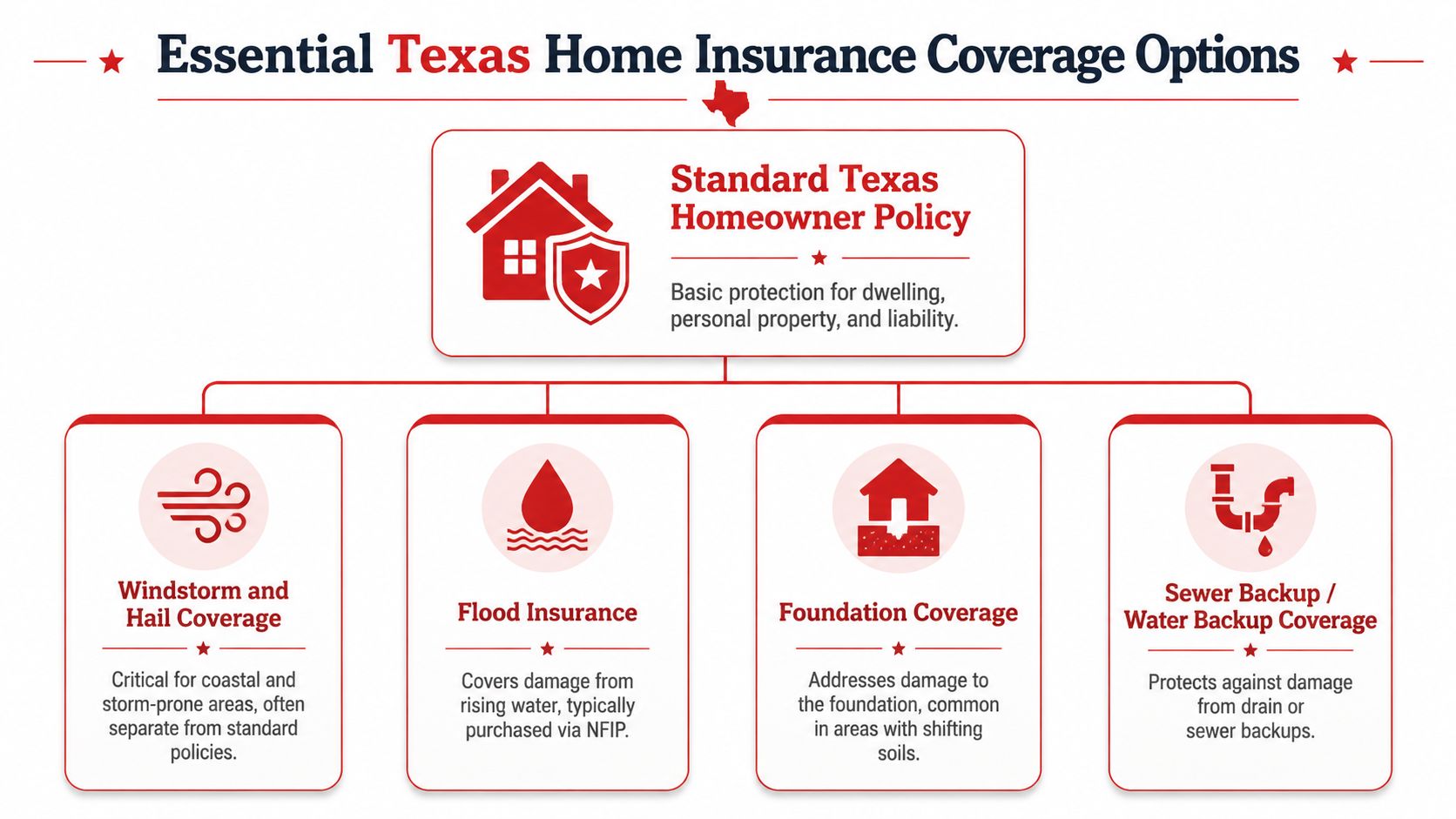
Texas homeowners often think of the home policy as one complete shield. It isn't. A standard homeowners policy is the foundation, but several major risks may need separate attention depending on the property and location.
Why standard coverage isn't always enough
One of the biggest misunderstandings is flood. Many homeowners assume water damage is water damage. It isn't. Standard homeowners coverage generally treats certain types of sudden interior water damage very differently from rising water entering the home from outside.
Many Texas homeowners in flood-prone areas like San Antonio don't realize that standard policies exclude flood damage, which is why working with an agent who can place both NFIP and private flood options is so important, as discussed in this San Antonio flood insurance agency overview.
That point changes the agency conversation. If an agent doesn't ask about drainage, low-lying exposure, prior water issues, or whether you're comfortable adding separate flood coverage, they're skipping a risk that deserves attention.
How flood and specialty options fit together
A practical coverage review often includes more than the base homeowners form:
- Flood insurance: Separate from standard homeowners coverage. The right option depends on the property and the level of protection you want.
- Wind and hail considerations: In Texas, storm-related deductibles may be handled differently from other losses. That's why agents often slow down here and explain out-of-pocket responsibility carefully.
- Water backup endorsements: Different from flood. This can matter when drains or sewers back up into the home.
- Foundation-related concerns: Texas soil movement and water patterns can create issues that homeowners should discuss in plain language with their agent.
If you own or manage property with significant exterior features, it also helps to think about risk outside the walls of the house. Operational exposure can then overlap with property protection. For a useful example from the commercial side, these Prestonwood landscaping insurance insights show how site conditions, equipment, and liability can affect insurance decisions around maintained property.
For homeowners who want a broader overview of policy structures and options, this guide to Texas home insurance coverage is a useful companion when you're comparing how different protections fit together.
Flood, wind, backup, and foundation concerns aren't interchangeable. A good agent separates them so you know exactly which risk is insured where.
The best agencies don't just say, "You might need this." They explain why the standard policy stops where it stops, what the gap looks like, and what buying the extra layer does for you.
From Quote to Coverage Your Final Checklist
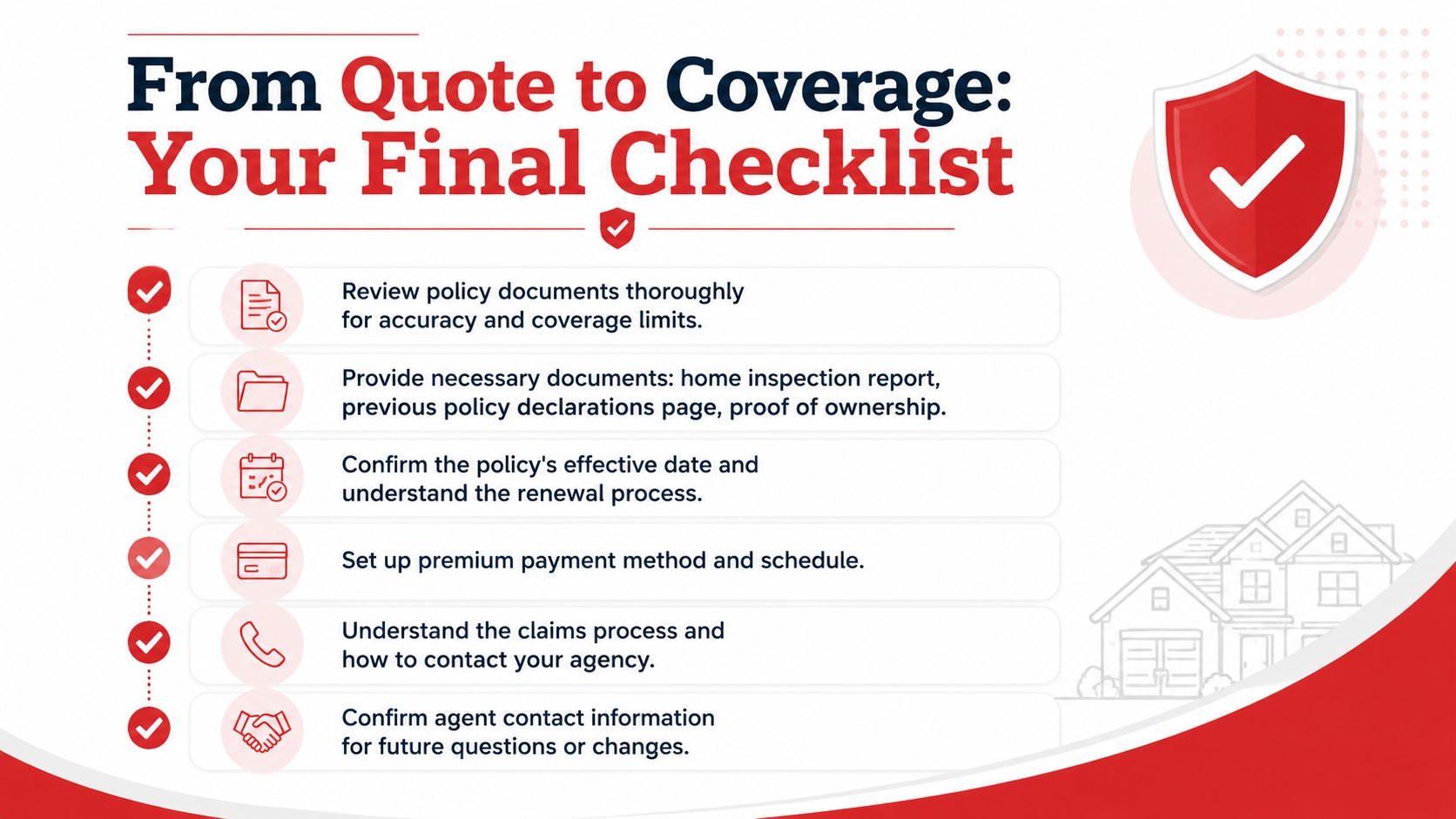
By the time you've chosen a policy, most of the hard thinking should already be done. The last stage is mostly about accuracy, timing, and making sure underwriting has what it needs before the effective date.
What binding a policy actually involves
An agent usually needs a clean set of details before coverage can be bound. That may include prior policy information, mortgage company details, occupancy information, and documentation on updates if the home is older. Some properties also trigger inspection requirements or follow-up underwriting questions after binding.
That extra attention makes sense in the current market. Texas premiums for a $300,000 policy rose from $3,635 in June 2022 to $4,049 by June 2025, roughly an 11.4% increase, driven by severe weather losses and tighter underwriting, according to Bankrate's analysis of the Texas home insurance market. Carriers are asking tougher questions, and homeowners should expect a more careful review than they might have seen in the past.
A simple closing checklist
Before you say yes, make sure you've done these things:
- Confirm the effective date: It needs to line up with closing or your renewal date.
- Verify the named insureds and property address: Small errors cause unnecessary lender and claims issues.
- Review deductibles one more time: Especially if there are separate deductibles for specific perils.
- Send documents promptly: Delays often happen because underwriting is waiting on basic paperwork.
- Know who to call after binding: You want the agency contact, not just the carrier's general line.
If you're ready to start the process, getting a home insurance quote is the easy part. The important part is reviewing what comes back with enough care to avoid buying a policy you'll need to fix later.
Frequently Asked Questions
How often should I review my home insurance?
Review it at least when the policy renews and anytime the home changes in a meaningful way. A roof replacement, renovation, major purchase, occupancy change, or claim should all trigger a fresh look. If nothing has changed, a short annual review is still smart.
Why does my agent care so much about roof age?
Because carriers care. Roof age can affect eligibility, pricing, and how the policy responds after storm damage. When an agent asks detailed roof questions, they're trying to avoid placing you with a policy that looks fine now but creates trouble later.
Can one agency help with both home and flood coverage?
Yes, but you should ask specifically. Standard homeowners insurance and flood insurance are usually separate. A capable agency should be able to explain how the two policies work together and where one stops and the other begins.
What's the biggest mistake homeowners make when shopping?
They compare price before they compare coverage structure. That's how people end up with a lower premium and a weaker policy. The better approach is to compare deductibles, exclusions, endorsements, claim settlement language, and service first, then decide whether the premium makes sense.
If you want help from an independent agency that can compare options and explain them clearly, Select Insurance Group, Inc. offers no-obligation guidance and quotes for homeowners who want real answers, not just a fast price.