
A lot of Florida residents start shopping for insurance the same way. They call one agent, get one quote, call another, get a different answer, and still don't know whether the policy suits their home, car, or business. The confusion gets worse when storm risk, flood questions, and roof age enter the conversation.
That's where an independent insurance agent in Florida can make a real difference. Instead of acting like a store with one shelf, an independent agent works more like a guide who can look across multiple options and help you sort out what matters, what doesn't, and where hidden coverage problems usually show up. For many Florida households, the biggest surprise isn't the premium. It's learning that a home's roof age can limit which insurers will even consider the property.
If you're trying to protect a house near the coast, insure a vehicle properly, or find commercial coverage that matches your operations, it helps to understand how independent agents work before you compare quotes.
Table of Contents
- Introduction to Independent Agents in Florida
- Understanding Independent Insurance Agents in Florida
- Benefits of Working with an Independent Agent in Florida
- Navigating Florida Specific Licensing and Coverage Rules
- How to Compare Agents and Request Multiple Quotes
- Common Florida Insurance Needs and Questions
- How Select Insurance Group Helps Florida Clients
- Conclusion and Next Steps
Introduction to Independent Agents in Florida
A Florida homeowner often finds out the insurance market is complicated at the worst possible time. It might happen after a renewal notice arrives, after a mortgage company asks for updated proof of coverage, or after a buyer's inspection notes an older roof. Suddenly, simple questions don't feel simple anymore.
One agent says the home should fit standard coverage. Another says the roof could be an issue. A third offers a policy, but the deductibles and exclusions aren't clear. That leaves the homeowner trying to compare apples, oranges, and a stack of legal forms.
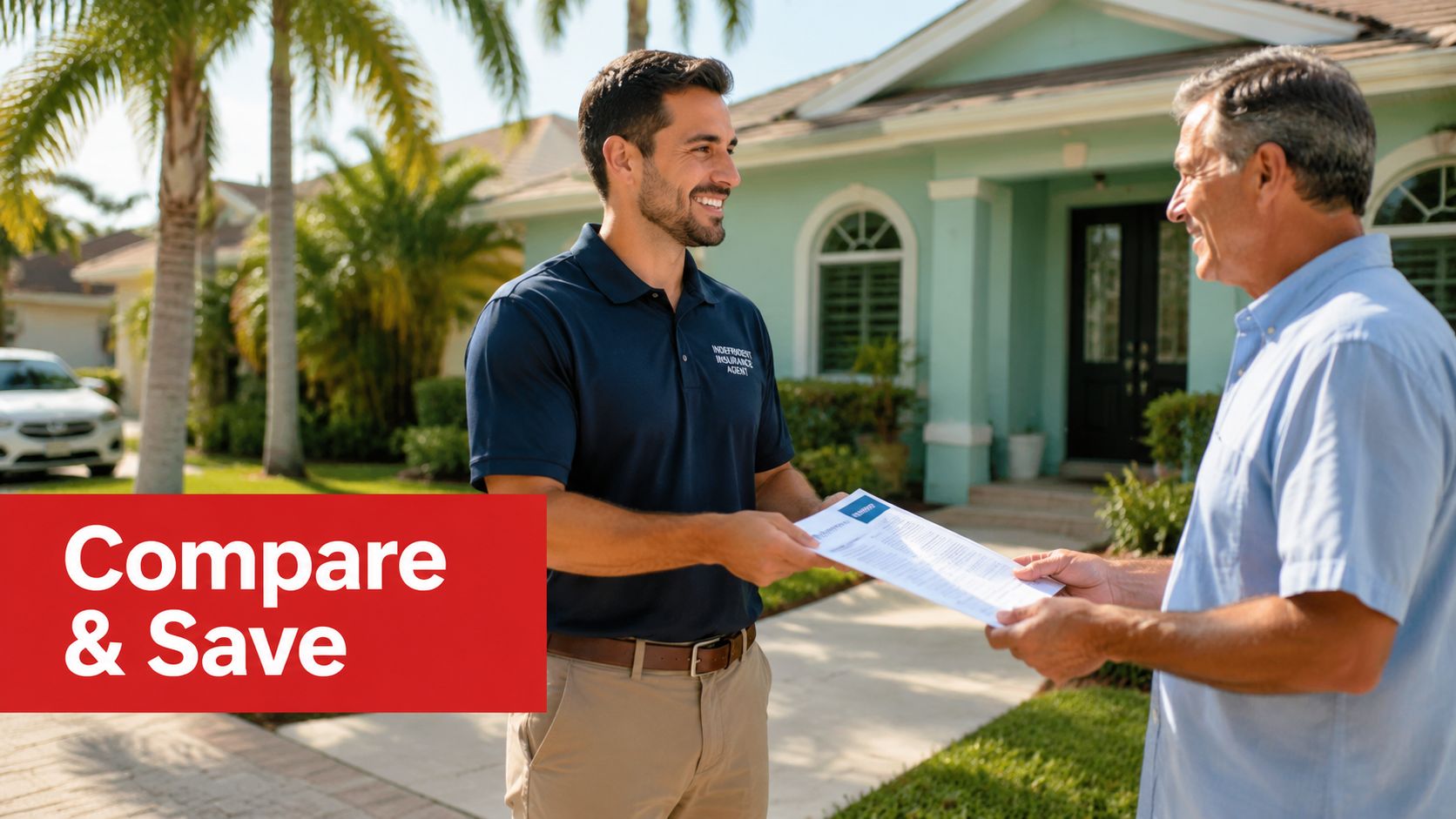
An independent insurance agent in Florida helps by taking that comparison work off your plate. Instead of hearing one company's answer, you hear a market-based answer. That distinction matters in a state where weather exposure, coastal property concerns, flood questions, and underwriting rules can change what's available.
The right agent doesn't just hand you a quote. They explain why one carrier fits your property and why another carrier may decline it.
For business owners, the pattern is similar. A contractor, retailer, or service firm may need general liability, commercial auto, or workers' compensation, but ensuring the policy fits the actual risk is the challenge. An independent agent can spot those differences earlier, before a claim puts the gap in plain view.
Understanding Independent Insurance Agents in Florida
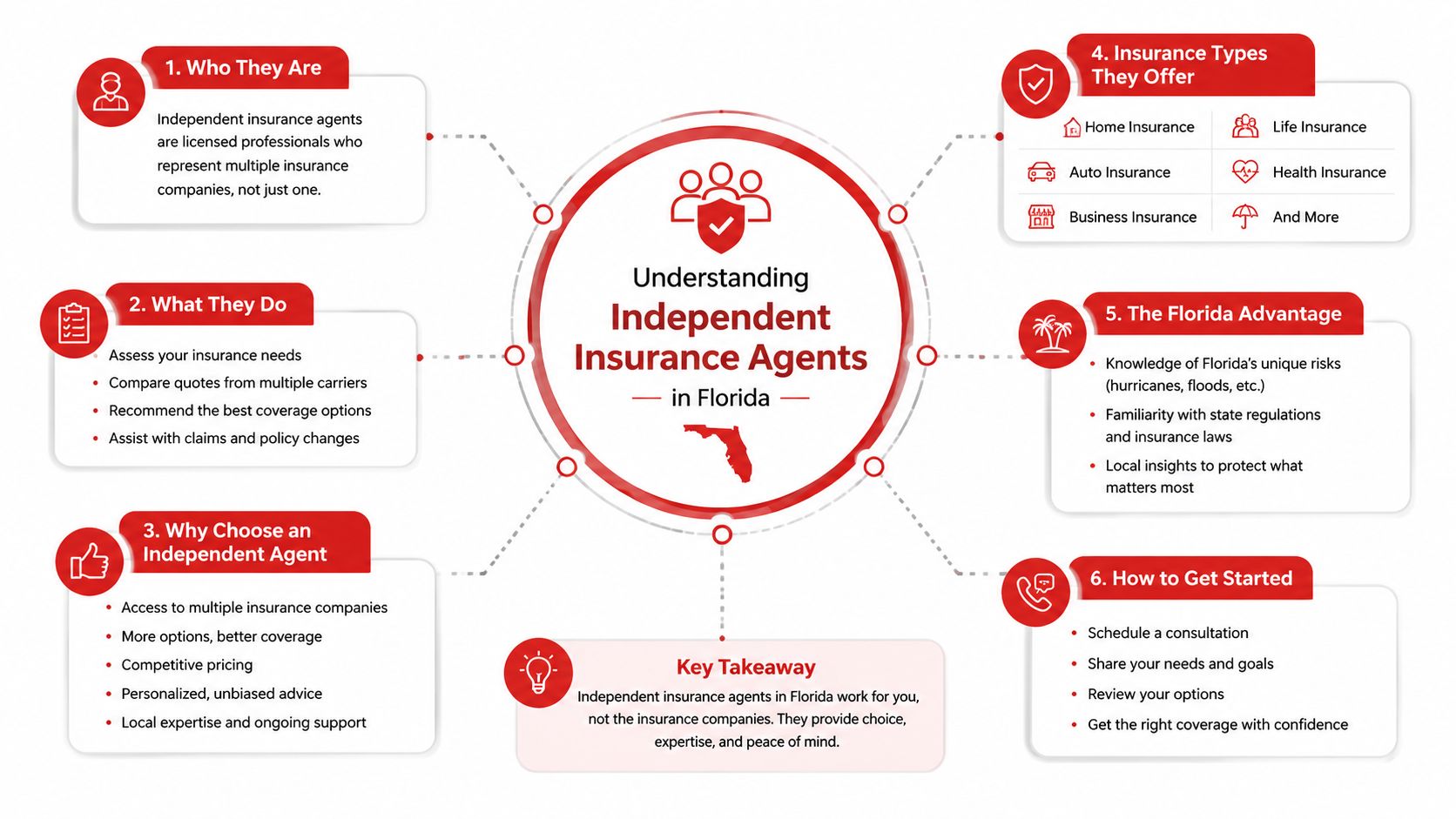
Independent agents are easiest to understand through a familiar analogy. Think of a captive agent like someone who can only recommend one bank. Even if another bank offers better terms for your situation, that adviser can't take you there. An independent agent works more like an adviser who can compare several institutions and explain which one best fits your needs.
What makes an agent independent
In practical terms, an independent agent represents multiple insurance carriers rather than just one. That gives the agent room to compare policy forms, underwriting appetite, pricing, and coverage options across a broader market.
The independent agency model is also a major part of the insurance system, not a niche corner of it. The independent agency channel handles 61.5% of total U.S. premiums in 2024, and Florida agents average seven carrier appointments to help match complex coastal risks.
If you want a fuller primer on the model itself, this guide on what an independent insurance agency is gives a helpful foundation.
Why that matters in Florida
Florida isn't a simple market. A home near the coast, a rental property, and a small contracting business can all trigger different underwriting concerns. When an agent can approach several carriers, they have more room to find one that wants that type of risk.
That broader access can affect more than price. It can shape whether you get replacement cost options, wind-related terms, flood coordination, or a path to specialty coverage when standard markets narrow.
Here's the simplest way to think about it:
| Agent type | Main limitation | Consumer impact |
|---|---|---|
| Captive agent | Works with one insurer | You see one company's answer |
| Independent agent | Works with multiple carriers | You can compare fit, price, and underwriting options |
For many Florida buyers, that flexibility is the difference between “I got a quote” and “I found coverage that is effective.”
Benefits of Working with an Independent Agent in Florida
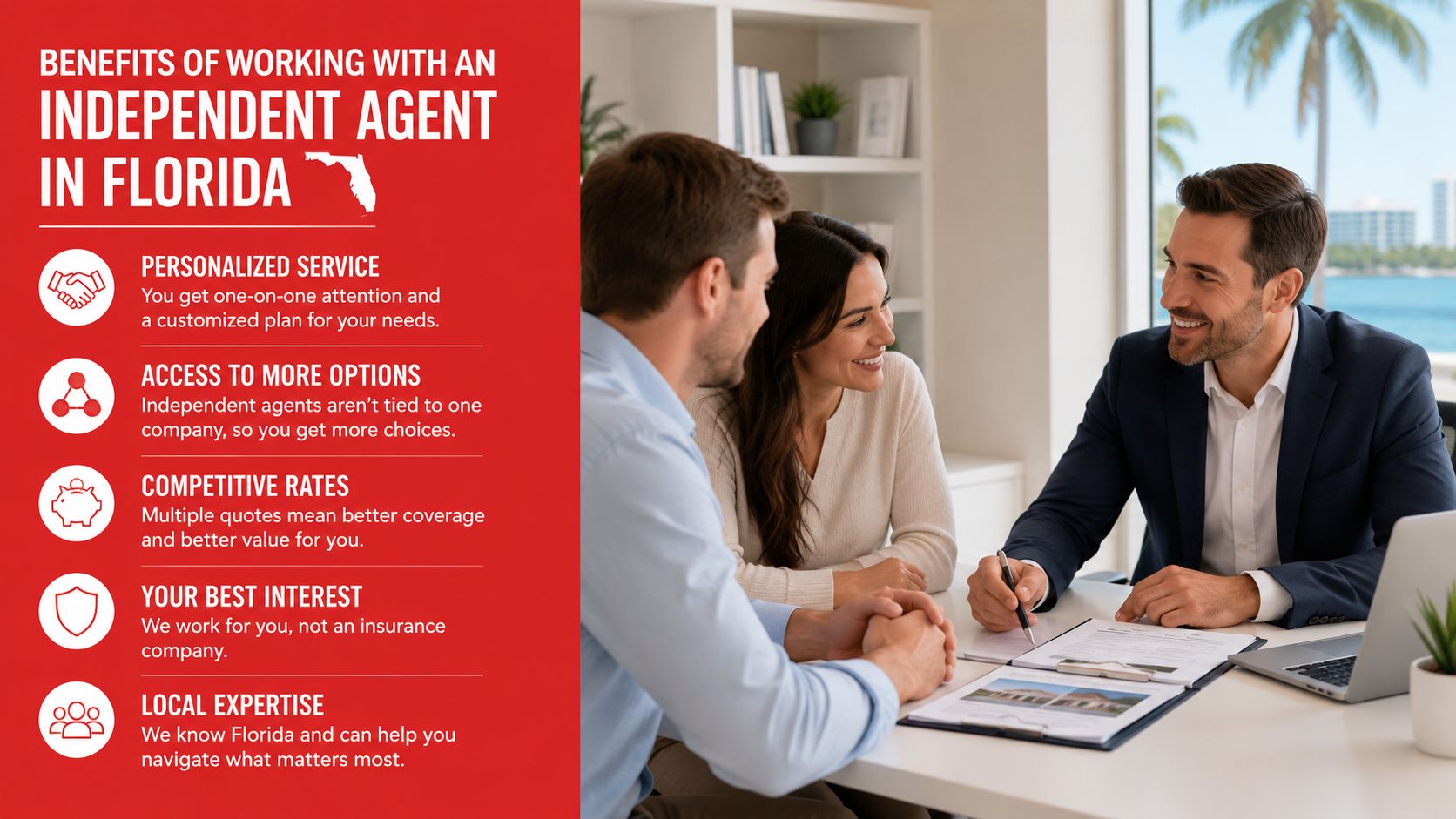
The biggest advantage of an independent agent isn't just access to more quotes. It's access to better-fitting options, especially when your property or business doesn't fit a clean, standard profile.
Broader access can solve hard-to-place risks
A family insuring a newer inland home may have an easier path than someone insuring an older coastal property. A small business with light office exposure may be easier to place than a contractor with vehicles, tools, and jobsite risks. Independent agents help because they can sort those risks into the carriers most likely to consider them.
That usually leads to practical benefits such as:
- More precise recommendations because the agent can compare different underwriting appetites.
- Less guesswork when bundling personal or commercial coverages.
- Better niche placement for flood-related concerns, wind exposure, contractor operations, or specialty property issues.
The roof age problem many buyers discover too late
This is the Florida issue many guides skip. Roof age doesn't just affect pricing. It can affect whether a homeowner gets an offer at all.
According to this Florida roof-age underwriting guide, 68% of Florida homeowners with roofs older than 10 years face coverage denial from at least one major national carrier. That matters because many buyers assume a roof only becomes a problem when it leaks. Insurers often look at it much earlier.
An independent agent is valuable here because they may have access to regional carriers or surplus-lines options when standard choices shrink. If one insurer says no because the roof is older, the conversation doesn't have to end there.
Practical rule: If your roof is older, ask the agent early whether they work with markets that can handle aging-roof scenarios. Don't wait until after an inspection surprise.
For a Florida homeowner, that can mean the difference between a stressful dead end and a realistic path to coverage.
Navigating Florida Specific Licensing and Coverage Rules
Florida uses a specific legal framework for independent agents, and that framework matters because it affects who the agent works for, how advice is delivered, and what responsibilities the agency carries.
What unaffiliated means under Florida rules
Florida refers to an independent agent as an unaffiliated insurance agent. The state requires that agent to be contractually unaffiliated with any insurer, which is the legal separation that supports more independent policy analysis and client-focused counseling. Florida also requires written information-security programs for these agencies, and public records show 27,009 licensed agencies statewide under this structure, as described by the Florida Chief Financial Officer's agent compliance guidance.
That may sound technical, but the consumer takeaway is simple. Independence in Florida isn't just a marketing phrase. It has a legal meaning.
What to verify before you trust advice
When you're choosing an agent, ask questions that reveal whether the person is equipped for Florida-specific issues.
A strong checklist includes:
- Licensing status so you know the agency is properly authorized to operate in Florida.
- Experience with your risk type such as coastal homes, flood-prone property, older roofs, or contractor operations.
- Security practices because your data often moves across several carrier systems and applications.
- Knowledge of mandatory coverages and optional protections including how a personal auto policy differs from a homeowners or flood solution.
For drivers, it also helps to review a plain-language explanation of Florida minimum auto insurance requirements before you compare quotes. That makes it easier to tell whether an agent is discussing only the legal minimum or a fuller protection strategy.
Consumers often focus on the quote first. In Florida, you should verify the agent first, then judge the quote.
How to Compare Agents and Request Multiple Quotes
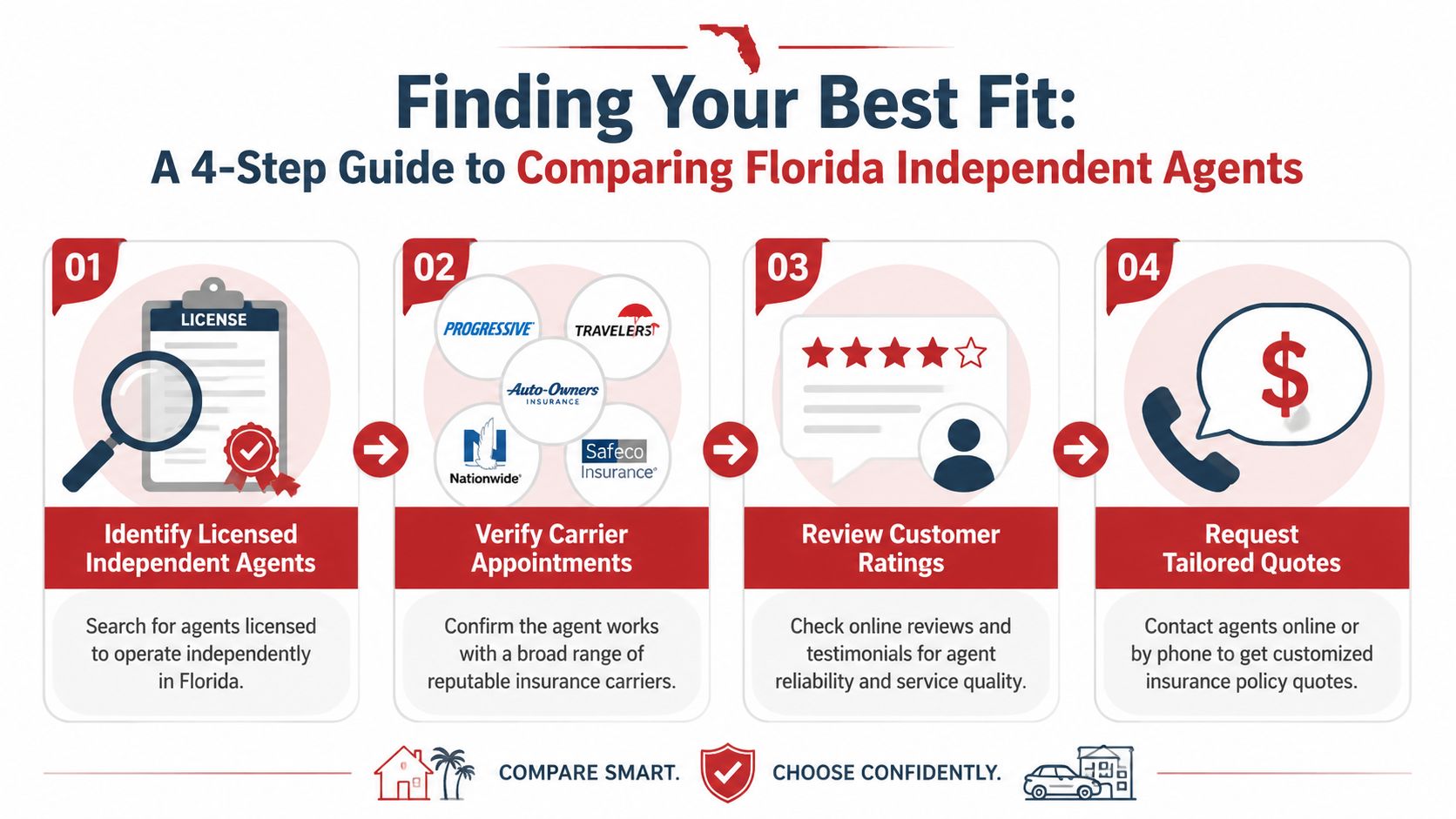
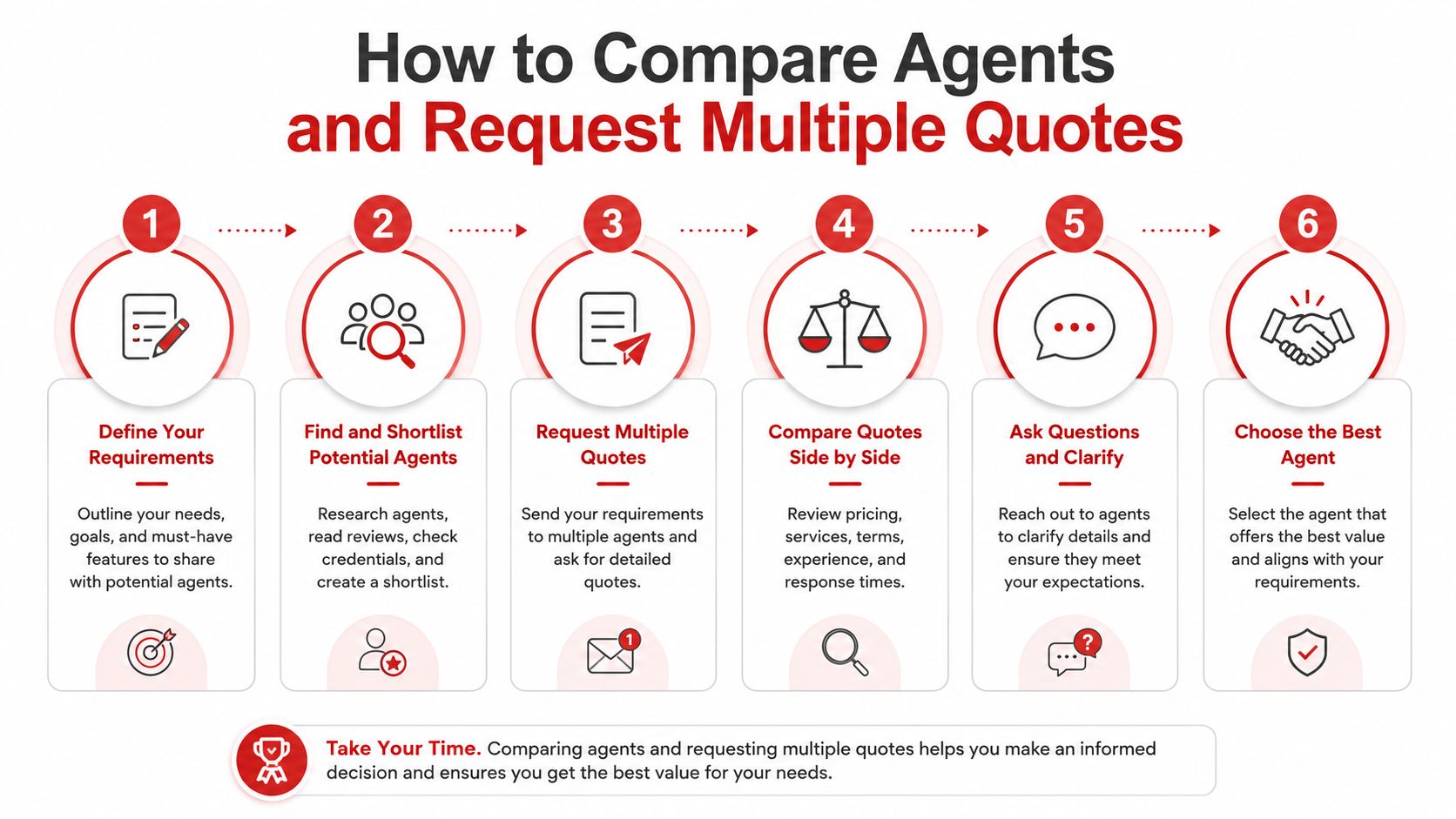
Comparing agents works best when you treat it like an interview, not a quick price grab. The goal isn't to collect numbers. It's to figure out who can explain your options clearly and who has enough carrier access to handle your specific risk.
A simple four step process
Start with a short list of independent agencies in your area. Then use this process:
Confirm the agency is licensed in Florida.
You want a real Florida-licensed operation, not someone speaking in vague terms about “nationwide options.”Ask about carrier access.
You don't need every appointment list in detail, but you should know whether the agent has enough market access for your type of home, vehicle, or business.Check service reputation.
Look for signs that the agency answers questions clearly, follows up, and helps at renewal time instead of disappearing after the sale.Request comparable quotes.
Give each agent the same facts so you can compare deductibles, endorsements, exclusions, and coverage structure fairly.
If you're moving from one insurer to another, this practical guide on advice on switching insurance can help you avoid common mistakes during the transition.
Questions to ask before you choose
A short set of questions can reveal a lot:
- For homeowners ask, “How would my roof age affect available markets?”
- For flood concerns ask, “How do you separate flood coverage from the homeowners policy?”
- For auto insurance ask, “What optional protections do you usually discuss beyond the state minimum?”
- For business coverage ask, “Which policy pieces matter most for my operations and vehicles?”
A good agent should answer in plain language. If the answers stay vague, overly rushed, or focused only on one quote, keep looking.
Common Florida Insurance Needs and Questions
Florida buyers often shop for one policy at a time, but their risks don't live in separate boxes. Home, flood, auto, and business coverage often overlap in ways that surprise people.
Home and flood questions
Homeowners usually need help understanding what the standard homeowners policy covers versus what must be insured separately. In Florida, a frequent point of confusion is that flood and homeowners coverage are not the same thing. Wind-related deductibles can also work differently than people expect.
Roof age questions belong here too. A homeowner may think, “My roof is still functioning, so I'm fine.” Underwriting may view that same roof differently. That's why it helps to raise roof age during the first conversation, not the last.
Useful questions include:
- Home condition “Will the age of my roof or updates affect eligibility?”
- Deductible structure “Is there a separate hurricane or wind deductible?”
- Flood protection “Do I need a separate flood policy for my location?”
Auto and business questions
Auto insurance buyers in Florida also face confusion around what the law requires versus what provides effective protection. If you want a plain-language legal overview, this article clarifying Florida no-fault insurance rules helps sort out common misunderstandings.
Business owners should ask different questions. A contractor may need to think about liability, vehicles, tools, and jobsite exposure. A retail or office-based business may focus more on liability, property, and employee-related protections.
The best insurance question is rarely “What's the cheapest policy?” It's “What claim would hurt me most if I guessed wrong?”
An independent agent can help line those questions up so your coverage matches your real risk, not just a quote form.
How Select Insurance Group Helps Florida Clients
Select Insurance Group operates as an independent agency, which means clients can benefit from broad carrier access rather than a one-company approach. According to the company's published background, it compares quotes from 20–40 leading carriers, offers bilingual support, and serves clients through local offices and digital service tools.
Where local guidance matters most
That model is especially useful in Florida because policy fit often depends on details that don't show up in a basic online form. A homeowner with an older roof may need an agency that can look beyond the most obvious market options. A contractor may need someone who understands how commercial auto, liability, and other business coverages work together.
For clients in Central Florida, the agency's Orlando office page gives a direct look at one local point of contact.
Why convenience matters too
Insurance shopping isn't only about underwriting. It's also about how easy the agency is to work with after the policy starts.
Select Insurance Group states that clients can use online tools for document upload, payments, policy updates, and claim support. That matters when a customer needs to send paperwork quickly, review policy details, or get help without making an extra trip.
Bilingual service also matters in everyday ways. When customers can ask technical insurance questions in the language they're most comfortable using, misunderstandings are less likely during quoting, binding, and service.
Conclusion and Next Steps
A good independent insurance agent in Florida does more than shop rates. They help you understand fit, spot underwriting issues early, and explain how Florida-specific risks affect your options. That matters most when your situation isn't straightforward, especially with older roofs, flood concerns, coastal property, or business exposures.
If you're comparing agents now, verify licensing, ask direct questions about your risk, and request quotes built from the same facts. Clear comparisons usually lead to better decisions than quick price checks.
If you want help comparing coverage from a true independent agency, Select Insurance Group, Inc. offers free, no-obligation quotes, bilingual support, and access to multiple carriers for personal and commercial insurance. You can contact a local office, request a quote online, or reach out by phone or text to review your options with a licensed agent.