
You're probably in one of three spots right now. You're buying a house in Farragut, Fountain City, Hardin Valley, or South Knoxville and the lender just asked for proof of insurance. You already own a home and your renewal jumped enough to get your attention. Or you had a storm roll through, looked at your declarations page, and realized you aren't fully sure what you bought.
That's normal.
Homeowners don't wake up wanting to study homeowners insurance. They want to know one thing. If something goes wrong, will this policy help me fix my house without wrecking my budget? In Knoxville, that question gets more local than a generic online checklist makes it seem. A house near a creek, a roof with some age on it, or a wind and hail deductible hidden in the fine print can change the whole conversation.
Homeownership costs also pile up in layers. During a purchase, people focus on the mortgage, inspection, and closing costs, then forget the smaller items that still matter. If you're budgeting the full picture, this Pestless Inc. cost breakdown is a useful example of how one overlooked line item can affect your home-buying total. Insurance works the same way. The premium is only part of the cost. Deductibles, exclusions, and separate policies matter just as much.
Local help matters because Knoxville isn't priced or underwritten exactly like the rest of Tennessee. If you want a starting point on policy basics and quote options, Tennessee home insurance coverage gives a clean overview. What follows is the part most shoppers really need. Plain-English guidance on what Knoxville home insurance covers, what drives the price here, where flood and storm gaps show up, and how to buy a policy that still makes sense after a claim.
Table of Contents
- Introduction to Knoxville Home Insurance Essentials
- What Knoxville Home Insurance Covers and How It Works
- Average Cost of Knoxville Home Insurance and What Drives Your Premium
- Local Risks Every Knoxville Homeowner Should Understand
- Required and Recommended Coverages Plus Smart Ways to Save
- How to Get Quotes Buy a Policy and File a Claim in Knoxville
- Final Takeaways for Protecting Your Knoxville Home
Introduction to Knoxville Home Insurance Essentials
A Knoxville homeowner can do almost everything right and still get surprised by insurance.
I've seen it happen when a buyer closes on a comfortable brick home, feels good about the monthly premium, then finds out after the first hail loss that the policy carries a percentage-based wind deductible instead of the flat deductible they thought they had. I've also seen long-time owners assume flood is part of the package because the house has “never flooded before,” only to learn standard homeowners insurance generally excludes flood damage.
Why local details matter more than people expect
Knoxville home insurance isn't just about checking a box for your mortgage company. It's a financial plan for a very specific property in a very specific weather pattern. A house in West Knoxville with a newer roof, better drainage, and updated electrical may be viewed very differently from an older home in a lower-lying area near a creek or river corridor.
That's why broad advice like “just raise your deductible” or “bundle and save” can fall short. It may help. It may also leave you underinsured where Knoxville losses happen.
Practical rule: Don't judge a home policy by premium alone. Judge it by premium, deductible structure, exclusions, and how well it fits your property's local risks.
The three moving parts of a good policy
Most Knoxville insurance decisions come down to three connected pieces:
- What the policy covers: The house itself, your belongings, liability, and living expenses if a covered loss makes the home unlivable.
- What the policy doesn't cover: Flood is the biggest one people miss. Some water losses, wear and tear, and maintenance problems can also fall outside coverage.
- What a claim will cost you first: Your deductible is where many surprises live, especially on wind and hail claims.
When those pieces line up, insurance feels boring in the best possible way. When they don't, people discover the gap after a storm, a burst pipe, or a closing deadline.
Knoxville rewards homeowners who read the details early. A little attention up front can save a lot of frustration later.
What Knoxville Home Insurance Covers and How It Works
A standard homeowners policy works like a five-part safety net. Each part catches a different kind of loss. If you know what each section does, insurance gets much easier to shop for.
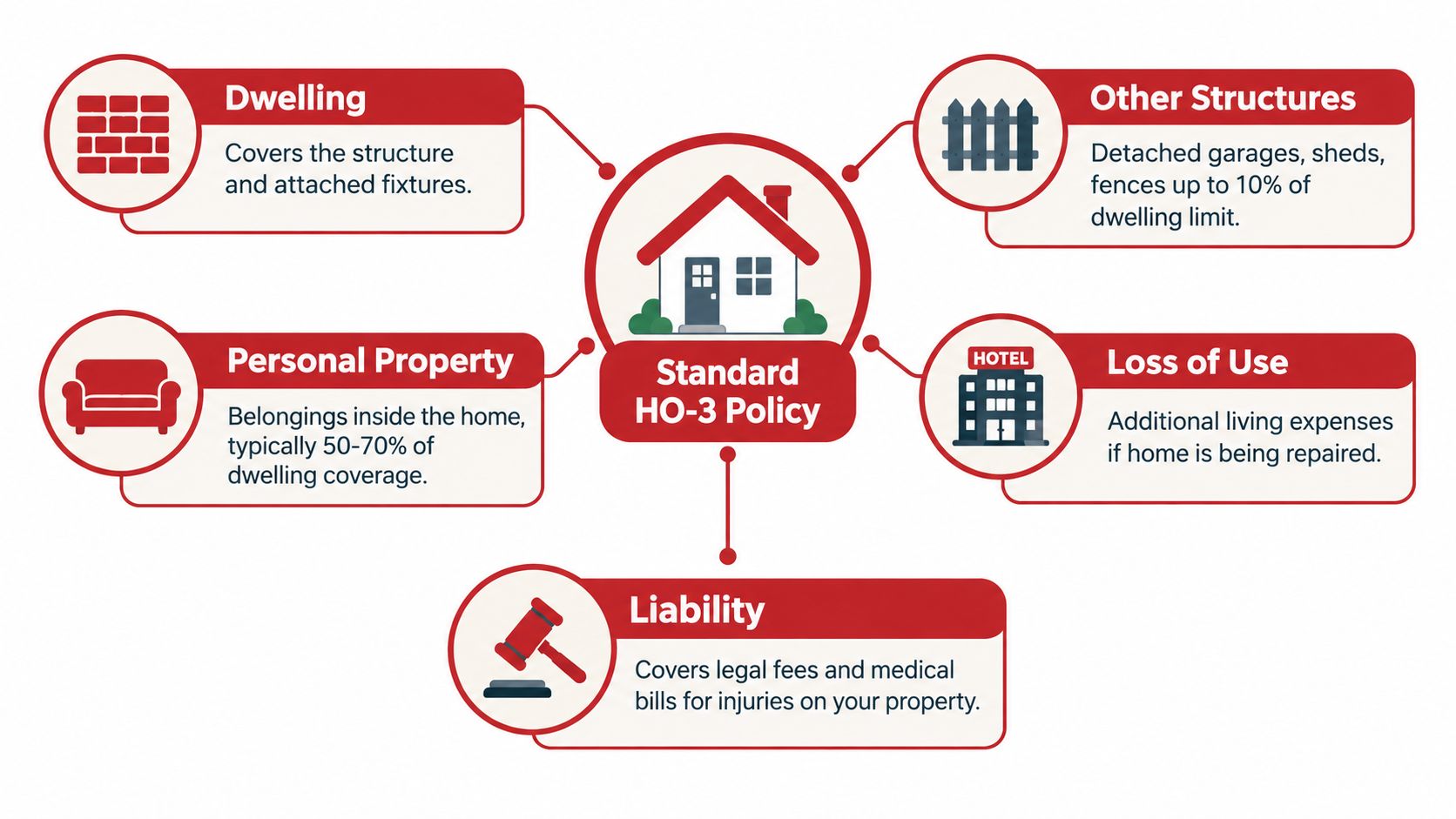
The five core parts of a standard policy
Think of your policy like your home's toolkit.
- Dwelling coverage pays to repair or rebuild the main structure after a covered loss. That means the house itself and attached features like built-in cabinets, walls, and the roof.
- Other structures coverage applies to things that aren't attached to the house, such as a detached garage, fence, or storage shed.
- Personal property coverage helps replace belongings inside the home, from furniture to clothing to electronics, when a covered event damages them.
- Loss of use coverage helps with extra living expenses if a covered loss forces you out during repairs.
- Liability coverage helps if someone is injured on your property or if you accidentally cause property damage or bodily injury to someone else.
If you're trying to understand one piece that often creates confusion, roof claims are a good example. This guide to home insurance roof replacement explains the difference between covered storm damage and problems tied to age or wear, which is a distinction homeowners everywhere need to understand.
What's usually excluded
Many first-time buyers get tripped up. A homeowners policy is broad, but it isn't all-risk in the way people use that phrase casually.
Common gaps often include:
- Flood damage: Water that rises from outside the home is usually excluded from a standard policy.
- Routine wear and tear: Old roofs, aging pipes, and deferred maintenance usually aren't claim items.
- Certain water problems: Some backup or seepage situations may need separate endorsements.
- High-value items above standard limits: Jewelry, collectibles, and specialty property may need extra scheduling.
If water comes from the sky through storm-created roof damage, that may be covered. If water rises from the ground into the house, that's usually a flood issue. People mix those up all the time.
Replacement cost versus actual cash value
This matters more than most shoppers realize.
Replacement cost generally aims to pay what it costs to repair or replace with similar materials today. Actual cash value factors in depreciation, which means age and wear reduce what you get paid.
Here's the plain-English version. If an older television or roof is insured on an actual cash value basis, the insurer may subtract for age before paying. With replacement cost, the goal is closer to replacing what you had with comparable new property, subject to the policy terms.
Rebuild cost isn't the same as market value
Your dwelling limit should reflect what it would cost to rebuild the home, not what Zillow says it might sell for. Land value, school district demand, and neighborhood trends affect market price. Insurance cares about labor, materials, and reconstruction.
That's why two homes with the same sale price can need very different amounts of coverage. Knoxville home insurance works best when the dwelling amount matches reconstruction reality, not real estate buzz.
Average Cost of Knoxville Home Insurance and What Drives Your Premium
A homeowner in Farragut and a homeowner in South Knoxville can both ask for "the same" policy and still get very different prices. On paper, each house may have similar square footage and similar dwelling coverage. In real life, one may have a newer roof, a different wind and hail deductible, no prior losses, and construction details an insurer likes better. That is why Knoxville home insurance pricing can feel inconsistent until you know what underwriters are measuring.
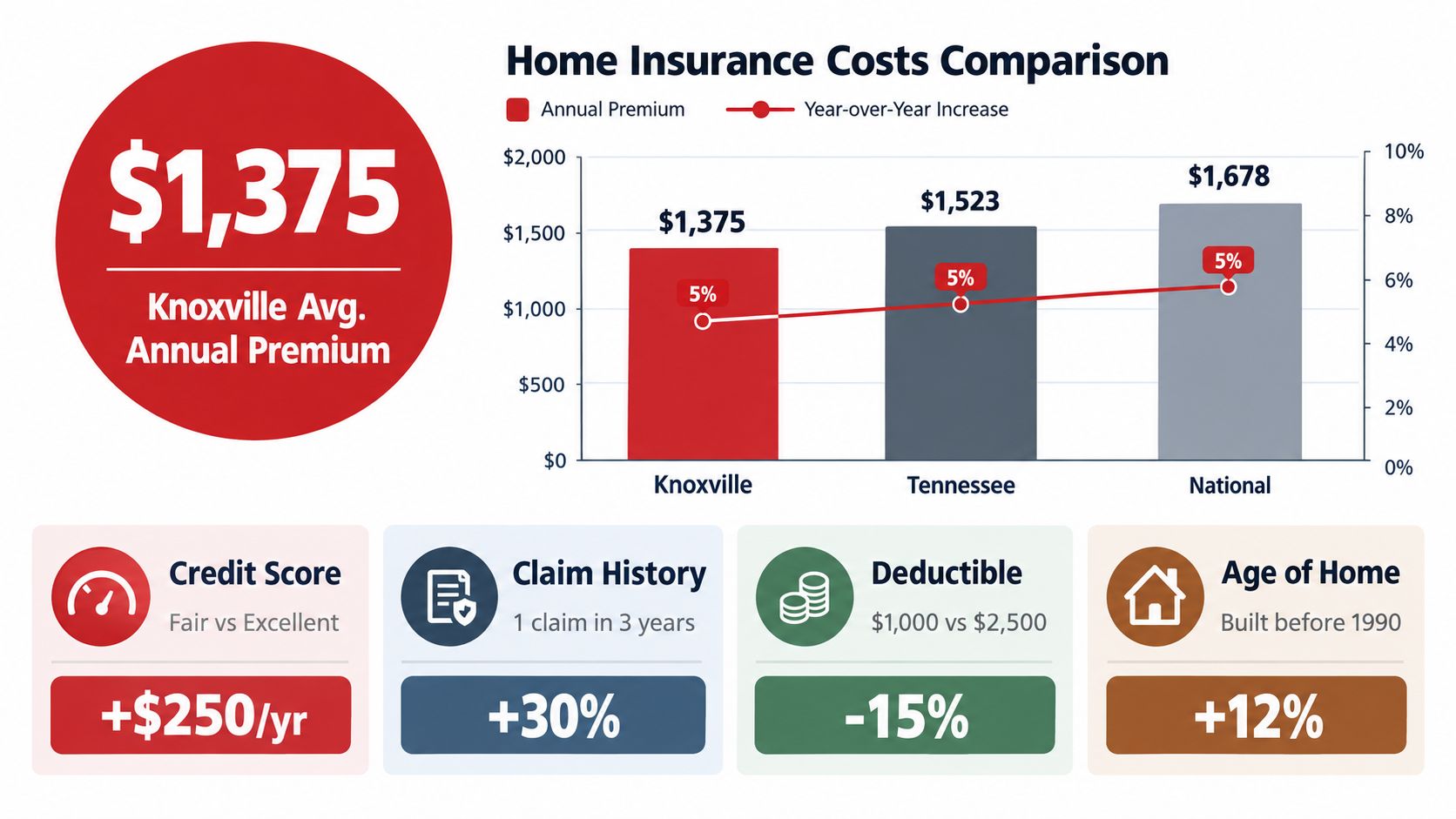
Averages still have value. They give you a starting line, not a final answer. The cleaner way to use them is as a rough range, then adjust for the house, the roof, the deductible setup, and the claim history tied to that property.
Here is a plain-English example.
House A has a newer architectural shingle roof, updated wiring, and a standard flat deductible that applies the same way across covered losses. House B has an older roof with limited documentation, a prior water claim on record, and a wind or hail deductible written as a percentage of the dwelling limit instead of a flat dollar amount. From the curb, they may look equally well kept. To an insurer, House B carries more claim potential and often more pricing volatility.
That percentage deductible point trips up a lot of Knoxville buyers. If your dwelling coverage is $300,000 and the wind or hail deductible is 1%, your out-of-pocket for a covered storm claim could be $3,000 instead of a $1,000 flat deductible. If it is 2%, that jumps to $6,000. The premium may look attractive until you realize how much risk you kept for yourself.
Roof age also carries more weight here than shoppers expect. In East Tennessee, insurers spend plenty of time looking at hail and straight-line wind exposure, so an aging roof is not a small detail. It is more like worn tires before a rainy drive. You might get where you are going just fine, but the odds of trouble rise, and the insurer prices for that possibility.
Your ZIP code can matter too, especially if it lines up with heavier storm activity or a pattern of roof claims. That does not mean every house in a higher-risk area is expensive to insure. It means the starting assumptions may be different before the carrier even looks at your individual home.
One more Knoxville-specific issue deserves attention. Flood coverage is often missing. Many homeowners assume "I don't live in a high-risk flood zone" means "I don't need to ask about flood at all." Those are not the same thing. Low flood-policy take-up can leave people exposed to a type of loss that a standard homeowners policy usually does not cover, and it can distort quote shopping because one buyer is comparing a base homeowners premium while another is budgeting for separate flood protection.
This is why I tell homeowners to compare quotes the same way you would compare two trucks. The paint color is not the point. Look under the hood. Check the dwelling estimate, the roof assumptions, whether wind and hail use a percentage deductible, and whether the quote leaves out protection you may need.
For shoppers comparing other Tennessee markets, home insurance pricing differences in Memphis can help show how storm patterns, property characteristics, and insurer appetite change from one city to another.
A low premium can be perfectly reasonable. It can also mean the quote was built with thinner protection, a higher storm deductible, or assumptions about the home that need to be corrected before a claim happens.
Local Risks Every Knoxville Homeowner Should Understand
A June afternoon in Knoxville can start out calm and end with shingles in the yard, water creeping into a basement, or a tree across a fence line. That is why local risk matters so much here. The policy language may look standard. The way losses happen in Knoxville is not.
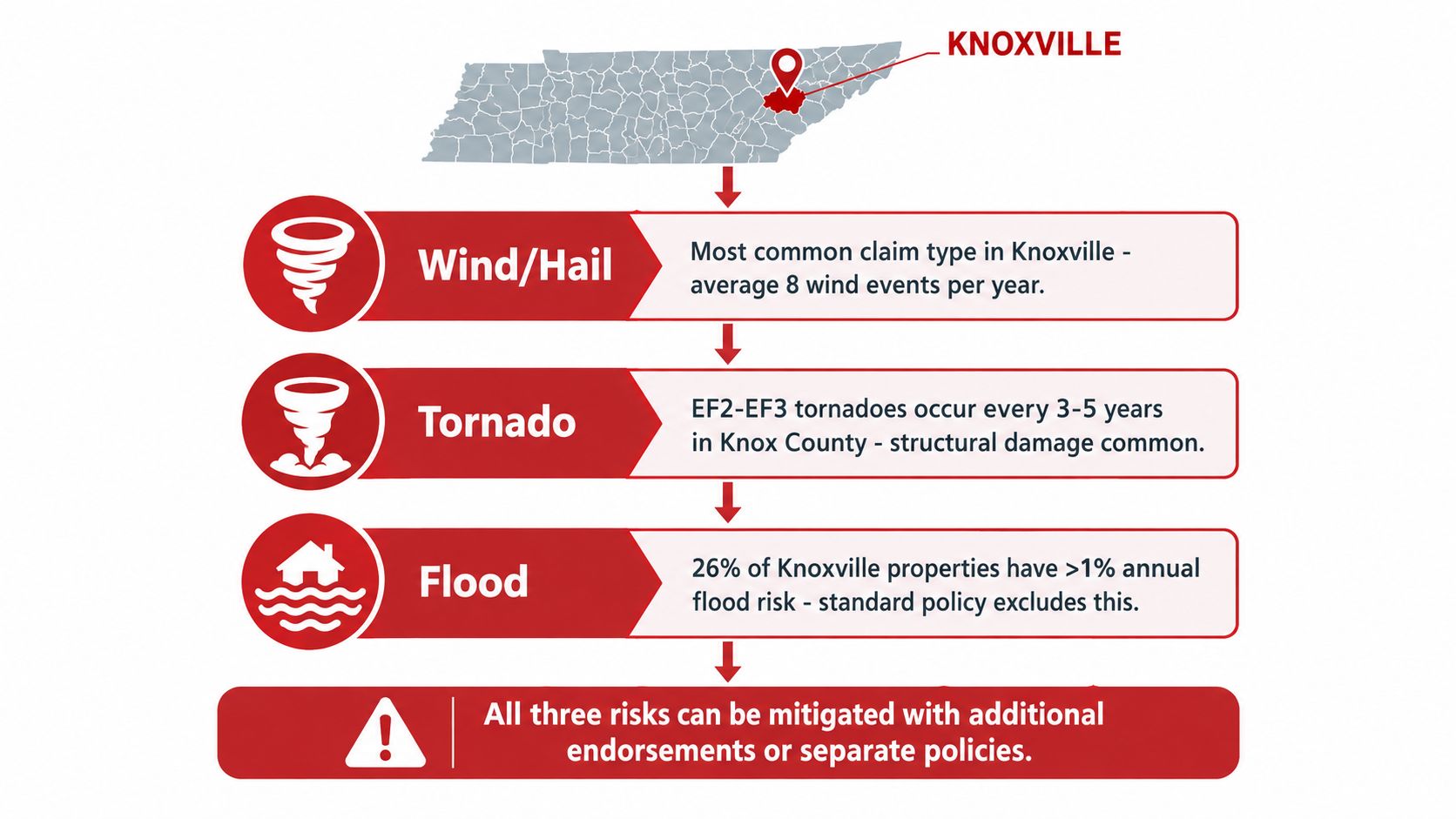
Wind and hail cause the claims homeowners see most often
Around Knoxville, wind and hail are the repeat offenders. Tornadoes get more attention, but many of the claims that hit household budgets start with a thunderstorm, not a headline event.
Hail is tricky because roof damage does not always look dramatic from the driveway. A roof can still shed water today and have enough shingle bruising or granule loss to shorten its life. Wind works the same way. It may lift a few tabs, loosen flashing, or open a path for water around vents and valleys. What looks minor on Saturday can turn into a ceiling stain on Tuesday.
That is why carriers and adjusters focus hard on three things after a storm:
- Roof age
- Roof material
- Signs of upkeep or prior wear
A good local habit is simple. After a hail or wind event, take date-stamped photos from the ground, note the time of the storm, and save any repair receipts. That paper trail helps if damage shows up later.
Tornado risk changes the size of the possible loss
Knoxville does not deal with tornado destruction every week. Still, tornado risk affects how insurers judge serious loss potential, especially in parts of the county that have a history of strong straight-line wind and severe storm activity.
A tornado claim is different from a routine shingle repair. It can involve roof framing, broken openings, water intrusion, detached structures, and long repair timelines all at once. In plain English, wind and hail create frequent wear-and-tear style claim disputes. Tornadoes create bigger check risk for the insurer and bigger displacement risk for the homeowner.
Homes with older roofs, weak attachments, aging siding, or vulnerable openings usually have a harder time in these events.
Flood catches Knoxville homeowners off guard
Flood is the gap that surprises people most often. A standard homeowners policy usually does not cover flood damage from rising water, creek overflow, or water that enters from outside and spreads across the ground before reaching the house.
That matters in Knoxville because flood exposure is not limited to a house sitting right beside the river. Heavy rain, poor drainage, slope, runoff from nearby development, and overflow near creeks can all create losses. Areas near the Tennessee River, Third Creek, and other low-lying corridors deserve a closer look, but homes outside the most obvious trouble spots can still have exposure.
The confusion usually starts with one bad assumption. Homeowners hear "not in a high-risk flood zone" and translate that to "no flood concern." Those are different statements.
Flood maps matter, but they are not the whole story
FEMA flood maps are a starting point. If a home is in a Special Flood Hazard Area such as Zone A or AE, a lender with a federally backed mortgage will generally require flood insurance. You can review map and flood-risk information through FEMA flood map resources.
The map does not answer every practical question, though. It does not tell you how water moves across your lot during a cloudburst, whether a nearby ditch backs up, or whether the lowest entry point to your home sits below the surrounding grade. Those are on-the-ground questions, and in Knoxville they matter.
I tell homeowners to treat flood risk like checking a basement after a hard rain. The official map is the blueprint. The water stain on the wall is the world test.
ZIP code, deductible structure, and claim habits all come together
Two Knoxville homeowners can both say, "I have home insurance," and still be carrying very different storm risk on paper. One may have a flat deductible. Another may have a percentage wind and hail deductible tied to the dwelling limit. In a city where storm claims are common, that detail can change what comes out of your pocket after the same weather event.
This is also where ZIP code matters in a practical way. Some parts of the Knoxville area get more insurer scrutiny because of storm patterns, roof-claim frequency, terrain, and rebuilding cost trends. That does not mean every home in those areas is a bad risk. It means the carrier may look more closely at roof condition, prior claims, and how the deductible is set.
The smart move is to read the declarations page like a repair estimate. Check what peril is causing the loss, which deductible applies, and whether flood is excluded and must be bought separately. That is how Knoxville homeowners avoid the kind of surprise that only shows up after the storm passes.
Required and Recommended Coverages Plus Smart Ways to Save
A spring storm rolls through Fountain City or Hardin Valley, shingles scatter across the yard, and the first question after the rain stops is simple. What does the policy pay, and what comes out of your pocket first?
That is the part many Knoxville homeowners do not fully sort out until claim time. A strong policy starts with the coverages that match how homes in this area are built, damaged, and repaired. It also means knowing which "savings" still leave you protected and which ones only make the premium look better on paper.
Start with the coverages that deserve extra attention
Begin with dwelling coverage. This is the bucket of money for rebuilding the house itself after a covered loss. In Knoxville, that number should track local labor and material costs, not the tax appraisal and not what a neighbor sold for down the street. Insurance rebuilds with current repair prices. It does not use real estate logic.
Personal property is next, and families often come up short. A finished basement, home office, workshop, or extra storage over the garage can add a lot of value. If your contents limit still reflects how you lived five years ago, it may not fit the house you have now.
Liability and loss of use deserve more attention than they usually get. Liability helps if someone is injured on your property or you accidentally damage someone else's property. Loss of use pays for the practical mess that follows a serious claim, like hotel bills, extra meals, laundry, and temporary rent while repairs drag on.
Flood coverage sits in its own bucket because standard homeowners insurance usually does not cover rising water. Around Knoxville, I tell people to treat flood insurance like a sump pump. You hope it never matters, but you do not want to start shopping for it after water is already at the door. That matters here because many homeowners still go without flood coverage unless a lender requires it, even in areas with drainage issues, creek exposure, or low spots that collect runoff.
One policy detail deserves a flashlight and a close read. The wind and hail deductible.
Some Knoxville policies use a percentage deductible for wind or hail instead of a flat dollar amount. If your dwelling coverage is $400,000 and the wind deductible is 1 percent, your share of the loss is $4,000 before insurance starts paying. At 2 percent, that becomes $8,000. For a city where roof and siding claims are common after severe weather, that one line on the declarations page can matter more than a modest premium difference.
Knoxville Coverage Options and Money Saving Opportunities
| Coverage or Feature | What It Does for Knoxville Homes | Cost and Savings Tip |
|---|---|---|
| Dwelling coverage | Pays to rebuild the home after a covered loss | Keep the limit tied to rebuilding cost. Review it after additions, major remodels, or finished space changes. |
| Wind and hail deductible | Sets your out-of-pocket cost for common storm claims | Check whether it is a flat deductible or a percentage of Coverage A. Make sure the amount would be manageable after a roof claim. |
| Flood insurance | Covers rising water that standard homeowners insurance usually excludes | Ask for a separate flood quote even if no lender requires it. That is especially wise for homes near creeks, drainage paths, or lower-lying lots. |
| Personal property coverage | Replaces belongings damaged by covered losses | Rework your contents estimate after renovations, basement finishing, or large purchases. |
| Liability coverage | Helps pay for injury or property damage claims involving others | Higher liability limits often add meaningful protection for a relatively small cost. |
| Roof upgrades and maintenance | Can reduce claim severity in storm-prone conditions | Save receipts, inspection notes, and contractor records. Updated roofing can improve how some carriers view the risk. |
| Bundling and claims-free history | May improve pricing depending on the carrier | Compare the full package, not just one discount. A lower premium is only useful if the deductible and coverage terms still fit. |
Where to save carefully, and where not to cut
A higher deductible can work well for a homeowner with an emergency fund. It is the insurance version of choosing a larger co-pay because you know you can handle it. The key is honesty. If a $5,000 deductible would force you to put storm repairs on a credit card, it is probably too high.
Good places to look for savings include updated roofing, protective devices, bundled policies, and a clean claims record. Ask whether the roof is settled at replacement cost or with limitations based on age or condition. That answer can affect a Knoxville claim just as much as the premium does.
The places I would review most carefully are flood decisions, wind and hail deductibles, and any roof-related restrictions. Those are the pressure points that show up after the storm, not during the quote.
How to Get Quotes Buy a Policy and File a Claim in Knoxville
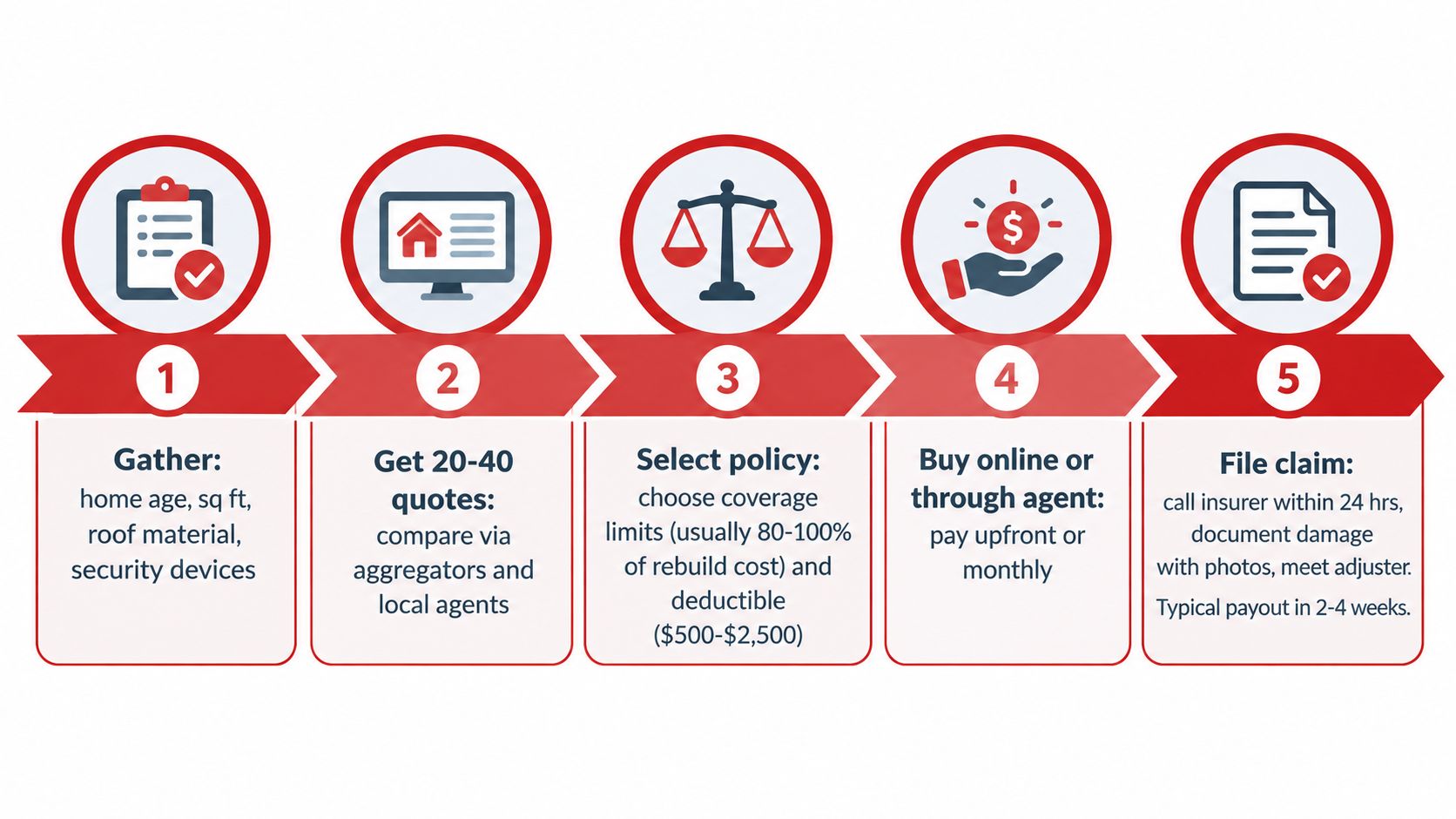
Shopping for insurance goes smoother when you gather the right facts before anyone starts quoting.
Getting quotes without wasting time
Start with the house details an underwriter will ask for anyway:
- Year built and square footage
- Roof age and material
- Updates to plumbing, electrical, and HVAC
- Foundation and construction type
- Prior claims if you know them
- Any detached structures
- Any known flood-zone concerns
Then verify the FEMA flood zone before closing if you're buying. That step can affect not only whether flood insurance is required, but also whether you want it even when it isn't mandatory.
If you want to compare options efficiently, Tennessee insurance quotes from Select Insurance Group is one example of an independent-agency path that lets homeowners review multiple carrier options rather than stopping at a single quote.
What to compare on every quote
Don't just compare the premium.
Check these line by line:
- Dwelling limit
- Wind and hail deductible
- Roof settlement terms
- Water-related exclusions or endorsements
- Liability limit
- Loss of use amount
- Whether flood is separate and quoted at all
A good quote review feels a little like reading the menu price and the fine print at the same time. The number up front matters. The conditions matter just as much.
When a storm hits, homeowners rarely regret asking more questions before binding the policy. They regret the question they never knew to ask.
What to do after damage happens
Claims go better when you slow down and document first.
- Protect the property from further damage: Tarp a roof opening if it's safe. Move belongings away from active leaks.
- Photograph everything: Wide shots, close-ups, exterior damage, interior water staining, and damaged personal property.
- Call the carrier promptly: Get the claim started and ask what emergency mitigation is allowed.
- Keep receipts: Temporary repairs, hotel stays for covered losses, and related emergency costs may matter later.
- Meet the adjuster prepared: Have your photos, contractor notes, and a list of damaged items ready.
Tree damage is common after strong storms, and homeowners often aren't sure how cleanup, debris removal, and property damage get separated in a claim. This how to manage tree insurance claims overview is a practical read for understanding that process.
One local habit that saves headaches
After any hail or wind event, don't rely only on what you can see from the driveway. Roof damage in Knoxville can be subtle at first and obvious later. If your neighborhood took a hit, document the date, keep every communication, and review your deductible before repairs begin so there's no confusion when estimates arrive.
Final Takeaways for Protecting Your Knoxville Home
Knoxville home insurance is often more affordable than many people expect, but a good premium doesn't guarantee a good policy. What matters is how the coverage fits Knoxville's actual risk pattern. Storm losses, roof condition, flood gaps, and deductible structure all matter more here than a generic checklist would suggest.
The smartest homeowners look past the headline price. They check whether the dwelling amount reflects rebuild cost, whether wind and hail deductibles are percentage-based, and whether the property needs separate flood coverage even if a lender doesn't require it. Those choices shape the financial outcome after a loss.
If you own a home already, pull out the declarations page and review it with fresh eyes. If you're buying, get quotes early enough to compare details without closing-week pressure. A little clarity now can save a lot of money and frustration later.
Insurance should help you sleep better in a storm, not leave you guessing after one.
Select Insurance Group, Inc. helps homeowners compare coverage options, review deductibles, and shop home insurance across multiple carriers with local Tennessee guidance. If you want a second look at your current policy or need a quote for a Knoxville purchase, visit Select Insurance Group, Inc. and ask for a plain-English review of your homeowners and flood options.