
The average Orlando renters insurance premium is roughly $13 to $15 per month, or about $154 per year, and Florida law doesn't require it, even though a landlord can. That's the number most renters want first, but the core decision is how much coverage you need and how much risk you're willing to keep.
Table of Contents
- What Renters Insurance in Orlando Costs in 2026
- The Four Coverage Pillars of an Orlando Renters Policy
- Why Your Quote Depends on Coverage Limits, Not Just Your ZIP Code
- Hurricanes, Floods, and the Gaps a Standard Orlando Policy Won't Cover
- How to Get a Renters Insurance Quote in Orlando Step by Step
- Landlord Requirements and Lease Clauses Orlando Renters Should Read Twice
- Discounts and Real Ways Orlando Renters Can Lower the Premium
- Choosing the Right Orlando Agency and Getting Covered Today
What Renters Insurance in Orlando Costs in 2026
A renter in Orlando can often get a basic policy for about the price of a couple of takeout meals, but the number changes fast once the coverage limit, deductible, and building risk change. In this market, the quote is tied less to a single citywide figure and more to what you insure, where you live, and how much protection you buy. For a broader breakdown of how monthly premiums are usually built, see this guide to renters insurance monthly costs.
Two neighbors in the same complex can still receive different quotes. One policy may use a lower personal property limit, while another assumes more replacement value, and that difference shows up in the premium. ZIP code still matters, but it is not the whole story. Carrier underwriting, deductible choice, and the age or construction profile of the building can all push the price up or down.
Practical rule: compare quotes only after you know what you own, because the cheapest quote is often the one that leaves out enough coverage to matter later.
Coverage limits are the biggest driver of the monthly bill. A renter who wants more protection for furniture, electronics, clothes, and small valuables will usually pay more than a renter who chooses a leaner contents limit. That is why Orlando premiums do not fit neatly into one number, and why a quote that looks high may reflect a policy that would pay more after a claim.
Orlando renters also need to read the quote with the lease in mind. Many landlords require proof of coverage, and some buildings want higher liability limits than a standard bare-bones policy includes. If you are trying to decide whether the premium is reasonable, the core question is whether the policy matches the lease, the value of your stuff, and the risk you are taking on by renting in a storm-prone state.
Flood is another reason the sticker price can mislead. A standard renters policy does not fill every storm gap, so a lower premium can still leave you exposed if you assume it protects against everything that can happen in a hurricane season. That trade-off matters in Orlando, where renters are often balancing tight housing budgets with the need for theft coverage, liability protection, and a place to stay if a covered loss makes the unit unlivable.
The Four Coverage Pillars of an Orlando Renters Policy

A solid policy bundles several protections that should match your lease, your furniture, and the way you live. The four pieces that matter most are personal property, personal liability, loss of use, and medical payments to others.
Personal property and how the payout works
Personal property coverage is the part renters notice first after theft or covered damage. If a bike disappears from a porch near Lake Eola Heights or a laptop gets ruined in a covered loss, this coverage replaces the item or reimburses it, depending on how the policy is written. The key distinction is replacement cost versus actual cash value. Replacement cost aims to pay what it takes to buy a comparable item new, while actual cash value factors in depreciation, which can leave the claim check smaller.
Practical rule: if you own furniture, electronics, or anything you'd have to replace, ask whether the quote is based on replacement cost.
Liability, loss of use, and guest medical
Personal liability helps if someone is injured at your place or you damage someone else's property. A dog bite at Lake Ivanhoe, a slip on a wet floor, or an accident that affects a neighboring unit can all turn into liability problems fast. Loss of use, also called additional living expenses, matters when a covered event pushes you out of the apartment for a while. If a water-heater rupture in a College Park duplex forces a temporary hotel stay, this coverage helps with relocation costs.
Medical payments to others is smaller and simpler. It pays modest medical bills for a guest hurt on your premises, even when fault is unclear. That matters because not every incident turns into a lawsuit, but somebody still needs care.
A quote only works if the policy language matches the risk
A standard policy protects your belongings and your liability exposure, not the rental structure itself. For a quick look at how Orlando policy terms are usually described, see the local explanation in this Orlando renters insurance guide. If you are comparing quotes, the question is whether each one protects what you own and covers the risks your lease creates.
Why Your Quote Depends on Coverage Limits, Not Just Your ZIP Code
Orlando renters often focus on ZIP code first, but the quote is shaped just as much by the coverage limit you choose. A graduate student with $12,000 in belongings does not need the same personal property limit as a family of four with $75,000 in contents, even if both live in the same part of town. The insurer is pricing the amount it may have to pay after a loss, so a quote can move up or down based on the value you want protected.
Three renter profiles, three realistic starting points
A student with a modest apartment and basic furniture can often start with a lower contents limit and a straightforward liability setup. A young professional with a desk setup, bikes, electronics, and better furniture usually needs more than the smallest limit, because replacing everything at once adds up fast. A family with a larger apartment or rental home should think room by room, not just item by item, since the total replacement cost usually matters more than one or two expensive pieces.
The premium follows the limit. A quote that looks inexpensive may be a quote with a thin contents limit or a weaker liability setup. If your lease asks for higher liability or if you want a better cushion for guest injuries and property damage claims, the monthly price can rise even when the ZIP code stays the same. That trade-off matters more than the headline number on a quote page.
Liability limits do not always move the premium much
Higher liability limits matter because lawsuits are where a cheap policy can fail you. Moving from a lower liability setting to a more protective one often changes the premium less than people expect, but it changes how much risk you can absorb if something goes wrong. That is why many renters with assets, or renters who host guests often, choose stronger liability protection even when the monthly cost only nudges upward.
A quote that looks inexpensive may be a quote with a thin contents limit or a weaker liability setup.
If you are furnishing an apartment yourself or keeping expensive electronics, do not copy a friend's coverage just because their premium looked good. Start with your contents, then choose the smallest deductible you can comfortably carry. That gives you a quote that fits your actual risk instead of a broad market average.
Hurricanes, Floods, and the Gaps a Standard Orlando Policy Won't Cover
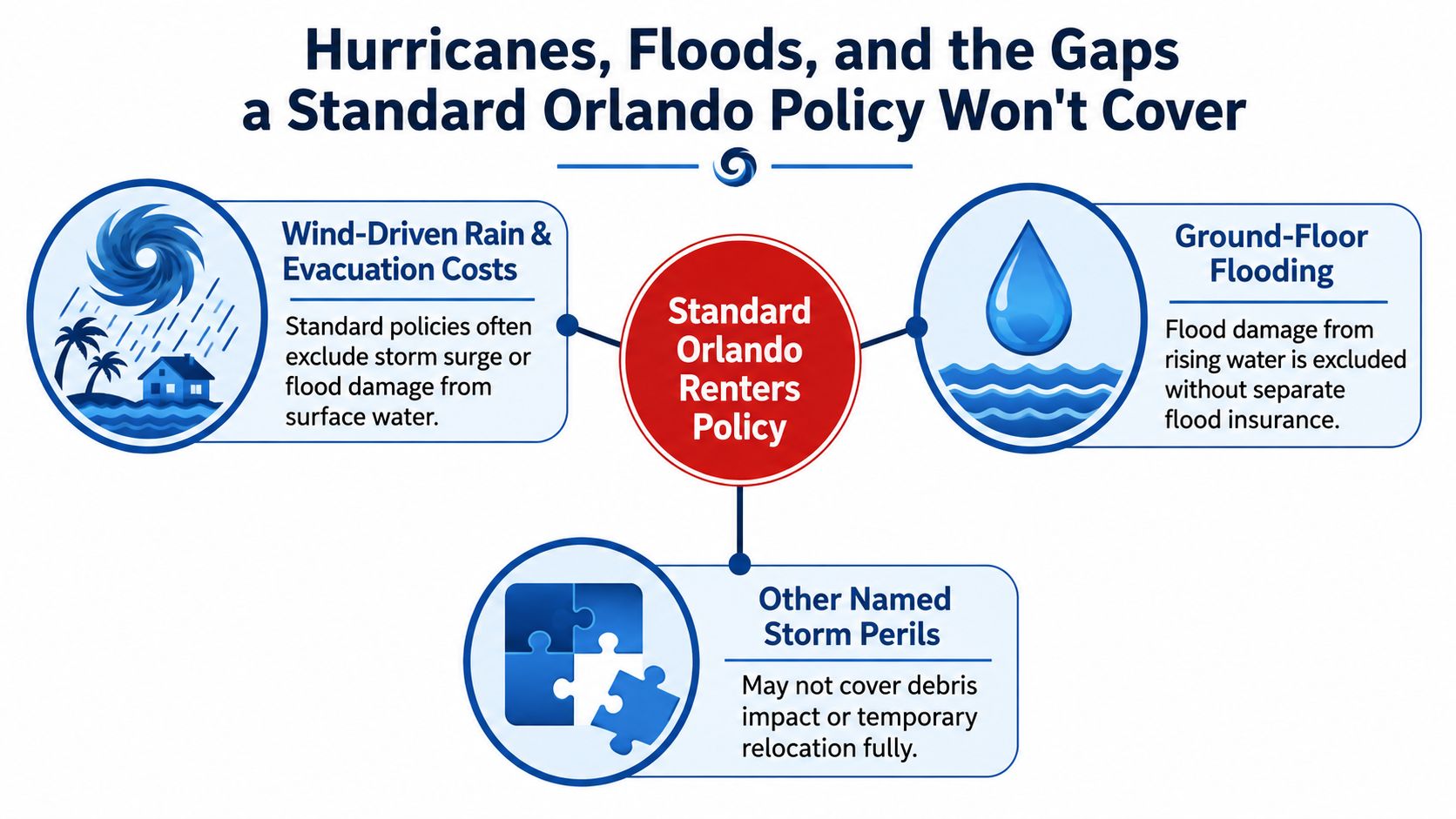
The mistake I see most often is a renter assuming “hurricane coverage” means everything is covered. Standard renters insurance does cover common losses like theft, fire, and other covered damage to your belongings, but flood damage is excluded, and that's where Orlando renters get surprised after a storm. In practical terms, the policy protects your stuff and your liability, not the building and not every kind of water intrusion.
What usually gets covered after a storm
If a covered event makes your unit temporarily unlivable, loss of use can help pay for hotel and related temporary living costs. That's the part renters remember after evacuation, because they're dealing with a short-term displacement while trying to salvage normal life. The policy is designed for your belongings and your living situation, not for repairs to the apartment structure itself.
Flood is different. Rising water, storm surge, or other flood-related losses generally call for a separate flood policy, and that can matter in Orlando when heavy rain, drainage issues, or nearby water sources create standing-water problems. Many renters learn that distinction only after they've already moved damaged belongings into a garage, a ground-level storage area, or another vulnerable spot.
What to ask before the next storm season
Before you bind a policy, ask where your belongings would be during an evacuation and whether those items would still be protected under the same policy terms. A box in a ground-floor storage area is not the same as furniture inside your unit, and a separate flood policy may be the only thing that responds if floodwater gets to it. If you need a practical checklist for post-flood cleanup and what to do first, FullScope Pest Control after a flood is a useful neutral resource to keep handy once the water recedes.
Orlando renters also need to keep landlord responsibility straight. The owner insures the structure, while your policy is for your contents and certain liability exposures. That's the cleanest way to avoid a bad surprise when everyone assumes the other policy will pay.
A quick reality check on storm losses
The most expensive mistake is assuming the policy is broader than it is. Wind damage, fire, and theft are the easier parts to understand, but flood, evacuation logistics, and storage-area exposure need a separate conversation before you sign. If you live low to the ground or near drainage-prone areas, ask about flood posture before you compare only the monthly premium.
How to Get a Renters Insurance Quote in Orlando Step by Step
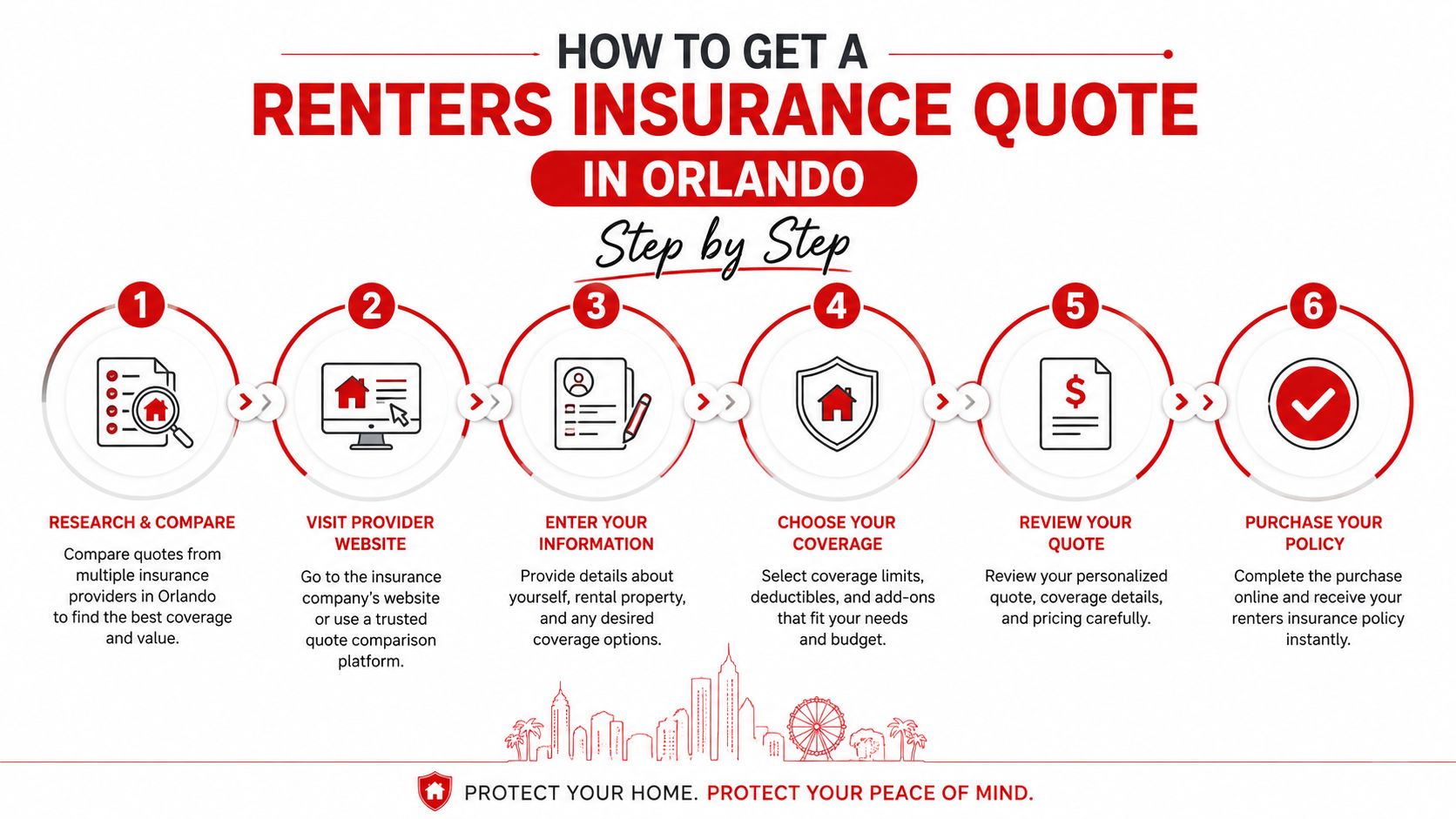
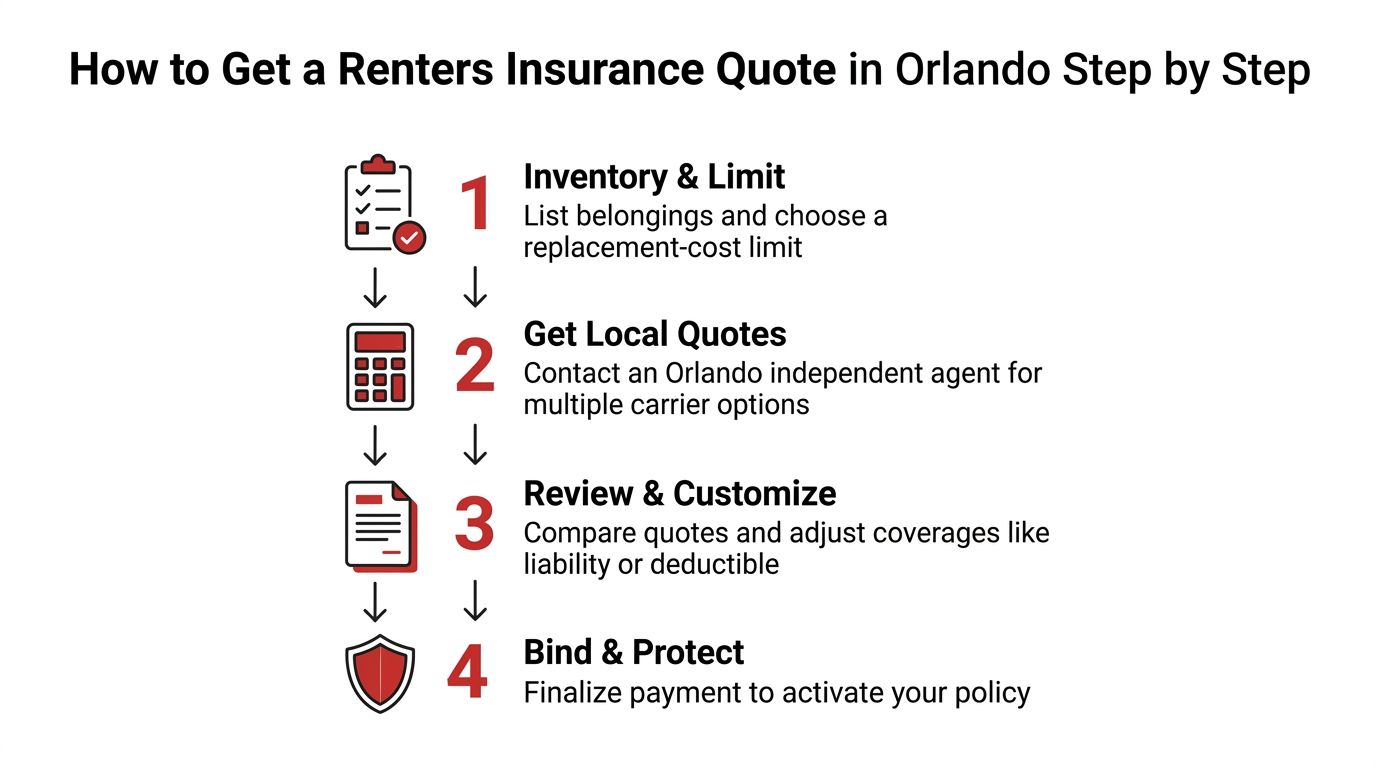
The cleanest quote process starts with your belongings, not with the carrier. Make a quick list of what you'd have to replace if you moved out tomorrow, then choose a personal property limit that reflects replacement cost instead of wishful thinking. If your apartment has a lot of electronics, furniture, or shared items, that number usually needs to be higher than the cheapest starter quote.
Gather the right information once
You'll save time if you have your lease, ID, and any prior policy details in front of you before you ask for quotes. A good quote process also asks about deductibles, liability, and whether you need special handling for roommates or landlords. If you're using an independent agency, the point is to get multiple carrier options from a single application instead of repeating the same facts over and over.
Practical rule: choose the deductible you can actually pay after a loss, not the deductible that makes the premium look attractive on paper.
A lot of Orlando renters also want to compare prices before they call. If you're doing that, compare renters insurance premiums with your actual coverage assumptions in mind, not just a headline monthly number. The right quote is the one that matches your contents, your lease, and your cash cushion.
Bind it, then store the proof
Once you've picked the limit and deductible, the final step is binding the policy and saving the proof of coverage. Modern agencies usually make this easy with document upload, digital payment, and instant ID cards, which helps when a landlord wants evidence right away. If you want to start that process now, you can use this Orlando quote request page and have your lease ready when you submit it.
The whole process should fit in one sitting if you've already done the contents estimate. The biggest time saver is being decisive about coverage limits before you shop, because that's what keeps the comparison honest.
Landlord Requirements and Lease Clauses Orlando Renters Should Read Twice
A lease can make renters insurance feel optional until you read the fine print. In Orlando, the policy itself may not be required by state law, but a landlord can still make it part of the rental agreement, and the exact clause matters more than most renters think. A clean lease usually asks for proof, a minimum liability limit, or both.
The three lease phrases that change your obligations
The first phrase is the minimum-limit clause, which sets the floor for liability or contents protection. The second is the additional-insured or interested-party clause, which asks for the landlord to be listed so they can receive proof of coverage. The third is the proof-of-coverage clause, which usually wants a Certificate of Insurance within a set window after move-in or renewal.
Those words sound bureaucratic, but they decide whether you're compliant. A downtown high-rise near Lake Eola may want stronger documentation and a tighter certificate deadline, while a single-family rental in Pine Hills may only ask for proof that a basic policy exists. If a kitchen fire damages neighboring units, the lease language shapes who gets notified, who has proof, and whether the landlord can show the tenant met the insurance condition.
The clause tenants forget to negotiate
One of the few useful negotiations is asking whether a higher deductible can offset a rider or extra requirement that the building already covers through its own master policy. That doesn't always work, but it's worth asking because some landlords are more flexible on structure than renters expect. If they want a specific form or certificate, get the exact wording before you buy, not after.
Practical rule: read the insurance clause before signing, because fixing a bad policy after move-in is always harder than buying the right one on day one.
The goal isn't to over-insure against everything. It's to make sure your policy satisfies the lease and still protects your belongings and your liability if something goes wrong.
Discounts and Real Ways Orlando Renters Can Lower the Premium
The smartest way to trim a renters premium is to change what drives the price, not to chase every discount on the page. For most Orlando households, bundling auto and renters is the biggest lever, because it usually produces the largest savings compared with small convenience-based discounts. If you already keep your auto policy in the same household, ask for the bundle first.
The discounts that usually matter
Autopay, paperless billing, and paid-in-full can add up, but they're usually secondary to bundling. Safety devices like smoke detectors, deadbolts, and smart leak sensors can help too, especially because they reduce the chance of a claim in the first place. Raising the deductible from a lower amount to $1,000 often lowers the premium, and that trade-off makes sense only if you already keep enough cash set aside to absorb the hit.
Not every discount is worth your time. Some carrier-specific offers sound good but don't move the quote enough to matter, especially if they're tied to unusual lifestyle assumptions. Skip anything that can't be clearly explained on the quote page or by the agent.
Three moves that tend to work
- Ask for the bundle first: If your auto and renters policies can live together, ask how the package changes the renters line.
- Test the deductible second: Move the deductible only if the premium relief is worth the extra out-of-pocket risk.
- Use simple safety upgrades: Add the devices you'd want anyway, then ask whether the carrier gives a credit for them.
The best discount is still the one that doesn't leave you underinsured. If a premium drop comes from cutting contents coverage too far, you've saved a little and created a much bigger problem later.
Choosing the Right Orlando Agency and Getting Covered Today
The three decisions that matter most in Orlando are still the same ones. Pick a coverage limit that matches what you own, decide whether your floor level or ZIP code makes a separate flood policy worth discussing, and use an independent agency that can compare multiple carriers without making you start over each time. That combination keeps the quote honest and the policy usable.
Select Insurance Group, Inc. fits that workflow because it offers renters coverage, quotes from multiple carriers, and local Central Florida service with bilingual help, secure document upload, and instant ID cards. For renters who want a quick answer without a long back-and-forth, that setup is practical, especially when a landlord wants proof fast and the lease has specific wording.
The cheapest policy in Orlando is the one that still pays when your apartment has a claim. If you're ready to sort out your coverage, have your lease and a rough contents estimate in hand, then call, text, or request a quote online and get the policy working before the next move-in deadline or storm forecast.
If you want help matching your Orlando lease to the right renters policy, Select Insurance Group, Inc. can walk you through coverage limits, deductible choices, and proof-of-insurance requirements in one conversation. Bring your lease, a quick contents estimate, and any landlord wording you've been given, and get the coverage handled before a small gap turns into a big bill.