
A Memphis driver can follow Tennessee's insurance law and still face a serious financial gap after one crash. The state's minimum liability limits are $25,000 per injured person, $50,000 per accident, and $25,000 for property damage, while one recent analysis estimated average full-coverage premiums in Memphis at about $2,944 per year, compared with $2,130 statewide. That is an $814 difference, or roughly 38%, according to NerdWallet's Memphis auto insurance analysis.
The reason Memphis auto insurance deserves more than a quick search for the lowest quote is local risk. Drivers face serious crash losses, vehicle theft exposure, and a meaningful risk of meeting an uninsured motorist. A minimum policy may satisfy the law, but it can leave your savings, wages, and vehicle unprotected when the damage exceeds the policy limit.
Table of Contents
- Introduction to Memphis Auto Insurance Today
- Tennessee Legal Requirements Every Memphis Driver Must Meet
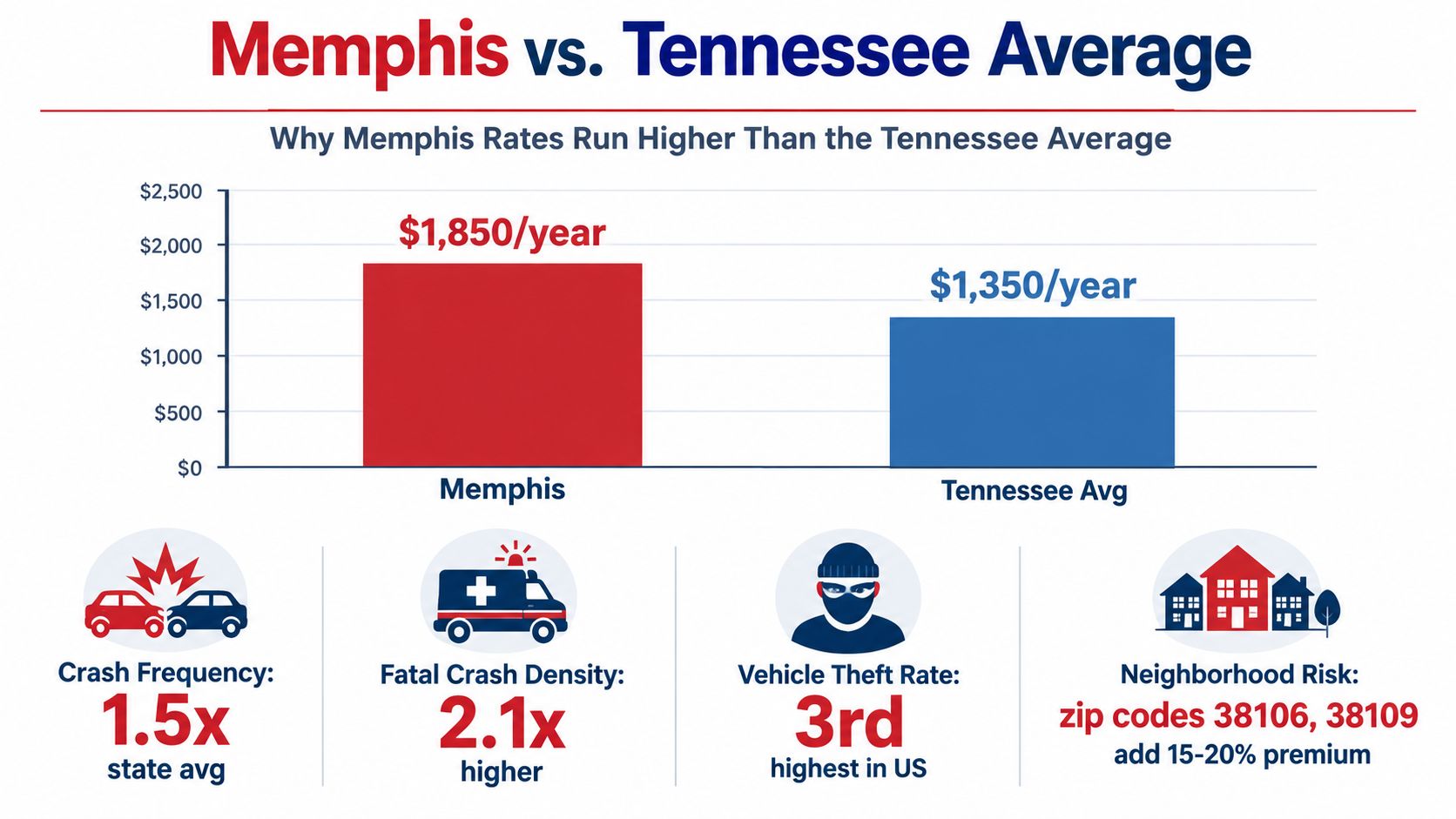
- Why Memphis Rates Run Higher Than the Tennessee Average
- What Memphis Drivers Actually Pay and How Coverage Levels Compare
- Proven Ways to Lower Your Memphis Auto Insurance Costs
- How to Compare Quotes and Handle Memphis Specific Issues
- Next Steps and How Select Insurance Group Can Help
Introduction to Memphis Auto Insurance Today
Memphis recorded 32,622 crashes and 176 fatal crashes inside city limits in 2024. Shelby County recorded 38,882 crashes and 200 fatal crashes that year, while the same analysis reported 148 pedestrian crashes and 28 pedestrian fatalities in Memphis year-to-date in its 2026 update, according to the Memphis crash statistics analysis. Those figures help explain why Memphis auto insurance can cost more than a driver expects, even when the driver follows Tennessee law.
Insurance pricing reflects several connected details: where the vehicle is kept, the car's type, the driver's record, selected limits, deductibles, claims history, and the insurer's assessment of local risk. In Memphis, crash density, vehicle theft, and encounters with uninsured drivers can influence both liability and physical-damage coverage.
Tennessee's legal minimums create a starting point, not a complete financial shield. The 25/50/25 limits may satisfy the state requirement, yet a serious collision can produce medical bills, vehicle repairs, legal expenses, and lost income beyond those limits. Choosing only the minimum can therefore leave your savings and wages exposed.
Practical rule: The cheapest legal policy and the most useful protection are two different decisions.
A useful comparison is a narrow bridge over a wide river. Minimum coverage may get you across a legal requirement, but broader limits and added protection can reduce the amount you must carry yourself after a major loss. The right choice depends on your car, budget, assets, and tolerance for paying an uncovered claim.
The key question is not, “What is the lowest Memphis auto insurance price?” Ask instead, “What protection can I afford, and what financial risk would I keep by choosing less?”
Tennessee Legal Requirements Every Memphis Driver Must Meet
Tennessee requires drivers to carry liability insurance, but the legal floor is modest beside the cost of a serious Memphis crash. The state minimum is commonly written as 25/50/25, a shorthand for three separate limits.
What 25/50/25 means
- $25,000 per injured person: The policy can pay up to this amount for bodily injury to one person in an at-fault accident, subject to the policy terms.
- $50,000 per accident: This is the total bodily-injury limit for everyone injured in one covered accident.
- $25,000 for property damage: This applies to damage you cause to another person's vehicle or property.
The Tennessee Department of Revenue's insurance guidance explains these statewide minimums and the need to maintain proof of insurance. Liability coverage pays for harm you cause to other people when you are legally responsible. It does not repair your own car after an accident you cause, and it does not automatically cover theft, weather damage, or vandalism.
A small safety net is a useful comparison. It may catch part of a loss, but it may not support the full weight of hospital bills, vehicle damage, legal costs, and lost income after a severe collision. If the claim exceeds your limits, you may have to pay the remaining amount personally.
Memphis-specific risks make that gap more important. Crash density, vehicle theft, and uninsured drivers can turn a low legal limit into limited financial protection. Tennessee's minimums satisfy the rule, but they may not match the risk a Memphis driver is trying to insure.
The uninsured motorist decision
Tennessee does not require uninsured motorist coverage, but insurers must offer it. You can reject the option only in writing, as explained by the Tennessee Department of Commerce and Insurance.
Uninsured motorist coverage can help when the driver who causes a crash has no insurance. Underinsured motorist coverage addresses a related situation, when the other driver has insurance but not enough to cover your losses. Availability and policy terms vary, so ask how bodily injury and property damage are handled before accepting or rejecting the coverage.
A driver who chooses only 25/50/25 may save money at purchase but retain more risk after a serious crash. In Memphis, that tradeoff can be especially difficult when the other driver lacks insurance or the losses exceed the available limits.
Drivers reviewing Tennessee auto insurance coverage should confirm the liability limits, uninsured or underinsured motorist protection, and physical-damage coverage included in the policy. A digital insurance card proves that coverage exists. It does not show whether the limits are broad enough for your car, finances, and Memphis driving risks.
Why Memphis Rates Run Higher Than the Tennessee Average
Memphis auto insurance prices reflect the claims insurers expect to pay, not only a driver's personal record. A careful driver may still receive a higher quote when the vehicle is frequently stolen, the garaging area produces many claims, or local repairs and liability losses cost more. Tennessee's 25/50/25 minimums set a legal floor, but Memphis risks can rise above that floor quickly.
Crash severity influences liability pricing
Frequent collisions and fatal events in Memphis and Shelby County affect the liability side of a policy. Insurers price exposure based on local claims experience, rather than treating Memphis like an abstract statewide average. Severe crashes can create larger bodily-injury claims, which raises the cost of liability protection.
Pedestrian crashes add another layer. A vehicle may have limited damage while the resulting medical and liability losses are substantial. A driver's ordinary commute can feel safe, yet the policy still needs to account for the broader streets and traffic conditions around Memphis.
Theft affects coverage for non-collision losses
Vehicle theft matters to coverage for losses such as theft, vandalism, fire, and certain weather events. A 2026 industry summary citing NICB data reported that the Memphis metro theft rate exceeded 427 stolen vehicles per 100,000 residents, ranked third nationally, and increased 36% from 2019 to 2025. Those figures appear in the Memphis vehicle theft summary.
A stolen car may be recovered with damage or declared a total loss. Insurers account for both the chance of a theft claim and the possible payout. The vehicle's make, model, age, security features, and overnight location can all affect the quote.
Coverage insight: A low liability quote does not show whether your vehicle could be replaced after theft.
Location creates quote variation
Two Memphis households can receive different prices because insurers use territory and garaging information during underwriting. A ZIP code is not a judgment about the driver. It groups locations by claims experience and expected risk.
Request quotes using the exact address, vehicle, limits, and deductible you plan to use. Listing a different garaging address to seek a lower price can create claim problems and may violate the policy application terms.
Check the vehicle's history before buying a used car. A branded title record check guide can explain why prior damage and title status matter during ownership and insurance discussions.
What Memphis Drivers Actually Pay and How Coverage Levels Compare
A recent estimate placed Memphis minimum coverage at about $89 per month and full coverage at about $198 per month. Another published estimate put full coverage near $2,671 per year and reported that Memphis rates had moved up or down by 27% since 2023. These figures come from separate estimates, so use them as budgeting references rather than guaranteed quotes or one fixed market price. Review the Memphis pricing estimate and the earlier Memphis premium comparison for their source context.
Your price can change with liability limits, collision and other-than-collision coverage, deductibles, vehicle value, driving history, credit-related rating practices where permitted, and the insurer's appetite for a particular risk. A monthly estimate is like a rough grocery budget. The declarations page is the receipt showing what your policy includes.
Memphis Coverage Level Cost and Protection Comparison
| Coverage Level | Typical Memphis Cost | What It Covers | Key Gap in Memphis |
|---|---|---|---|
| State minimum liability | About $89 per month in one recent estimate | Injuries and property damage you cause, up to 25/50/25 limits | Little protection for losses above the limits, your own vehicle, theft, or an uninsured driver |
| Full coverage | About $198 per month in one recent estimate | Liability plus protection for your vehicle through collision and other-than-collision coverage, subject to deductibles and policy terms | Higher cost, and the policy still needs careful review for liability and UM/UIM limits |
| Higher-limit policy with physical-damage coverage | Varies by driver, vehicle, and carrier | Broader financial protection through higher liability limits and selected vehicle coverage | A higher premium and possible deductibles, but less exposure to severe out-of-pocket losses |
Tennessee's 25/50/25 minimums may look affordable, but they cover only limited liability. In Memphis, theft, dense traffic, crashes, and uninsured drivers can make that low price poor value if a loss exceeds the limits or damages your own vehicle.
Two practical household examples
A budget commuter with an older sedan that has little market value may decide to drop collision coverage if the driver could absorb the loss and has another way to reach work. That choice still leaves liability limits and uninsured motorist protection to review carefully.
A family financing an SUV faces a different set of obligations. The lender may require physical-damage coverage, while replacing the vehicle after theft or a total loss could strain the household budget. For that family, the lowest liability-only option may fail to meet loan terms and leave the transportation plan exposed.
A deductible is the amount you pay before certain covered vehicle losses are paid. Raising it can lower the premium, but choose an amount you could pay promptly after a crash or theft. A lower monthly bill has little value if the deductible prevents you from repairing or replacing the car.
Proven Ways to Lower Your Memphis Auto Insurance Costs
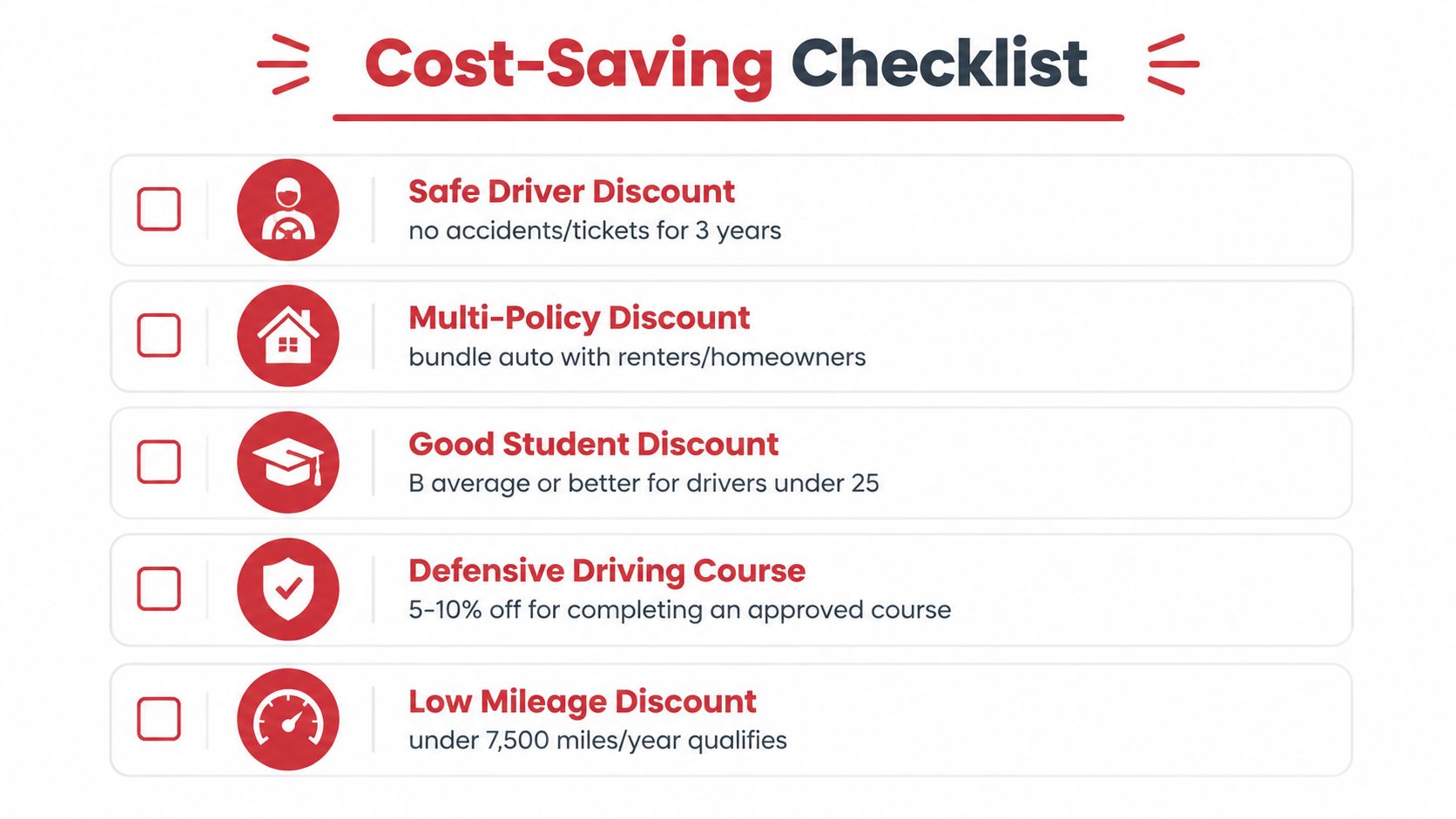
Lowering a Memphis premium doesn't require cutting every protection. Start by separating pricing discounts from coverage reductions. Discounts reduce the rate while keeping the selected protection. Lowering limits or removing coverage reduces the insurer's obligation and can create a much larger financial risk.
Ask about every relevant discount
Call an agent or carrier and ask for a written review of available discounts. Common categories include:
- Safe driving: A clean driving record may qualify for a safe-driver price reduction, depending on the insurer's rules.
- Bundling: Combining auto with renters or homeowners coverage can create a multi-policy discount.
- Student status: Young drivers may qualify for a good-student discount under the carrier's eligibility requirements.
- Driver education: An approved defensive-driving course may affect pricing where the insurer accepts it.
- Vehicle equipment: Anti-theft devices, airbags, and other safety features may matter to underwriting.
- Mileage: Drivers who use a vehicle less often may qualify for a low-mileage rating category.
- Payment choices: Some insurers price policies differently based on payment frequency, electronic payments, or paid-in-full arrangements.
The exact eligibility rules vary. Don't assume a discount applies just because your vehicle has a safety feature or because you completed a course. Ask what documentation the insurer needs and when the savings begin.
Adjust the policy without weakening it blindly
A higher collision deductible can lower the premium, but it shifts more repair cost to you. Review the choice alongside your emergency fund, vehicle value, and likelihood that a stolen or damaged car would disrupt work or family responsibilities.
Also protect your continuous insurance history. A lapse can make future shopping harder or more expensive, even if you didn't drive during the gap. If a payment is difficult, contact the insurer before cancellation and ask about available arrangements.
Use a quote worksheet
Keep these details together:
- Vehicle identification information and current mileage.
- Driver licenses, household drivers, and driving history.
- Current declarations page.
- Preferred liability limits and UM/UIM decision.
- Collision deductibles.
- Desired discounts and supporting documents.
Requesting quotes with the same information lets you compare actual pricing rather than comparing incomplete estimates. That process usually saves more time than repeatedly changing coverage until a single quote appears cheaper.
How to Compare Quotes and Handle Memphis Specific Issues
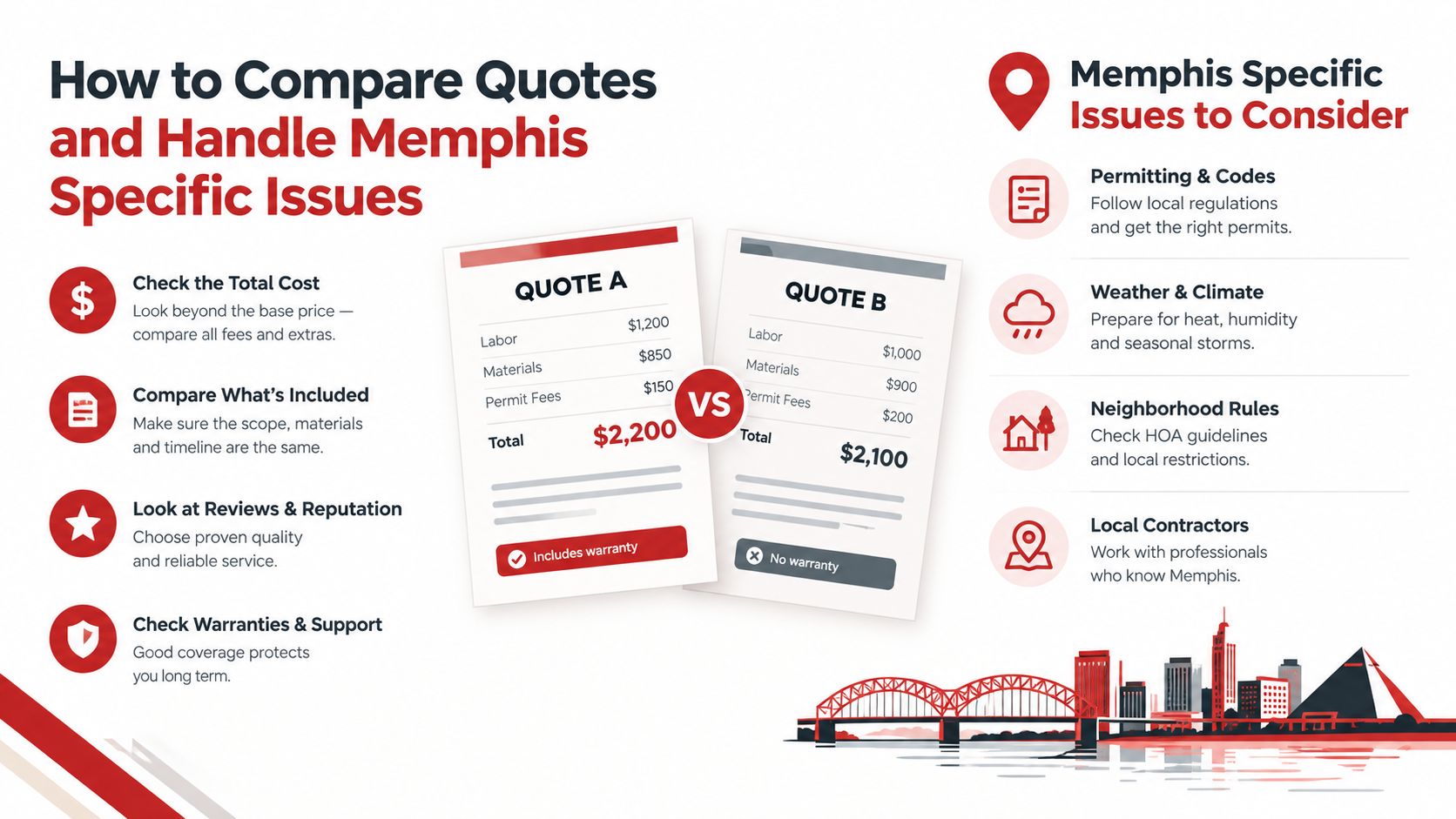
Memphis quote comparisons become useful only when every insurer receives the same information. Provide identical drivers, address, vehicles, liability limits, UM/UIM selections, deductibles, and requested coverage. A quote using Tennessee's minimum limits cannot be fairly compared with one using higher limits. The cheaper figure reflects less protection, not necessarily better value.
Use a decision matrix
| Question | Quote A | Quote B | Quote C |
|---|---|---|---|
| Liability limits | Record the exact limits | Record the exact limits | Record the exact limits |
| UM/UIM selection | Accepted, rejected, or included | Accepted, rejected, or included | Accepted, rejected, or included |
| Other-than-collision deductible | Record the amount | Record the amount | Record the amount |
| Collision deductible | Record the amount | Record the amount | Record the amount |
| Discounts applied | List each discount | List each discount | List each discount |
| Claims and service questions | Write the response | Write the response | Write the response |
Ask how each policy responds after theft, a hit-and-run, a serious injury crash, or flooding. Other-than-collision coverage may address some theft and water-related losses, but exclusions still apply. Read the exclusions and endorsements rather than assuming that “full coverage” means every possible loss is covered.
Address local problems before buying
Memphis has risks that can make Tennessee's low legal minimums poor protection for a serious loss. Ask how the policy handles uninsured or underinsured drivers, especially because uninsured motorists can leave you responsible for medical bills, vehicle damage, or lost income after a crash. Declining UM/UIM may reduce the premium while leaving a large financial gap.
Flood-prone parking areas and busy accident corridors deserve specific questions. Confirm whether relevant water damage is covered and whether rental reimbursement applies while the vehicle is being repaired. If a serious driving violation requires an SR-22, verify who files it, how long it must remain active, and what happens if the policy cancels.
Use a written comparison, not just the monthly price. An independent agency can gather comparable options, while you review the limits, exclusions, deductibles, and service details. The Tennessee insurance quote support page can be one starting point for requesting options. Keep the same limits and deductibles across each request so the results remain comparable.
Next Steps and How Select Insurance Group Can Help
Memphis drivers don't need to choose between affordability and responsible protection, but they do need to compare those goals. Tennessee's 25/50/25 limits satisfy the legal floor, while local crash, theft, and uninsured-driver risks can make that floor too narrow for many households.
Start by gathering your current declarations page, vehicle information, driver details, preferred deductibles, and any documents needed for discounts. Then request quotes that use identical coverage so you can compare price and protection together. If the vehicle is financed, confirm the lender's requirements before removing collision or other optional coverages.
Select Insurance Group, Inc. provides Tennessee auto insurance options and compares quotes from multiple carriers. Its bilingual specialists can help customers review documents, payments, policy updates, and claims support, making the process easier for drivers who want guidance in English or Spanish. You can also review the agency's broader service approach through its insurance group information.
Don't accept a surprisingly high quote without asking what is driving it. A licensed agent can check whether the issue is the vehicle, address, limits, deductible, driving record, missing discount, or carrier appetite, then help you compare a different option without removing protection.
Select Insurance Group, Inc. offers free, no-obligation auto insurance quotes and can compare coverage options for Memphis drivers who want stronger protection than the legal minimum alone. Visit Select Insurance Group, Inc. with your driver, vehicle, and current policy details ready, and ask for a clear comparison of limits, deductibles, UM/UIM coverage, and available discounts.