
You're on the phone with a Florida insurance office, and the quote sounds fine until the conversation turns to deductibles, exclusions, and what happens if a claim is denied. The price is clear, but the policy isn't. That gap is exactly where a bilingual insurance agent Florida shoppers can trust makes the difference, because insurance only helps when the person buying it understands what's covered, what isn't, and what changes at renewal.
For Spanish-speaking families, that's not a minor inconvenience. It's the difference between signing quickly and signing carefully, between assuming a low premium means protection, and knowing exactly what the policy will do when a storm, crash, or cancellation notice lands in the mailbox. Florida's language environment makes this a real everyday issue, not a niche request.
Table of Contents
- Why a Bilingual Agent Matters in Florida
- The Florida Insurance Market and Bilingual Demand
- How to Verify a Real Bilingual Insurance Agent
- Personal and Commercial Coverage to Discuss
- Getting a Fast Bilingual Quote From Select Insurance Group
- Common Mistakes to Avoid When Choosing an Agent
- Next Steps and Bilingual Insurance FAQ
Why a Bilingual Agent Matters in Florida
A family renews auto coverage in Central Florida, gets a lower number than last year, and signs without asking much more. Later, after a claim, they discover the deductible is higher than they thought, the liability limits are tighter than they expected, and the renewal notice was never clearly explained. That's not a language issue in the abstract, it's a coverage problem.
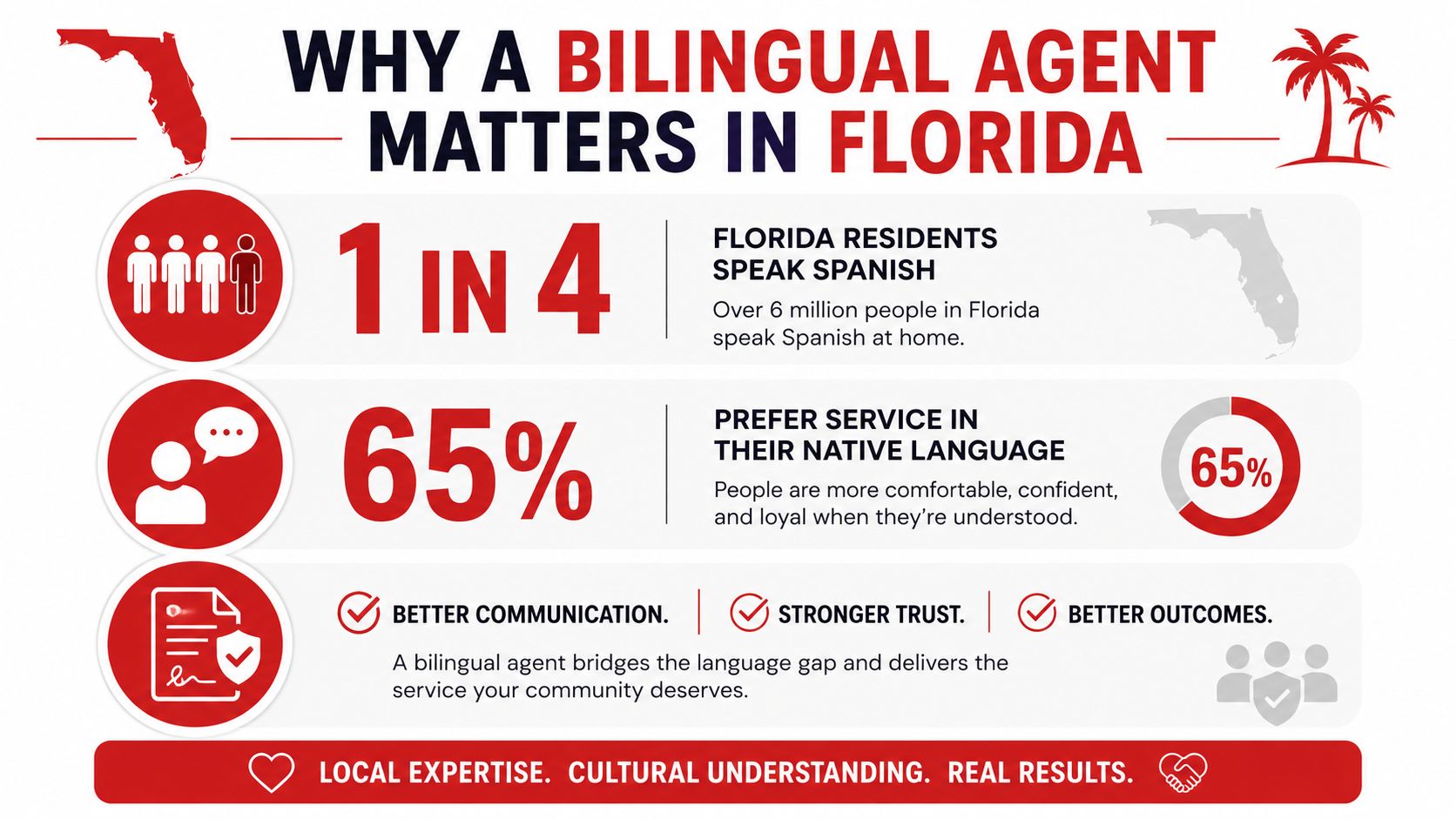
Florida's need for multilingual support is visible in the state's language profile, where the limited-English-proficient population reached 4,963,674 people age 5 and older, 46.4% of residents in that age group were classified as LEP, and only 18.6% spoke only English and 35.1% spoke English very well, according to the Migration Policy Institute's Florida language profile. That makes language clarity a daily insurance issue, not a courtesy.
Practical rule: if a policy term would be hard to explain in a short phone call, it'll be harder to understand later under stress.
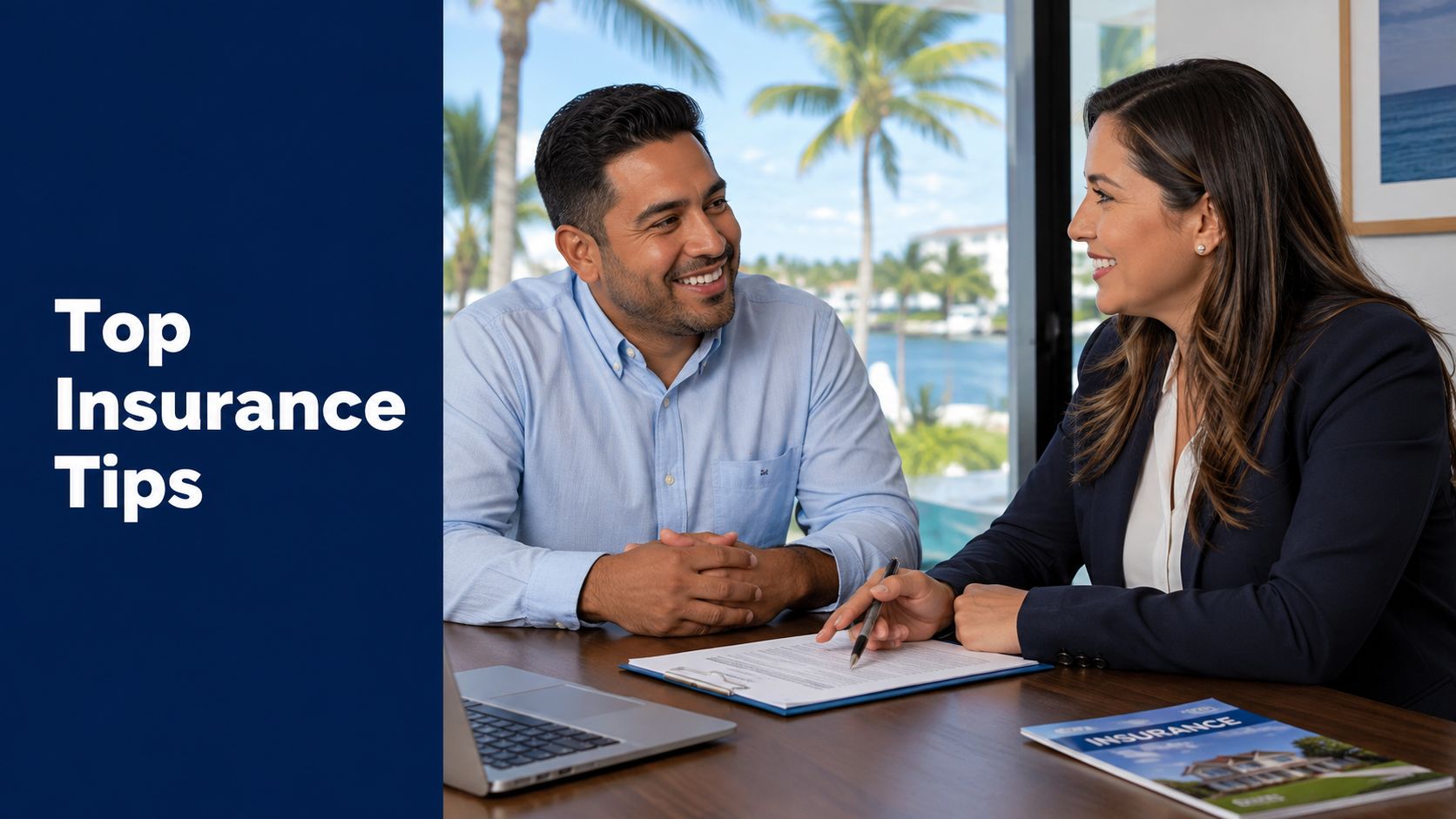
A bilingual agent changes the whole buying experience. Instead of translating only the greeting, the agent can explain coverage limits, deductibles, claims steps, and renewal choices in a way the shopper can question and verify. For a local shopper comparing options, that can mean a more confident decision, whether the conversation starts in an office, over the phone, or through a local agency such as Select Insurance Group's Kissimmee office.
Florida also isn't standing still on language demand. The state's LEP growth from 2000 to 2023 was reported at 85.7% in the same profile, which points to a long-term increase in multilingual households rather than a passing trend. For shoppers looking beyond personal auto, a helpful public-facing resource on Spanish-language support and related legal-service communication is the US Immigration Bonds Tampa guide, since it shows how much trust depends on clear language when decisions carry consequences.
The Florida Insurance Market and Bilingual Demand
Florida has a large enough insurance labor market that bilingual capability can become a real specialization instead of a novelty. The U.S. Bureau of Labor Statistics counted 40,030 insurance sales agents in Florida in May 2023, with a mean annual wage of $81,410 and a location quotient of 1.39, which means the occupation is more concentrated here than in the nation overall, according to the BLS occupational profile for insurance sales agents. In plain terms, Florida is crowded enough to support specialists, and language skill is one of the clearest ways to stand out.
That same BLS profile shows 12,360 insurance sales agents in the Miami-Fort Lauderdale-West Palm Beach metro area alone, with a mean annual wage of $83,180. That concentration matters because the metro sits inside one of the country's most linguistically diverse markets, where a client may want not just a quote, but a quote they can compare, question, and understand.
The insurance job market also tells you something about service expectations. Nationally, the BLS counted 457,510 insurance sales agents with a mean annual wage of $79,700, so Florida's state wage level sits slightly above the national average. That doesn't mean every agent is better, but it does show that the state's insurance business is substantial enough for agencies to invest in bilingual workflows, longer consultative conversations, and broader carrier access.
A bilingual agency matters most when it operates as an independent shop, because the customer gets comparison instead of a single-company pitch. That's where multilingual service and multi-carrier access fit together. A shopper who needs coverage for a family vehicle, a condo, or a storefront wants translation plus options, not just one translated quote.
Bottom line: in Florida, bilingual service is a market advantage because the customer base is large, diverse, and often making high-stakes decisions under time pressure.
How to Verify a Real Bilingual Insurance Agent
The easiest mistake is believing a website banner. A real bilingual agent should be able to do more than say they speak Spanish. They should be able to explain policy terms, handle documents, and walk you through a claim conversation without switching back to English whenever the details get technical.
Start with licensing and fluency, not marketing
First, confirm the agent is licensed in Florida and active. Then ask for a short conversation in Spanish about a real policy topic, not just small talk. If the discussion gets shaky when you ask about deductibles, coverage limits, or cancellation notices, the person may be bilingual in greeting only.
After that, ask how the agency handles paperwork. A strong bilingual office can explain whether policy declarations, renewal notices, and claims messages are discussed in Spanish, or at least reviewed line by line so nothing gets lost in translation. That matters because insurance confusion usually appears in the documents, not the sales pitch.
You should also check whether the agency is independent, because that affects whether you're comparing one carrier or several. If you want a practical starting point on that distinction, use the agency's explanation of independent insurance agent service and then verify that the quote process reflects it.
Look at the training path behind the agent
Florida pre-licensing outcomes vary sharply by training provider. In the state's 2024 pre-licensing report card for PL0215 attempts, Kaplan Financial Education posted a 78% pass rate with 700 passes, 196 fails, 896 attempts, while A.D. Banker & Company posted 49% and Insurance Institute of South Florida posted 30%, according to the Florida pre-licensing report card. That spread is a reminder that preparation quality matters before a new agent ever sits across from a customer.
Ask one direct question, “How do you explain claims, billing, and cancellation in Spanish?” The answer tells you more than a logo ever will.
Personal and Commercial Coverage to Discuss
A good bilingual conversation in Florida should move past “What's the price?” and into “What problem am I trying to solve?” That's true whether the policy is for a minivan, a duplex, or a landscaping company. The same language barrier that obscures a family policy can also hide gaps in a business policy, especially when the buyer is signing fast.
Personal lines that deserve plain-language review
For personal coverage, a bilingual agent should be ready to discuss auto, homeowners, renters, motorcycle, RV, and flood. The important part isn't naming the policy, it's translating the tradeoffs. On auto, ask about liability limits, uninsured motorist coverage, and what happens if the driver in your household is at fault but the other driver carries little coverage. For homes, ask how the policy treats wind, hurricane-related deductibles, and roof or water exclusions.
Florida shoppers should also ask about changing auto rules and how those rules affect renewal decisions. The exact legal minimums and coverage choices can change, so the practical question is whether the agent will explain the current requirement set and how it affects your risk if you carry too little protection. For many households, the issue isn't whether the policy is affordable today, it's whether it can survive a claim tomorrow.
Commercial lines need the same discipline
Small business owners often need a different conversation. A bilingual agent should be able to talk through general liability, commercial property, workers' compensation, commercial auto, and trucking coverage in terms of exposure, operations, and payroll or vehicle use. A contractor needs to know whether tools, trailers, and jobsite incidents are treated the way the owner assumes they are. A delivery business needs to know how drivers, vehicles, and cargo fit under the policy.
If you're comparing business coverage and wondering whether a treatment, service, or office expense is typically handled by insurance, a useful consumer explanation of coverage questions can be found in the article on covered by insurance at MedAmerica Rehab Center. The point isn't the subject matter, it's the habit of asking clear coverage questions before you sign.
| Coverage Type | Who It Protects | Key Question to Ask |
|---|---|---|
| Auto | Drivers, passengers, and other people on the road | What liability limits and uninsured motorist options do I actually need? |
| Homeowners | The home and the family inside it | How do wind, hurricane, and water exclusions work here? |
| Renters | Personal property and liability | If something gets stolen or damaged, what proof will the claim need? |
| Flood | The building and contents exposed to rising water | Is flood separate from my home policy, and what isn't covered? |
| General Liability | Customers and visitors | What incidents are excluded from my business activity? |
| Commercial Auto | Business vehicles and drivers | Are employees, owners, and non-owned autos all treated the same way? |
Getting a Fast Bilingual Quote From Select Insurance Group
A strong quote process should feel organized, not rushed. At Select Insurance Group, the workflow starts with a bilingual conversation about the vehicle, home, or business, then the agency compares instant options across 20 to 40 leading carriers and presents choices in a way the customer can read and compare. That matters because a fast quote is only useful if the shopper can still understand the differences before choosing.
What the first call should cover
A good first call is practical. For a personal policy, the agent should gather the vehicle or property details, the current policy situation, and the coverage goals. For a business policy, the conversation should move quickly to operations, vehicles, locations, and the kinds of claims the owner worries about most.
Select Insurance Group's model also includes secure document upload, payments, policy updates, and claim support, which means the customer doesn't have to restart the conversation every time a form or notice arrives. The agency also lists local offices in Central Florida and the Carolinas, with phone and text access for responsive follow-up. For readers who want a local office example, the Select Insurance Group Orlando page shows how that access is presented to customers.
Why speed still needs structure
Fast quoting only works when the carrier comparison stays organized. A bilingual agent should be able to explain why one option costs less, what got removed to get there, and whether that tradeoff is acceptable for your situation. That's especially important in Florida, where home, auto, and business buyers often need to compare protection, not just premium.
If a quote arrives quickly but no one can explain the exclusions in plain Spanish or plain English, the process isn't really done yet.
Common Mistakes to Avoid When Choosing an Agent
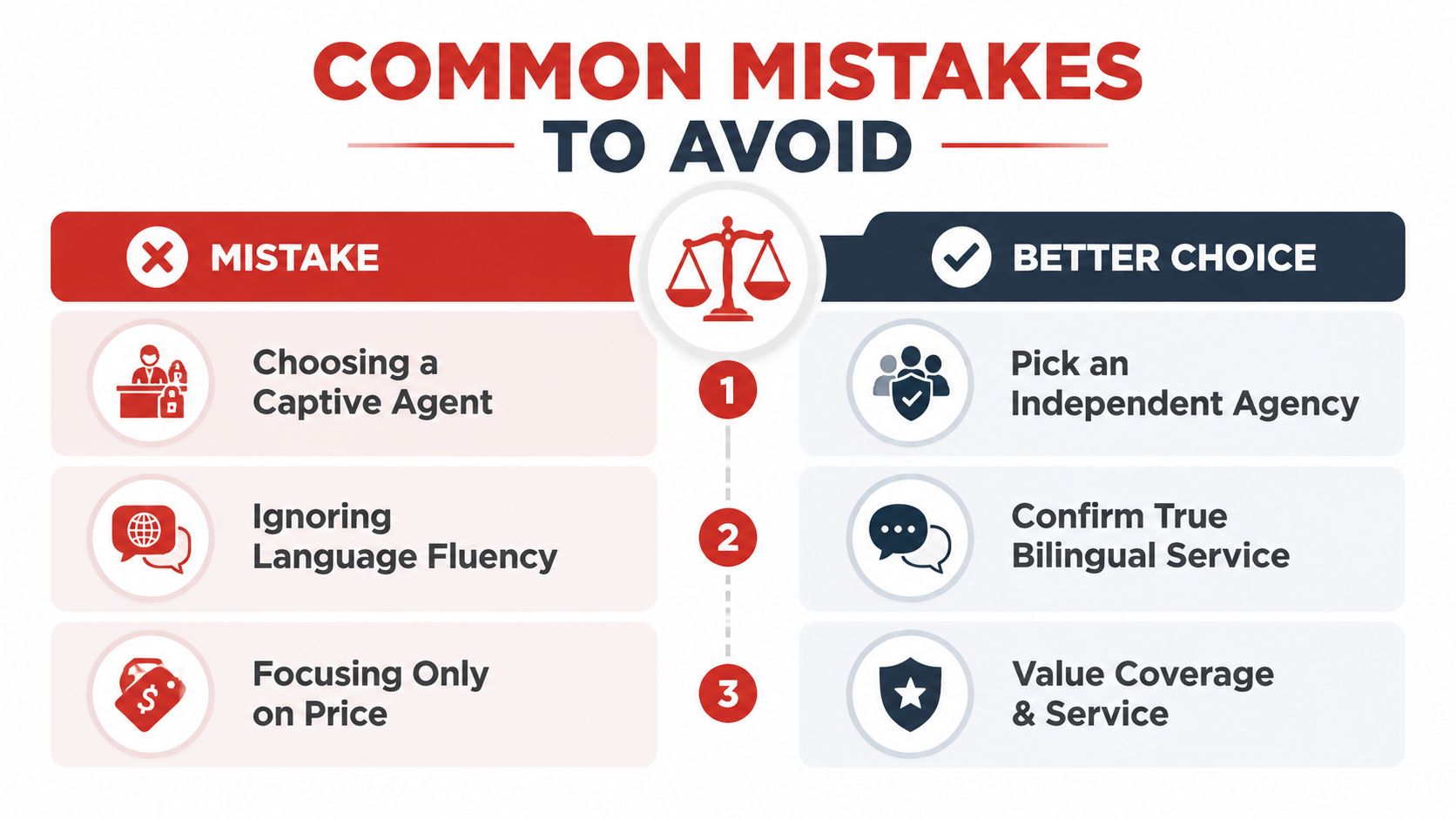
The biggest mistake is treating every agent the same. A captive agent represents one company, while an independent agency can compare multiple carriers, and that difference changes the whole conversation. If you don't ask which model you're dealing with, you may think you're shopping broadly when you're seeing just one menu.
Price without context is a bad shortcut
A second mistake is chasing the lowest premium and stopping there. The lower number may mean a higher deductible, thinner liability, narrower claims support, or a policy that's harder to manage in Spanish when something goes wrong. In Florida, that can become expensive the moment a storm, collision, or cancellation notice enters the picture.
The better move is to compare the policy details side by side and ask what changed to produce the lower quote. If the answer isn't clear, the quote isn't ready to sign.
Language service has to reach claims and billing
Another common error is assuming “bilingual” means every part of the service is bilingual. It doesn't. The test is whether the office can explain billing questions, reinstatement issues, cancellation notices, and claim steps in the language the customer prefers.
Use this test: if the agent can't explain how a claim starts, who calls whom, and what paperwork follows, keep asking until the workflow makes sense.
The final mistake is assuming every carrier handles billing and cancellation the same way. They don't, and that's why independent agencies matter. The right questions are simple, but they're not optional, especially if you're managing a household or business where one missed notice can create a bigger problem than the premium itself.
Next Steps and Bilingual Insurance FAQ
Start with three actions. First, verify the Florida license. Second, ask for a real Spanish conversation about coverage, documents, and claims. Third, compare at least one quote from an independent agency against your current policy so you can see what changed, not just what the price is.
Quick checklist
- Confirm the license and make sure the person can discuss your policy without hand-waving.
- Ask about documents in Spanish, especially policy declarations, renewal notices, claims messages, and cancellation notices.
- Review the coverage for the exact risks you face, not just the cheapest premium.
- Check carrier breadth so you know whether you're seeing one option or several.
- Keep notes on who explained what, so you can compare answers later.
Common questions Florida shoppers ask
Do bilingual agents always provide every document in Spanish? Not always. Ask directly how they handle policy forms, billing notices, and claims communication before you buy.
How do I know if the agent really speaks Spanish well enough? Ask insurance-specific questions in Spanish. A fluent greeting is different from explaining deductibles or exclusions.
What should I expect from a commission-based agent? Expect the agent to be paid through the policy relationship, but still insist on clear comparisons, because compensation shouldn't replace coverage advice.
How can I verify a Florida license? Ask for the license details and check that the agent is active before sharing sensitive information or binding coverage.
If you want bilingual help with personal or commercial coverage, Select Insurance Group, Inc. works with Florida shoppers who need plain-language guidance, multi-carrier comparison, and fast quote turnaround. Visit Select Insurance Group, Inc. to ask for a bilingual quote and compare options before your next renewal or new-policy decision.