
Most Chattanooga business owners hear the same advice: carry Tennessee's legal minimum and you're covered. That advice confuses legal compliance with financial protection. A policy can satisfy the state and still leave a contractor, distributor, service company, or delivery operation exposed to a loss that threatens the business.
Chattanooga Business Auto insurance needs to reflect how vehicles are used. That includes company vans, pickups, trucks, rented vehicles, and employees using personal cars for work. It also means accounting for the city's manufacturing and freight economy, where vehicle uptime, liability protection, and dependable operations directly affect revenue.
Table of Contents
- The Reality of Commercial Auto Risk in Chattanooga
- Tennessee Legal Minimums and Market Realities
- Hidden Exposures for Hired and Non-Owned Vehicles
- Tailoring Coverage for Local Fleets and Contractors
- How Compliance and Driver Records Affect Premiums
- Steps to Secure Quotes and Choose a Local Agent
The Reality of Commercial Auto Risk in Chattanooga
Chattanooga isn't an isolated retail market. It sits inside a major automotive manufacturing corridor connected to suppliers, contractors, warehouses, and freight routes. The Greater Chattanooga regional directory lists Volkswagen Chattanooga with 5,239 employees, along with Denso Manufacturing at 1,444 employees, Gestamp Chattanooga at 1,282, Nokian Tyres at 475, and Total Network Manufacturing at 354. Those figures are documented in federal Tennessee commercial vehicle safety materials.
That industrial concentration creates more than factory employment. It supports fleets of supplier vehicles, contractor pickups, delivery vans, maintenance trucks, and commercial vehicles moving materials between facilities and job sites. A collision involving one of those vehicles can affect a company's equipment, employees, customers, cargo, contracts, and reputation at the same time.
The minimum policy is a starting point, not a strategy
Tennessee's statutory auto liability floor is 25/50/15, meaning $25,000 for bodily injury to one person, $50,000 for bodily injury per accident, and $15,000 for property damage per accident, as summarized in Tennessee commercial auto requirements guidance. Those limits may satisfy a legal requirement, but they don't define the amount a business could owe after a serious crash.
A business vehicle can damage another vehicle, injure multiple people, block a worksite, or trigger a claim against the company itself. Repair costs, medical bills, lost income, attorney fees, and settlement demands can quickly exceed a low liability limit. The business owner remains responsible for the shortfall.
Broker's rule: Choose limits based on the financial damage your operation could cause, not merely the minimum amount required to put a vehicle on the road.
Chattanooga operations create layered exposure
A local HVAC company may send vans through congested corridors all day. A supplier may move parts between plants. A contractor may carry tools and materials to several sites, while an employee uses a personal sedan to deposit checks or visit a customer. Each activity creates a different coverage question.
Commercial auto insurance should be treated as an operating safeguard. The right policy protects continuity when a vehicle is damaged, a driver causes injury, or a claim reaches beyond the value of the vehicle itself. The wrong policy can leave the company paying out of pocket precisely when cash flow is already under pressure.
Tennessee Legal Minimums and Market Realities
Tennessee's legal minimum is a starting point, not a responsible risk limit. The 25/50/15 floor described above may keep a vehicle compliant, but it leaves little room for a serious injury claim, multiple claimants, rising repair bills, or litigation against the business. For a full breakdown of local requirements and coverage options, review our Chattanooga auto insurance guide.
Federal rules can change the exposure
Federal requirements create a much higher benchmark for certain operations:
| Coverage Tier | Bodily Injury Per Person | Bodily Injury Per Accident | Property Damage |
|---|---|---|---|
| Tennessee statutory floor | $25,000 | $50,000 | $15,000 |
| Interstate freight carrier over 10,001 lbs GVWR, federal minimum beginning point | Not separately stated | Not separately stated | $750,000 CSL |
The federal threshold begins at $750,000 combined single limit for interstate freight carriers operating vehicles over 10,001 pounds GVWR, according to the Tennessee commercial auto requirements information. That requirement does not apply to every Chattanooga business. Vehicle weight, cargo, route, and business activity determine whether an operation falls into a different regulatory category.
A contractor using a light service van is not automatically treated like an interstate freight carrier. The claim potential can still be substantial, particularly around industrial sites, busy highways, and customer properties. A single accident may involve vehicle repairs, medical treatment, lost income, legal defense, and demands against company assets.
Premium is an operating cost
One Tennessee business-insurance source reports an average commercial auto premium of $229 per month, or $2,744 annually, for the state. The figure appears in commercial auto insurance cost guidance. It is a reference point, not a Chattanooga quote. Underwriters consider vehicle type, driving radius, claims history, driver records, business use, liability limits, and selected coverage.
The cheaper policy is not always the cheaper decision. Lower limits can shift the next loss back to the company, while higher deductibles or missing physical-damage coverage can leave an owner funding repairs during a revenue disruption. Chattanooga businesses should price coverage against the cost of an uninsured claim, not against the premium alone.
Repair inflation makes that calculation harder. A damaged commercial vehicle can require expensive parts, specialized labor, towing, rental transportation, and downtime before it returns to service. Litigation can push the total far beyond the value of the vehicle.
Claims trends reinforce the warning
The Verisk ClaimSearch trends report reported that commercial auto claims volume remained 14% above 2021 levels after falling 5% in 2025. Industry reporting also cited commercial auto premium increases of 5.8% in the first quarter of 2026, the 59th consecutive quarter of increases.
Use the statutory floor as a compliance reference. Set business auto limits by examining the operation's actual financial exposure:
- Could one serious accident exceed the selected liability limits?
- Would the policy protect business assets and future income?
- Does coverage match the vehicle's weight, route, cargo, and use?
- Would a rented or employee-owned vehicle create a separate liability gap?
Higher liability limits and an umbrella policy deserve serious consideration for many operations. The correct structure depends on the business, but Tennessee's minimum should rarely end the discussion.
Hidden Exposures for Hired and Non-Owned Vehicles
A company doesn't need to own a vehicle to face commercial auto liability. If employees drive personal cars for business errands, if the company rents a truck, or if a worker uses a borrowed vehicle for a job, the business may still be named in a claim.
Many small businesses have a dangerous blind spot here. Owners insure the vehicles titled in the company's name and assume the rest belongs to the driver. That assumption can fail when the driver was acting for the business.
Owned, hired, and non-owned are different exposures
Owned auto coverage applies to vehicles the business owns, leases, or schedules according to the policy. That's the familiar category for company vans, pickups, and trucks.
Hired auto coverage addresses vehicles the business rents, leases temporarily, or otherwise uses without owning. A contractor renting a box truck for a weekend project is a straightforward example. The rental agreement may impose obligations, and the business may need protection beyond the rental company's available coverage.
Non-owned auto liability addresses vehicles the business doesn't own but uses in connection with its operations. The classic scenario is an employee driving a personal car to a bank, supplier, customer appointment, or job site. The employee's personal policy may respond first, but business liability can still remain, and personal policies may restrict or exclude certain business uses.
For a fuller explanation of these distinctions, review this guide to hired and non-owned automobile coverage.
Common Chattanooga scenarios
Consider a service company whose employee uses a personal vehicle to deliver a part. If that driver causes a collision, the injured party may pursue the employee and the employer. The business could face allegations that it directed the trip, failed to supervise the driver, or benefited from the activity.
A contractor may rent a truck to transport materials for a short job. If the business has no hired auto protection, the owner may discover that a personal auto policy doesn't address the commercial purpose. A rental agreement, damage to the rented vehicle, and liability to others can create separate financial issues.
Delivery operations create another gap. Part-time couriers may use their own cars while completing company assignments. The business should not assume that a driver's personal insurance automatically protects the company's liability exposure.
Close the gap deliberately
Start by listing every way employees use vehicles for work. Don't limit the review to vehicles on the title.
- Employee errands: Identify bank deposits, supply runs, customer visits, and interoffice travel.
- Temporary rentals: Record rented cars, vans, and trucks used for jobs, conferences, or deliveries.
- Borrowed vehicles: Ask whether workers ever use a vehicle belonging to another person or business.
- Delivery activity: Separate company-owned delivery vehicles from employee-owned vehicles used for deliveries.
- Personal-policy restrictions: Require proof of personal insurance where appropriate, but don't treat that proof as a substitute for business coverage.
Practical warning: A driver having personal insurance doesn't automatically mean the business has adequate liability protection.
Hired and non-owned liability can be appropriate even for a company with only one titled vehicle, or none at all. The correct endorsement depends on the carrier and operation, so ask an agent to review actual vehicle use rather than just counting vehicles.
Tailoring Coverage for Local Fleets and Contractors
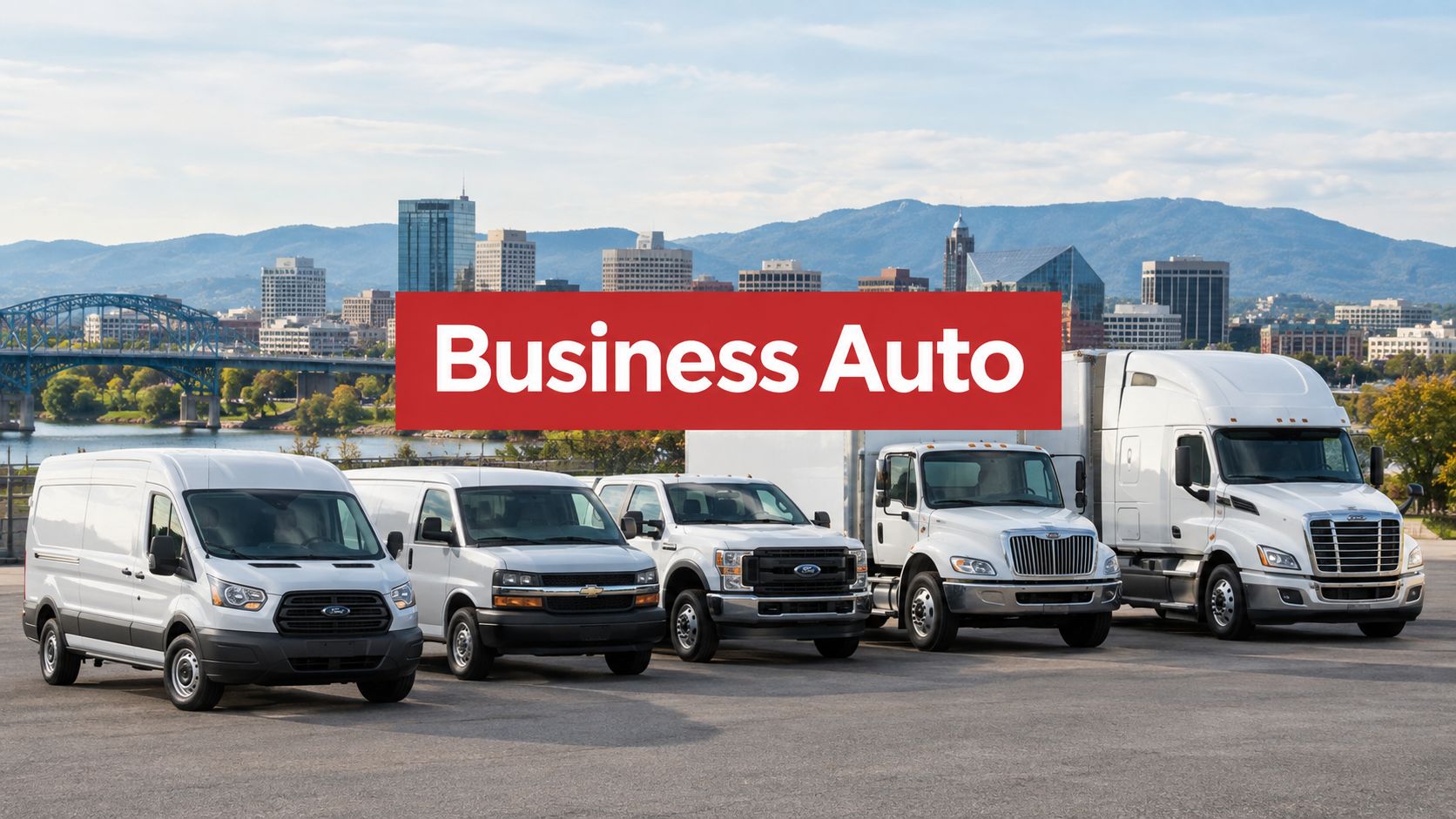
A service van, a delivery truck, and a flatbed hauling equipment don't present the same risk. Treating them alike produces either unnecessary cost or dangerous gaps.
Start with liability, then decide whether the business needs protection for its own vehicles, cargo, tools, equipment, and people. The vehicle's function matters as much as its size.
Match the policy to the vehicle's job
| Vehicle category | Typical use | Main coverage focus | Practical recommendation |
|---|---|---|---|
| Service vans | Daily travel to customer homes, businesses, and job sites | Liability, physical damage, tools and equipment | Schedule every van, describe the radius accurately, and protect permanently installed or transported equipment where applicable |
| Delivery trucks | Moving products between suppliers, warehouses, and customers | Higher liability, cargo, loading and unloading exposure | Review cargo responsibilities and confirm that delivery use is accurately classified |
| Heavy equipment transporters | Hauling machinery, materials, or job-site equipment | Liability, physical damage, cargo, and equipment hauling | Confirm weight, route, trailer details, and whether federal or state requirements apply |
A contractor with a single flatbed may need a different structure from a company operating several HVAC vans. Fleet size affects administration, but it doesn't determine the correct limits by itself.
Physical damage is a business decision
Liability coverage protects others when the business causes damage. Physical damage coverage protects the company's scheduled vehicle against collision, theft, vandalism, fire, and other covered causes, depending on the policy.
Choose the deductible with cash flow in mind. A higher deductible can reduce the premium, but it also requires the business to absorb more after a loss. If a disabled van means missed appointments and lost revenue, physical damage coverage may be central to keeping the operation moving.
Cargo requires separate attention. A vehicle policy may not automatically cover tools, materials, customer property, or goods being transported. A contractor should identify what is carried, who owns it, and when responsibility transfers. That review may point toward cargo protection or tools and equipment coverage.
Uninsured and underinsured motorist protection also deserves a direct discussion. A commercial vehicle can be hit by a driver whose insurance is inadequate, leaving the business exposed to vehicle damage, injuries, and disruption. Don't assume the other driver will have enough coverage to make the business whole.
Control the operational side too
Insurance works better when the fleet is managed well. Keep maintenance records, control who can drive, document vehicle inspections, and separate personal use from business use. Businesses looking to improve fleet operations with this guide can use those management practices to support safer, more predictable vehicle operations.
For broader protection, review Chattanooga commercial insurance options alongside the auto policy. General liability, property, workers' compensation, cargo, and umbrella coverage may interact with the vehicle program. The goal isn't to buy every endorsement. It's to prevent one policy from leaving a predictable operational exposure uncovered.
How Compliance and Driver Records Affect Premiums
Underwriters don't evaluate a commercial vehicle in isolation. They evaluate the business, its drivers, its routes, its maintenance practices, and its compliance history.
Tennessee's Motor Carrier Plus program oversees commercial vehicle compliance, while CDL rules apply to operators of larger and more complex vehicles. The state's commercial driver license guidance explains the regulatory framework businesses must account for when assigning drivers and vehicles.
Classification errors create practical problems
A vehicle's classification should match its actual weight, use, cargo, and route. A business that describes a truck as a light local vehicle while using it for heavier hauling can create problems at underwriting, during an inspection, or after a claim.
The same principle applies to drivers. A policy may be active, but a driver who lacks the required qualification can still create operational and coverage complications. A compliance failure can result in citations, a vehicle being placed out of service, or an interruption that prevents the company from completing contracted work.
Operational standard: Every driver, vehicle, route, and use description should tell the same story on the application, in the fleet records, and on the road.
Build a defensible driver process
Businesses should maintain a written driver policy rather than relying on informal approvals. The process should address:
- Motor vehicle records: Review driver histories before assignment and at regular intervals.
- License requirements: Match each driver's license class and endorsements to the vehicle.
- Vehicle inspections: Document pre-trip checks, defects, repairs, and recurring maintenance.
- Use authorization: Define who may drive company vehicles and whether personal use is allowed.
- Incident reporting: Require prompt reporting of collisions, citations, damage, and near misses.
- Training records: Keep evidence of orientation, safe-driving instruction, and job-specific requirements.
Driver records can affect premiums, but they also affect whether a carrier is willing to continue writing the account. A business with multiple drivers should explain its selection and monitoring process during renewal instead of waiting for an underwriter to discover inconsistencies.
Treat renewal as an audit
Before renewal, compare the policy schedule with the actual fleet. Remove vehicles no longer owned, add replacements, update garaging locations, and verify that employee drivers are listed correctly. Report changes in delivery territories, cargo, vehicle weight, and business activity.
A clean submission helps the carrier price the risk accurately. It also gives the owner a chance to correct a coverage mismatch before a loss exposes it.
Steps to Secure Quotes and Choose a Local Agent
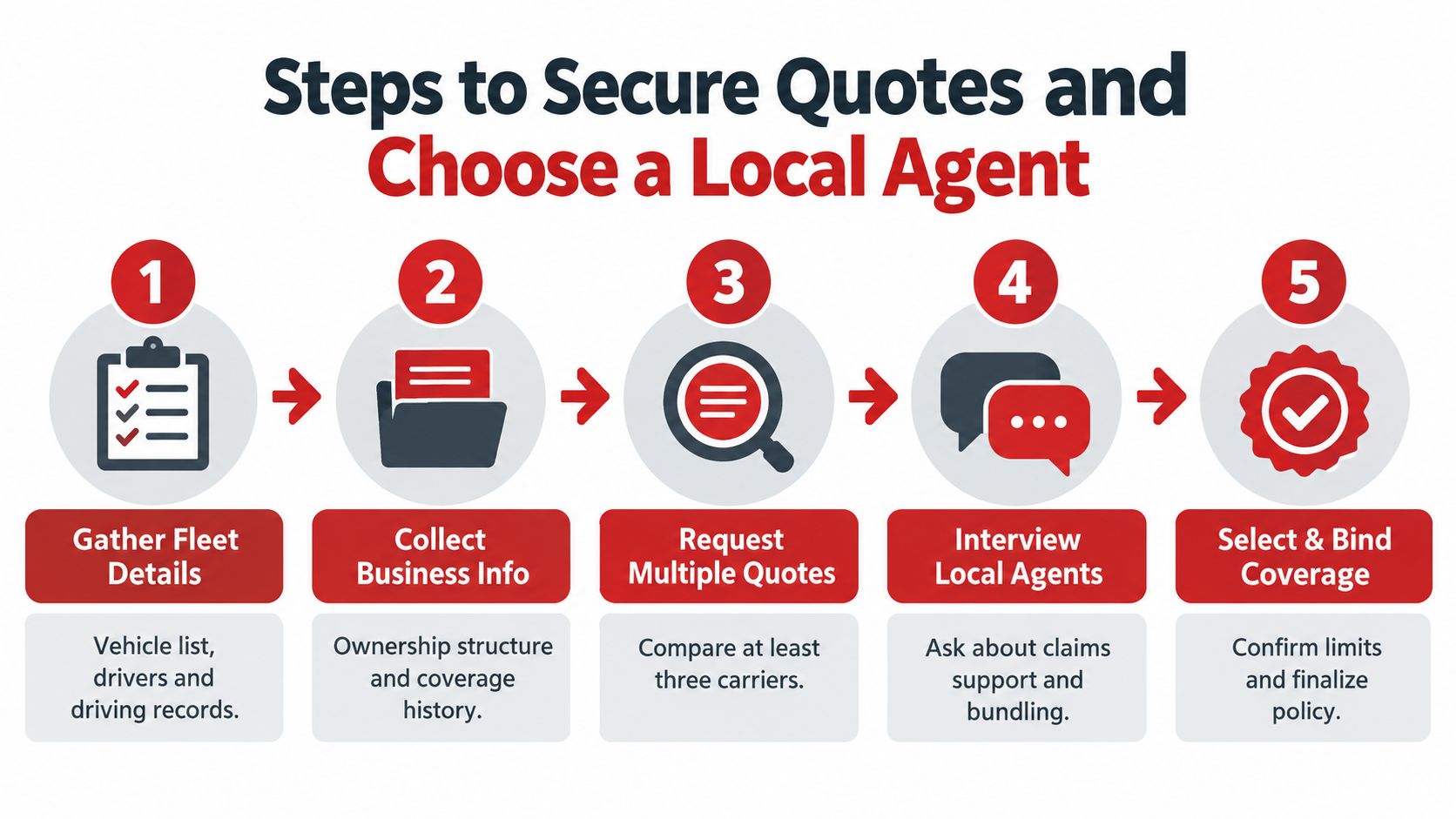
Accurate quotes require accurate information. An agent can't properly assess Chattanooga Business Auto exposure from a vehicle count alone.
Prepare the submission
Gather the information an underwriter will use:
- List every vehicle. Include VINs, year, make, model, ownership, garaging address, use, radius, and vehicle weight.
- Document every driver. Provide license details, driving history, experience, and the vehicles each person operates.
- Describe the work. Explain deliveries, job-site travel, passenger use, cargo, overnight parking, and employee personal use.
- Collect business records. Include ownership structure, prior coverage, claims history, contracts, and safety procedures.
- Request comparable proposals. Compare the same liability limits, deductibles, physical damage options, hired and non-owned coverage, cargo, and exclusions.
Don't compare premiums without comparing the coverage structure. A lower quote may carry lower limits, a higher deductible, narrower use definitions, or missing endorsements.
Choose an agent who can explain the gaps
Ask how the agency handles claims, policy changes, certificates, driver additions, vehicle replacements, and renewal reviews. Local responsiveness matters when a vehicle is damaged and the business needs to keep operating.
Select Insurance Group, Inc. provides commercial auto guidance for company cars, delivery vehicles, service trucks, fleets, and business use of personal vehicles, with options that can include liability, physical damage, hired and non-owned auto, cargo, and tools and equipment coverage. Its bilingual specialists serve businesses across Tennessee and other southeastern states, and the agency offers quote comparison and policy support.
Don't wait until a vehicle is added or a contract is signed. Have the policy reviewed before the next work vehicle goes on the road, especially if employees use personal cars or the business rents equipment.
Select Insurance Group, Inc. can compare commercial auto options for Chattanooga contractors, service companies, delivery operations, and fleets, including coverage for owned, hired, and non-owned vehicles. Visit Select Insurance Group, Inc. to request a no-obligation review and discuss limits that match how your business operates.