
A contractor leaves Memphis with a wrapped pickup, tools in the bed, and a full day of jobs ahead. The first stop might be in Germantown, followed by a supply run and another appointment across town. A personal auto policy may cover ordinary commuting, but business use can create a coverage problem when the vehicle carries equipment, represents a company, or is driven for paid work.
The same issue affects a delivery van moving through downtown traffic, a cleaning company with several employee drivers, and a trucking operator using Memphis as a base. Memphis business auto insurance is designed around how a vehicle is used, who drives it, and what the business could be responsible for after a crash.
This guide explains the subject in plain language. You'll learn how commercial auto coverage works, why Memphis pricing can differ from other Tennessee markets, how fleet and contractor risks are evaluated, and which safety practices can strengthen your position at renewal. For local guidance, businesses can review Memphis auto insurance options and discuss their situation with a bilingual insurance professional at Select Insurance Group.
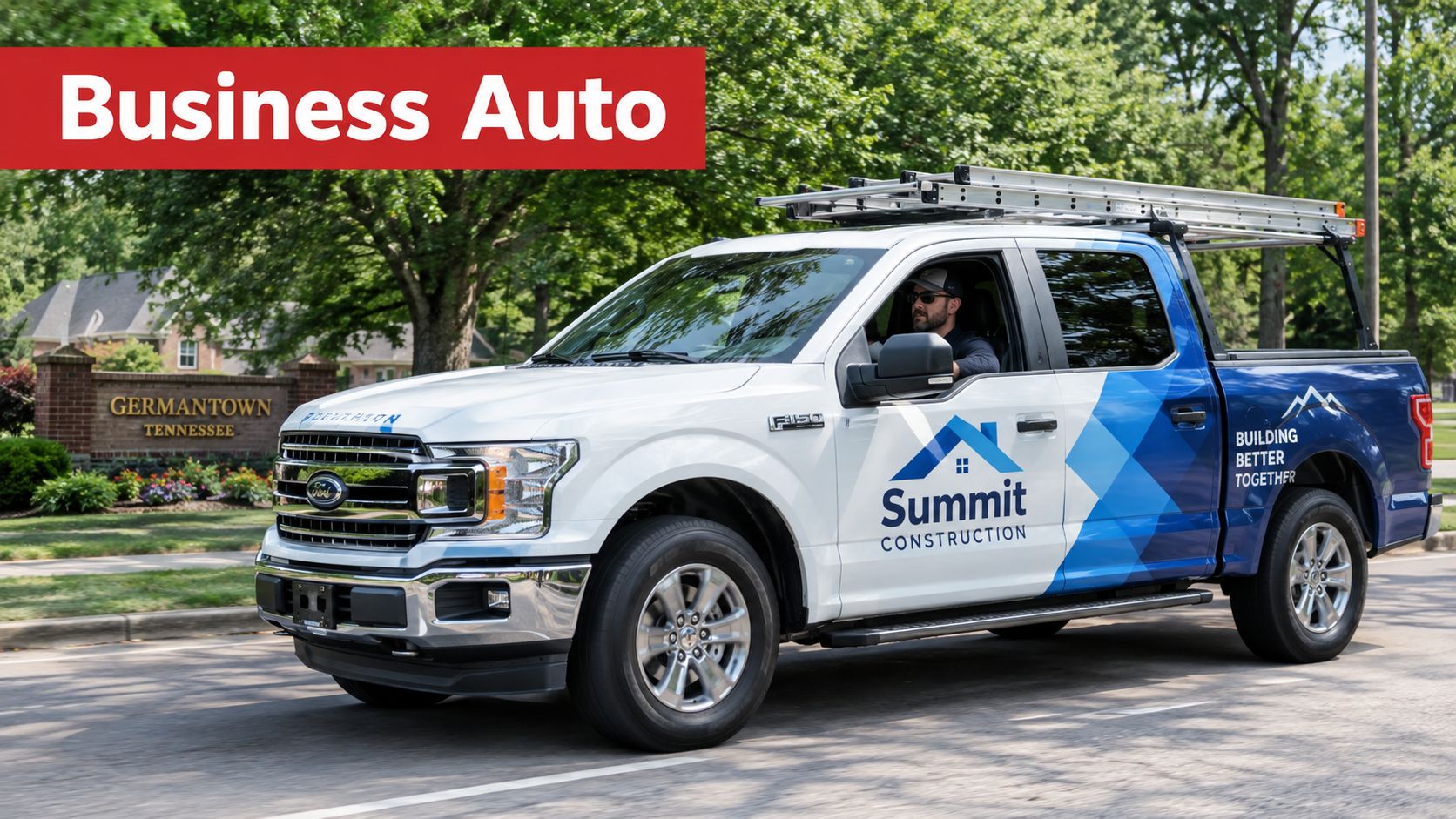
Table of Contents
- Introduction to Memphis Business Auto Insurance
- What Memphis Business Auto Insurance Covers and How It Works
- Tennessee Requirements and Why Memphis Costs More
- Fleet and Contractor Considerations in a Freight Hub City
- How to Get Memphis Business Auto Coverage Without the Hassle
- Smart Ways to Lower Your Memphis Business Auto Premiums
- Your Next Steps With Select Insurance Group in Memphis
Introduction to Memphis Business Auto Insurance
Why personal auto coverage can fall short
Personal auto insurance is generally built for personal driving, such as commuting, errands, and household use. It may not be structured for a vehicle that transports tools, carries customers' property, makes deliveries, or is driven by employees as part of their jobs.
Think of a personal policy as everyday clothing. It may work for a normal trip, but it isn't automatically built for the heavier demands of a worksite. Business auto insurance is the work gear. It considers commercial driving patterns, company ownership, employee drivers, equipment exposure, and the financial consequences of an accident involving the business.
A contractor who occasionally drives a personal pickup to a job may assume ownership determines coverage. In practice, the purpose of the trip matters. A vehicle can be personally owned and still require careful review when it's used regularly for business.
The practical rule: Insurance follows the use of the vehicle as much as it follows the vehicle itself.
Memphis adds another layer because the city functions as a major freight and transportation center. Memphis sits at a major freight intersection and near the FedEx World Hub, which contributes to substantial commercial-vehicle activity and makes business auto coverage especially relevant for local operators. Tennessee commercial auto guidance explains why commercial vehicles face different coverage considerations from ordinary passenger vehicles.
Who needs to pay attention
Business auto may be relevant if your company owns vehicles, leases vehicles, asks employees to drive their own vehicles for work, or hires people to operate company vehicles. Common examples include:
- Contractors: Pickup trucks and vans may carry tools, materials, ladders, or specialized equipment.
- Delivery businesses: Drivers may make repeated stops across dense urban areas and surrounding communities.
- Service companies: Employees may travel between customer locations throughout the day.
- Trucking operators: Larger vehicles and freight operations can involve higher liability requirements and more detailed safety reviews.
- Small businesses: An owner may use one vehicle for both personal and commercial purposes, creating a classification question.
The right policy isn't just the one with the lowest initial quote. It should match the actual operation, protect the business from serious liability, and support safer driving practices over time. A good process starts with the basic coverage structure, then moves toward the specific risks created by Memphis traffic, freight activity, and driver behavior.
What Memphis Business Auto Insurance Covers and How It Works
Business auto insurance becomes easier to understand when you separate two questions: what can go wrong, and what property is exposed? A commercial policy can address injuries or damage caused to others, damage to the insured vehicle, and certain situations involving vehicles the business doesn't own.
Liability comes first
Liability coverage responds when a covered business vehicle causes bodily injury or property damage to another person. Suppose an employee backs a company van into a customer's gate, or a contractor causes a collision while traveling to a job. The business could face repair bills, medical expenses, legal costs, and other financial demands.
The policy limit is the maximum amount the insurer generally pays for a covered loss under the applicable terms. Businesses with heavier vehicles, more drivers, or greater public exposure often need a careful limits discussion rather than an automatic selection of the lowest available option.
Physical damage protects the vehicle
Physical damage coverage addresses damage to the insured vehicle itself. Collision coverage generally applies to damage caused by impact, while other-than-collision coverage generally addresses risks such as theft, vandalism, fire, falling objects, or weather-related events, subject to the policy terms and deductible.
For a Memphis contractor, this may matter when a work truck is damaged in a crash or vandalized overnight. The vehicle may be essential to earning revenue, so the business should consider not only the repair exposure but also how long the vehicle could be unavailable.
Other coverage questions owners often miss
Medical payments coverage can help with certain medical expenses for occupants, depending on the policy. Uninsured or underinsured motorist coverage addresses situations where the at-fault driver lacks enough insurance to cover the resulting injuries or damage.
Hired and non-owned auto coverage is important when a business rents vehicles or asks employees to use personal vehicles for company errands. For example, an employee might use a personal sedan to pick up supplies. That vehicle may not belong on the company's scheduled auto list, but the business can still face liability arising from the work-related use.
Coverage also depends on the named insured, listed vehicles, approved drivers, territory, vehicle class, and policy exclusions. A personal policy may restrict or exclude regular business use because the insurer priced the policy for a different risk.
Before buying, describe the operation clearly. Explain who drives, where vehicles travel, what they carry, whether employees use personal vehicles, and whether customers or other parties ride in them. Clear information helps the policy match the true exposure.
Tennessee Requirements and Why Memphis Costs More
A Memphis contractor can meet Tennessee's minimum financial responsibility rules and still face a serious coverage gap after one major crash. The state framework is commonly summarized as 25/50/25, covering minimum liability amounts for bodily injury per person, bodily injury per accident, and property damage. The infographic below places those requirements beside local pricing factors.
Minimum limits are a starting point, not a universal business recommendation. A commercial vehicle can cause greater damage than a personal car, and lenders, contracts, freight arrangements, or regulatory rules may require higher limits.
Memphis pricing reflects local conditions
Memphis has been identified as Tennessee's highest-cost auto insurance market in several recent analyses. Average annual full-coverage premiums have been estimated at about $1,700 to $2,671, depending on the methodology, according to this Memphis auto insurance cost analysis. One Tennessee-focused analysis placed Memphis at roughly 30% above the state average.
Those figures describe personal full-coverage pricing, not a guaranteed commercial quote. They still show how local loss conditions can put pressure on insurance costs. The same analysis lists ZIP codes such as 38157, 38117, and 38125 with estimates of about $1,587 to $1,684 annually, so location can affect pricing within Memphis.
Commercial underwriting uses different details. Vehicle type, operating radius, driver history, claims record, cargo, garaging location, business type, and selected limits all influence the quote. A contractor using one pickup lightly has a different exposure from a delivery company operating several vans with multiple drivers.
Premium movement signals broader pressure
Tennessee commercial auto liability direct premiums written rose from $578.339 million in 2015 to $1.074717 billion in 2022, an increase of more than 85%, according to the NAIC auto insurance database. The statewide change does not determine every Memphis business's renewal, but it indicates broader pressure in commercial auto liability.
Insurers also review claim frequency and severity, repair inflation, legal expenses, maintenance practices, and driver controls. Premium therefore reflects how a business operates, not just how many vehicles it owns.
Underwriting levers give owners practical ways to influence future pricing. Telematics can document speeding, harsh braking, mileage, and route patterns. Driver training, motor-vehicle-record reviews, maintenance logs, and documented corrective action can show that preventable losses are being addressed. These steps do not guarantee a lower renewal, but they give the insurer clearer evidence of risk control.
Businesses cannot control every market condition. They can report operations accurately, select qualified drivers, maintain vehicles, and document safety improvements. Owners seeking Tennessee insurance quotes should provide those details at the beginning so the quote reflects the actual Memphis operation.
Fleet and Contractor Considerations in a Freight Hub City
A contractor leaving a Memphis warehouse may use one pickup for tools, materials, and occasional deliveries. A regional fleet may send several vans and trucks through the same corridors every day. Both need business auto insurance, but their underwriting profiles differ because vehicle use, driver access, mileage, and downtime create different exposures.
Memphis adds freight-hub complexity. Roads carry delivery vehicles, tractor-trailers, service vans, and passenger traffic near major shipping routes and the FedEx World Hub. Underwriters therefore examine how the operation runs, not only the number of vehicles listed on the policy.
Match the structure to the operation
| Operation Type | Typical Vehicles | Key Coverage Focus | Liability Consideration |
|---|---|---|---|
| Independent contractor | Pickup, cargo van, service vehicle | Business use, physical damage, tools and equipment exposure | Confirm whether personal or commercial ownership and use are appropriate |
| Small service company | Vans, pickups, light-duty vehicles | Scheduled vehicles, employee drivers, hired and non-owned exposure | Review every person who may drive for work |
| Delivery operation | Cargo vans and other commercial vehicles | Repeated stops, loading activity, driver supervision, vehicle downtime | Urban driving patterns can increase the importance of strong limits and safety controls |
| Regional fleet | Multiple commercial vehicles | Fleet scheduling, maintenance documentation, telematics, claims review | Underwriters may examine driver performance and safety records closely |
| Federal trucking operation | Trucks and trailers | Motor carrier requirements, cargo arrangements, physical damage, filings | Federal trucking liability minimums commonly range from $750,000 to $5,000,000, depending on the operation, as described in Tennessee commercial auto information |
For a Memphis operator, telematics and driver-safety records can turn daily activity into underwriting evidence. Speeding alerts, harsh-braking events, route patterns, vehicle inspections, training records, and documented corrective action help show how the business controls preventable risk. They do not guarantee a lower renewal, but they can give an insurer a clearer basis for evaluating the account.
Contractors need clean ownership records
A personal pickup used for jobs can create problems when its title, policy, garaging address, and business use do not match. Tell the agent whether the vehicle belongs to you, the company, or another entity. Identify employees, subcontractors, and family members who may drive it.
Contractors running delivery routes should track fuel, maintenance, driver time, and vehicle downtime. Those records help explain operating costs and may reveal avoidable inefficiencies. Businesses in delivery networks can also review guidance on how to optimize FedEx contractor margins, especially when vehicle expenses affect the wider budget.
Fleets need repeatable controls
A fleet safety program works like a maintenance calendar. Each task has an owner, a record, and a follow-up date. Keep the driver list current, document motor-vehicle checks, record maintenance, and remove unauthorized drivers promptly. Update the policy when a vehicle is added, sold, leased, or repurposed instead of waiting for renewal.
Businesses can compare business insurance for contractors when auto coverage must fit with general liability, equipment, or other commercial protection. The aim is a coordinated insurance structure that matches the company's actual work, vehicles, drivers, and freight activity.
How to Get Memphis Business Auto Coverage Without the Hassle
A business auto quote goes faster when the applicant treats it like an operating profile rather than a vehicle-shopping form. Underwriters need enough detail to understand the vehicles, drivers, use, territory, and loss history. Missing information can lead to follow-up questions, revised pricing, or a policy that doesn't fit the risk.
Begin with a complete information packet
Gather vehicle identification details, ownership or lease information, garaging locations, estimated use, and the type of work performed. Prepare driver names, license information, driving histories, and any relevant experience details. Have prior insurance information and claims records available when requested.
Be precise about vehicle use. “Service work” may mean a technician drives directly to customers, while “delivery” may involve frequent stops and transported goods. Those are different exposures, even if both use a van.
Compare the whole proposal
A quote comparison should look beyond the premium. Review liability limits, deductibles, vehicle valuations, exclusions, driver requirements, rental or replacement provisions, and whether hired and non-owned coverage is included when needed.
An independent agency can compare proposals from multiple carriers, which may help a business find a better fit for its class of operation. Spanish-speaking owners can also request bilingual explanations so they understand what the policy does and doesn't cover before signing.
Digital intake can reduce back-and-forth when the business has several vehicles or drivers. A secure digital form platform for insurance companies can help organize submissions, although the applicant still needs to provide accurate information and review the final application.
Binding is not the end
Once the business selects an option, the agent confirms the effective date, collects required signatures and payment, and issues proof of insurance. Customers may also need certificates of insurance for property owners, general contractors, shippers, or other business partners.
After purchase, report changes promptly. Add new vehicles, disclose changes in drivers or operations, update addresses, and notify the agency if the company begins hauling different goods or traveling farther from Memphis. Accurate policy updates help prevent surprises during a claim.
Smart Ways to Lower Your Memphis Business Auto Premiums
Premium control starts before renewal. In a dense market with delivery activity, stop-and-go driving, and multiple commercial vehicles, an insurer may want evidence that the business manages the risks it can control. A lower quote can look attractive, but the better value may come from coverage paired with safety systems that reduce future losses.
Turn driving behavior into usable information
Telematics can help a business identify harsh braking, speeding, sudden acceleration, excessive idling, route patterns, and other behavior signals. The purpose isn't to punish drivers automatically. It's to show managers where coaching, scheduling changes, or route adjustments may prevent crashes.
Dash cameras can provide context after an incident and help distinguish preventable behavior from circumstances outside the driver's control. Driver monitoring can support coaching when employees repeatedly handle phones, follow too closely, or make unsafe lane changes.
Industry discussion continues to connect commercial auto loss pressure with distracted driving, social inflation, repair costs, and rising claim severity, while also describing greater use of technology and risk control in underwriting. The telematics and commercial auto loss discussion is useful context for why insurers increasingly ask how a fleet proves safer operations.
Build a safety record an underwriter can review
Technology works best when it supports a documented program. Create a written driver policy, establish phone-use expectations, review incidents, and keep records of coaching. Schedule regular vehicle inspections and address defects before a vehicle returns to the road.
For trucking operators, CSA performance and maintenance records deserve close attention. FMCSA's Memphis carrier snapshot reports 138,481 inspection-related records, 129,131 total inspections, 22,156 violations, and 3,101 crashes over its trailing reporting window. FMCSA safety data also explains that reported crashes include reportable crashes regardless of fault, so businesses should distinguish crash involvement from preventability while still managing every record carefully.
A practical renewal file can include:
- Driver controls: Keep current driver lists, driving reviews, training records, and documented coaching.
- Vehicle controls: Track inspections, repairs, tires, brakes, lights, and recurring defects.
- Technology controls: Review telematics and camera findings for patterns, not isolated events.
- Claims controls: Report incidents quickly, preserve evidence, and document preventability reviews.
- Underwriting communication: Give the agent a concise summary of safety changes before renewal.
The strongest approach connects coverage, behavior, maintenance, and documentation. That gives the business a clearer way to demonstrate improvement rather than asking for a lower price.
Your Next Steps With Select Insurance Group in Memphis
Memphis business auto insurance should reflect the work your vehicles perform, not just the number printed on the door or the name on the registration. A contractor, service company, delivery operator, and trucking business each need a different conversation about drivers, vehicle use, liability, physical damage, and risk controls.
Start by gathering your vehicle list, driver information, garaging details, current policy, and claims history. Then ask an independent agency to compare coverage options and explain differences in plain language. Select Insurance Group, Inc. provides commercial insurance support, including business auto and trucking coverage, along with secure tools for document upload, payments, policy updates, and claim support.
A consultation should clarify whether your current policy matches your actual use, whether any vehicle or driver is missing, and whether your limits and deductibles make sense for the business. Spanish-speaking owners can request bilingual assistance, which can make technical policy language easier to understand before coverage is bound.
The process also continues after purchase. Keep the agency informed when you add a vehicle, hire a driver, change routes, expand services, or introduce telematics and other safety controls. Those details can help keep the policy accurate and give your renewal discussion a stronger operational foundation.
The next move is simple. Request a review before a vehicle is added or a policy renews, and bring specific questions about exclusions, driver eligibility, liability limits, and safety documentation. Clear information gives you a better chance of securing dependable protection at a competitive rate.
Select Insurance Group, Inc. offers Memphis businesses commercial auto and trucking coverage, independent quote comparison, secure policy tools, and bilingual guidance for contractors and fleet operators. Visit Select Insurance Group, Inc. to request a free, no-obligation quote and discuss coverage that fits how your business vehicles are used.