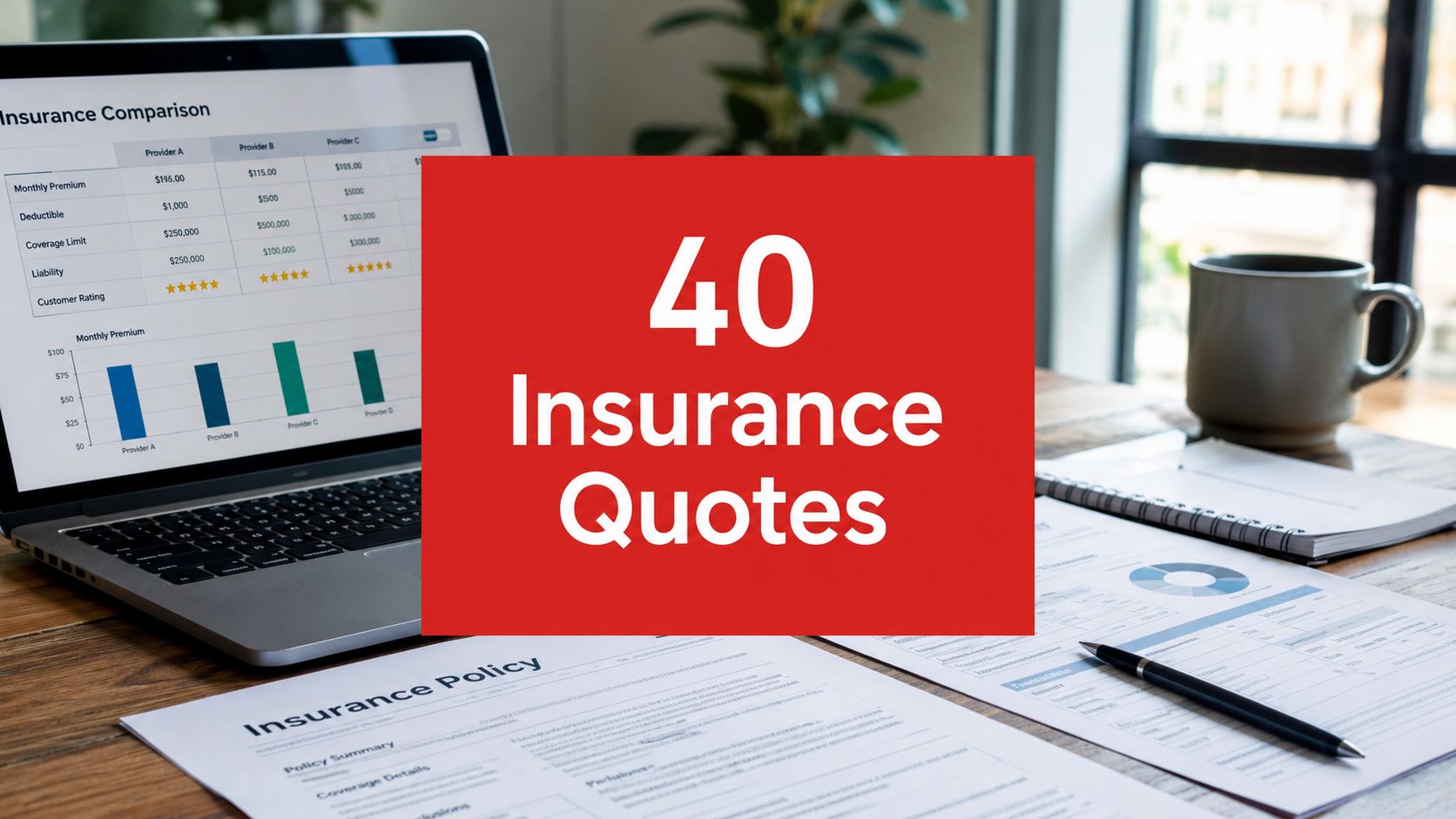

You're probably staring at three or four insurance quotes right now and wondering why the numbers don't line up. Same driver, same house, same business, yet one quote looks fair, another feels inflated, and a third leaves you guessing what's covered. That confusion is exactly why 40 carriers insurance quotes matter, because the market is fragmented and insurers don't price risk the same way.
The U.S. car insurance market is spread across more than 500 providers, and The Zebra estimates the average U.S. car insurance premium at $1,759 The Zebra industry statistics. MoneyGeek's figures show a wider gap inside the market, with $2,575 per year for full coverage versus $727 per year for minimum coverage, a difference of $1,848 annually The Zebra industry statistics. That's why a single quote is never enough. The job is finding the carrier that fits your risk, your vehicle, your property, or your business.
A good independent agency doesn't shop one company and call it a day. It compares enough carriers to expose where the market is friendly to your profile and where it isn't. That matters even more if you're in a specialty class, run a small fleet, need contractor coverage, or want someone to explain the difference between a cheap quote and a usable policy.
Table of Contents
- Why One Carrier Is Never Enough
- How Multi-Carrier Quoting Actually Works
- Personal Lines Versus Commercial Lines in a 40-Carrier Shop
- Preparing Your Information Before You Request Quotes
- Comparing Quotes the Right Way
- Where 40-Carrier Quotes Add the Most Value
- Security, Bilingual Support, and State Availability
- Your Next Steps to Request Quotes From Select Insurance Group
Why One Carrier Is Never Enough
The first time you see a spread in quotes, you might assume somebody made a mistake. A driver gets one price from one carrier, then another quote comes back much higher for what looks like the same policy. A business owner sees the same thing with general liability or commercial auto, and the instinct is to blame the process. Usually, the process is fine. It's the market that's fragmented.
Price differences are normal, not suspicious
Insurers don't use one universal formula. They weigh the same risk differently based on age, driving record, credit, location, vehicle type, and coverage choices. That's why quote-shopping works in the first place. If the same shopper can get a meaningful difference from one carrier to another, then the cheap quote is not the goal, the right-fit quote is.
Practical rule: If you only asked one carrier, you didn't shop. You got one opinion.
That point matters in Florida and across the Southeast, where underwriting appetite can shift sharply by ZIP code and risk profile. A carrier that wants one driver class may not want another. A carrier that likes one neighborhood may dislike the next one over. The value of 40 carriers insurance quotes is that the broader the comparison set, the better your chance of finding a carrier that wants your risk.
If you want a sense of how many carrier names are in the Florida market alone, the List of Florida car insurance carriers from Martin Hernandez, P.A. is a useful reference point for how crowded the field really is.
The real goal is fit, not just savings
People fixate on premium because it's easy to compare. I get it. But a quote that's a little higher and lines up with your exposure is better than a bargain policy that blows up at claim time. That's especially true for homes, rentals, and business risks where exclusions and limits matter more than the headline number.
The disciplined way to think about the market is simple. Carrier breadth creates choice. Choice creates negotiating power. And negotiating power is what gets you closer to coverage that matches the actual risk you're carrying.
How Multi-Carrier Quoting Actually Works
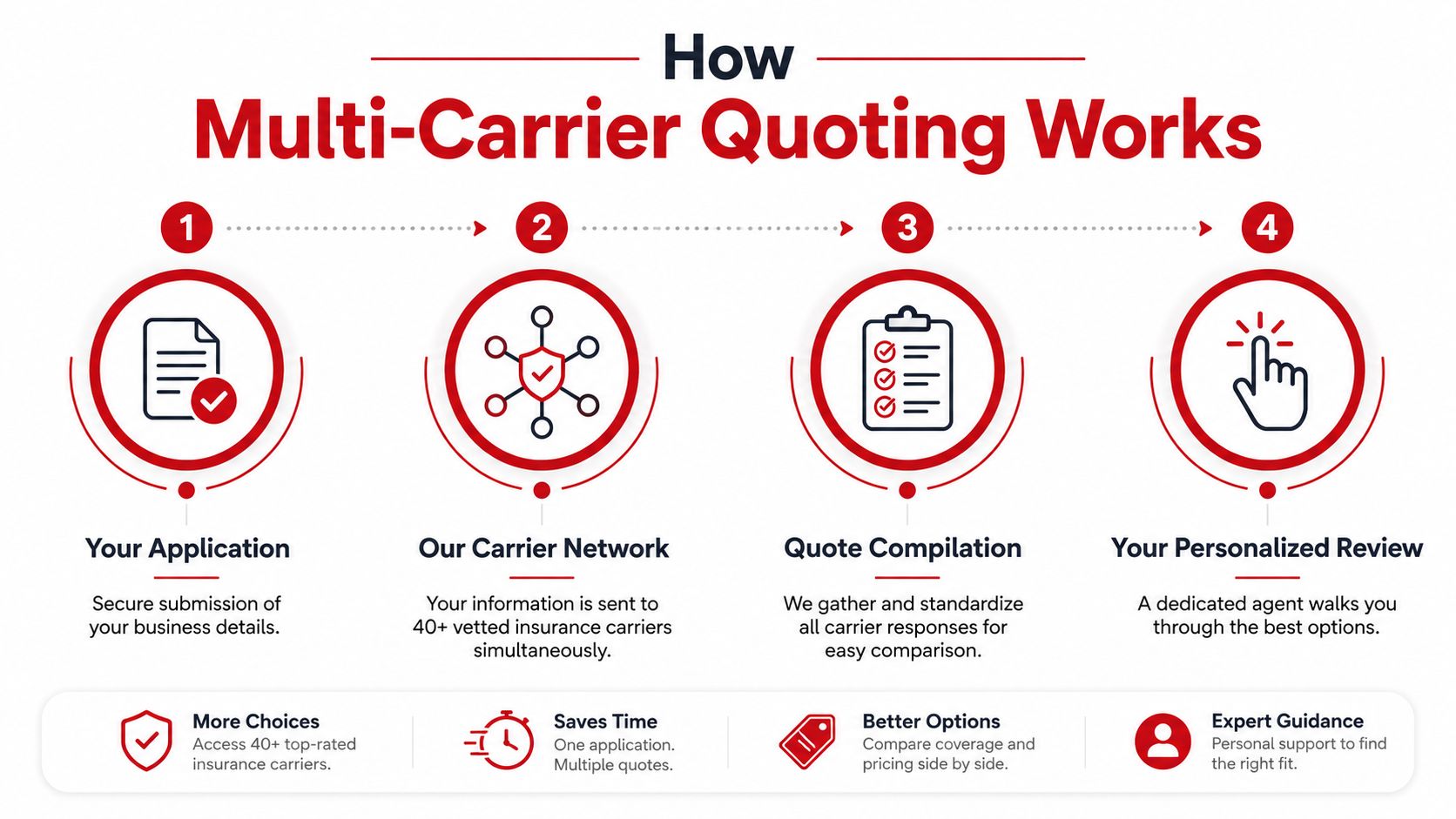
Comparing 40 carriers is like tasting 40 coffee blends before deciding what you want every morning. You don't judge the whole shelf by one cup, and you don't need to prepare the same application 40 times either. The smart process is one standardized intake, then many carrier responses.
One application goes farther than most people think
A properly built quote workflow starts with the same core data and reuses it across carriers. For auto and home, that usually means identity and risk details such as address, household or driver information, vehicle or property characteristics, and coverage choices. For businesses, the data expands into payroll, operations, exposure classes, and policy type. Once that information is standardized, the agency can push it through multiple carrier systems without making you rebuild the same file over and over insurance quote workflow guidance.
That's the part shoppers rarely see. The speed comes from standardization, not magic. If the base data is clean, many quotes can come back quickly. If the data is messy, the process slows down, and the results become less useful.
Rule of thumb: bad inputs create bad quotes. Clean inputs create clean comparisons.
What happens when a carrier won't quote instantly
Not every carrier responds the same way. Some give near-instant pricing. Others return partial data, a referral, or a request for more detail. That doesn't mean the workflow failed, it means the account needs human review. A licensed agent checks the responses, normalizes the details, and spots the trade-offs that matter, like a lower premium paired with a weaker coverage structure.
If you want the agency model explained in plain English, this overview of what an independent insurance agency does is a good companion piece. The short version is that the agency does the tedious comparison work, then translates the output into a decision you can use.
The payoff is simple. One application. Many carrier looks. Less duplicate data entry. And a human who can tell you which quote is better, not just cheaper on paper.
Personal Lines Versus Commercial Lines in a 40-Carrier Shop
Personal insurance and commercial insurance run on different clocks. Personal lines like auto, homeowners, renters, motorcycle, and RV often produce faster results because the input set is narrower. Commercial lines are more variable because the carrier has to understand the business itself, not just the driver or property.
Personal lines move faster, commercial lines need more context
For a standard auto or home shopper, a multi-carrier shop can work quickly once the basic details are in place. The workflow is designed to compare pricing and common coverages side by side, so you can see where one carrier is more competitive than another. That's useful, but it doesn't tell the whole story. You still have to verify the deductible, the liability limit, the exclusions, and any policy feature that affects actual claim protection.
Commercial insurance is different. A contractor, fleet owner, or trucking account can't usually be judged from a few simple fields. The carrier wants to know what the business does, how it operates, what it touches, and how much exposure it carries. That's why commercial quoting often needs more review even when the carrier network is broad.
Different lines create different quoting speeds
An AI-powered comparison system can support 12 major commercial lines of business that together represent about 85% of commercial premium volume, including Commercial Auto, General Liability, Commercial Property, Workers' Compensation, Cyber, and Umbrella Patra commercial comparison overview. That tells you the direction the market is moving. A wider carrier network can compare more business classes in one pass, but the policy still has to match the exposure.
For small business owners, the practical distinction is this.
- Simple personal risks: These usually quote faster because the carrier needs fewer variables.
- Commercial auto and trucking: These often need more human review because vehicles, drivers, routes, and cargo change the risk.
- Contractors and mixed operations: These often need clarification on work types, subcontractors, and endorsements.
- Landlord and specialty property: These can look simple until exclusions or occupancy details change the answer.
The same 40-carrier framework can serve both sides of the market. The difference is how much context the carrier needs before it will stand behind a price. A fast quote is useful only if it's quoting the right thing.
Preparing Your Information Before You Request Quotes
Most quote delays come from missing details, not from carrier laziness. If you want a clean comparison, you have to give the market the same facts up front. That means gathering the right documents before you start, not halfway through when someone asks for a VIN, a declarations page, or payroll data you don't have handy.
The personal file should be ready in one sitting
For personal lines, start with basic identity and risk details. Have driver information ready, current policy details if you already carry coverage, and vehicle or property specifics. If the carrier asks for household details or additional drivers, you don't want to stop the process and hunt through old emails.
The reason this matters is simple. The more standardized the intake, the more useful the comparison. You also reduce the chance that one carrier prices off incomplete information while another prices off the full picture.
Businesses need a fuller packet
Commercial shoppers need more than a name and address. Payroll, class codes, loss runs, vehicle schedules, and the way the business operates can all affect the outcome. If you're quoting fleets, contractors, or mixed commercial risks, the file should be organized before the first submission goes out. That prevents delay and avoids quotes that look good until the carrier circles back for missing facts.
| Documents to Gather Before Requesting 40 Carriers Insurance Quotes | Personal Lines | Commercial Lines |
|---|---|---|
| Identity details | Driver names and contact info | Business legal name and contact info |
| Coverage history | Current declarations page | Prior policy details and loss history |
| Vehicle or property data | VINs, home details, or other asset info | Vehicle schedules, property details, or equipment lists |
| Risk details | Household members and additional drivers | Payroll, class codes, operations, and exposure notes |
| Supporting records | Prior claims or license details | Loss runs and any requested underwriting documents |
Practical rule: if you can hand over the same base facts once, the comparison gets faster and more accurate.
If you're prepared before you ask for quotes, the whole process feels less like paperwork and more like a decision session. That's how it should work.
Comparing Quotes the Right Way
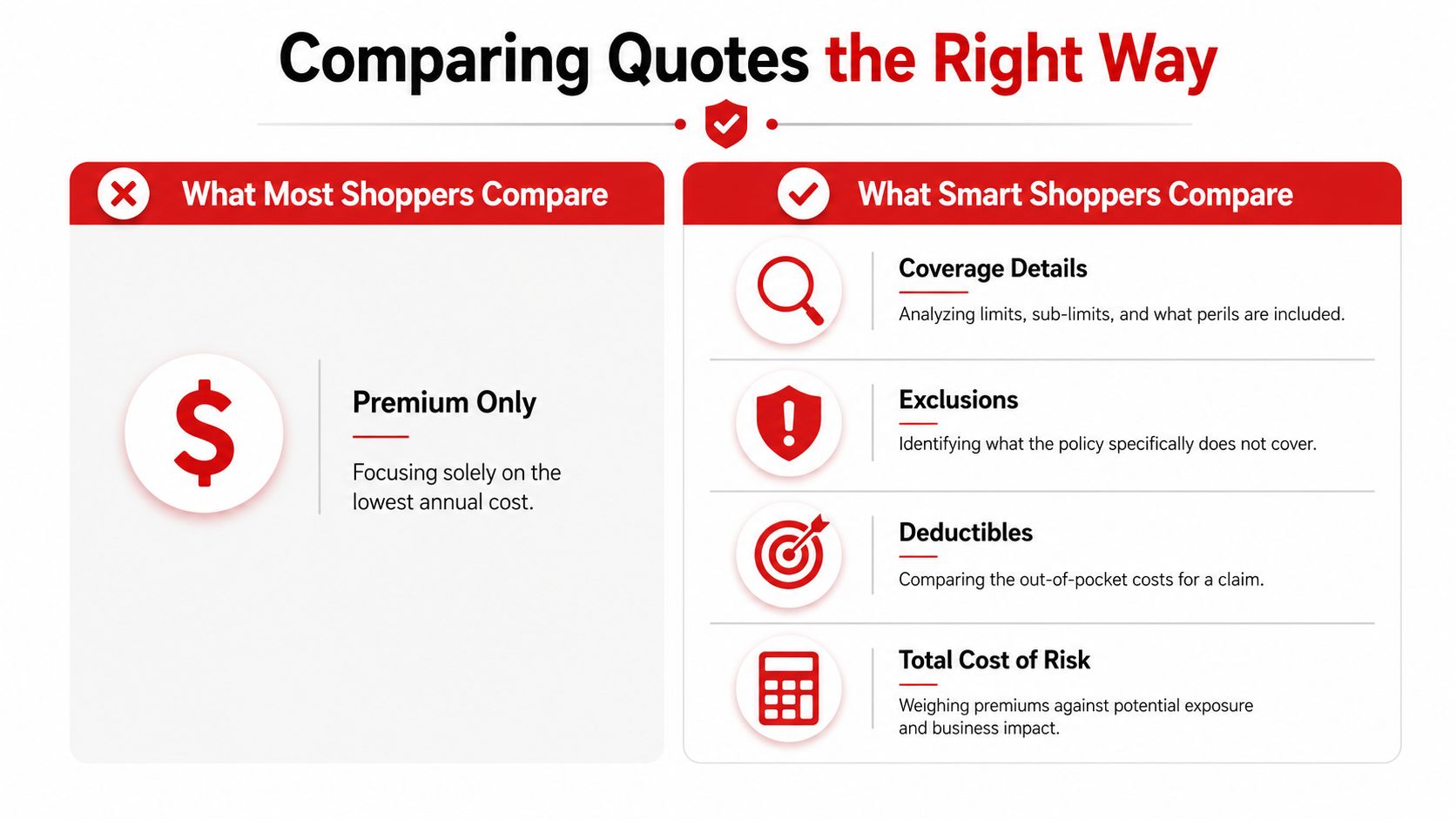
The cheapest quote is often the least useful quote. I've seen plenty of shoppers chase the lowest premium, only to discover later that the limits were thin, the deductible was awkward, or the policy left out exactly what they needed most. Smart comparison means reading the quote like a contract, not like a coupon.
Compare the structure, not just the dollar figure
Start with the basics. Look at liability limits, uninsured motorist coverage, medical payments, deductibles, and any add-on feature that changes the policy's value. Then check what the policy excludes. A bargain premium is meaningless if the policy doesn't respond the way you expect when a claim hits.
You should also ask whether the carrier's appetite fits your profile. Some carriers like one kind of driver, property, or business class and dislike another. That's why two quotes on paper can look similar but behave very differently in real life.
Think in terms of total cost of risk
The core question isn't, “What's the cheapest policy?” It's, “What will this policy cost me if something goes wrong?” That's the total cost of risk. Premium is only one part of that answer. Deductibles, exclusions, sub-limits, and policy features all influence what comes out of your pocket later.
- Liability limits: These should match the exposure, not just the budget.
- Uninsured motorist coverage: This matters when the other driver can't pay.
- Medical payments: This can soften smaller injury claims.
- Bundling effects: These can help, but only if the combined package still fits the risk.
- Policy features: Extras like accident forgiveness or replacement coverage can be valuable if they're real and not just marketing language.
Practical rule: if you can't explain why one quote is better than another, you're not done comparing.
A good review process cuts through the noise. It turns a pile of quotes into a decision rooted in coverage quality, not just monthly payment size. That's the difference between shopping and buying wisely.
Where 40-Carrier Quotes Add the Most Value
The argument gets sharp. 40-carrier quoting is most valuable for specialty and emerging risks, not for standard shoppers who only want the lowest auto premium. That's because standard risks often fit neatly into a small set of carrier appetites, while specialty risks get filtered, declined, or mispriced if you only ask a narrow panel.
Specialty risks need broader carrier appetite
Trucking, contractor liability, small fleets, landlord property, and flood add-ons don't fit every carrier's comfort zone. One insurer may want the account, another may only want part of it, and a third may quote only after a human reviews the file. That variation is exactly why broader carrier breadth matters. The more carriers you compare, the better your chance of finding one that wants the exposure instead of forcing it into a box.
This is also where instant quote engines can mislead people. A fast result feels efficient, but if the system isn't built for the risk class, it can hide gaps until later. A contractor can get a number quickly and still find out the policy doesn't treat the job scope the way it should. A fleet owner can get a price and still miss a key endorsement. A landlord can get a quote and later discover the occupancy or property detail changed the outcome.
Human review still matters most when the risk isn't standard
I'm a fan of automation when it speeds up standard work. I'm not a fan of pretending every risk is standard. Bilingual households, truckers, contractors, and small businesses with mixed exposures often need someone to review the answers line by line. The policy has to fit the way the customer lives or operates.
My take: if the risk is ordinary, automation helps. If the risk is specialized, automation is only the first draft.
The best use of 40 carriers insurance quotes is not hunting pennies on a clean auto file. It's finding the carrier that will properly insure the thing that's harder to place, harder to explain, or easier to misclassify. That's where carrier breadth stops being a shopping trick and becomes a coverage tool.

Security, Bilingual Support, and State Availability
A broad carrier panel doesn't help much if the agency handling it is clumsy with documents, slow with communication, or unavailable where you live. The trust layer matters. Secure uploads, reliable payment handling, and responsive service are what make a comparison process usable instead of annoying.
The agency has to make the workflow safe and usable
When shoppers send sensitive information, they need confidence that the file handling is controlled and the process is organized. That's especially true when a quote requires identity details, household data, or business records. A good agency gives people a place to upload documents securely, update policies, and handle payments without turning every step into a phone chase.
The communication layer matters just as much. Many families and business owners want someone who can explain coverage in plain language without making them feel behind. That's where bilingual support becomes a real operational advantage, not a marketing line. If a household prefers Spanish-language help, the agency has to be set up to deliver it clearly and consistently. The same goes for clients who want phone or text updates instead of long email threads. For a closer look at language support, see this overview of a bilingual insurance agent in Florida.
State reach should match the customer's footprint
State availability also matters. An agency serving Alabama, Florida, Georgia, North Carolina, South Carolina, Tennessee, and Virginia can help people who move, work across state lines, or own property in more than one place. That's especially useful for families and small businesses in the Southeast, where one household can have multiple risk locations and one business may operate in more than one state.
The right comparison engine is only half the story. The other half is an agency that knows how to protect the file, explain the quote, and make sure the customer can use the policy after purchase. That's what turns carrier breadth into a better experience.
Your Next Steps to Request Quotes From Select Insurance Group
If you want a no-pressure quote comparison, start with one conversation and give the agency the basic facts about your vehicle, home, or business. That's the fastest way to see where the market is competitive and where a human review is still needed. For people who want local help, Select Insurance Group, Inc. serves personal and commercial clients through its Orlando and Tampa presence, and you can read more on the agency's Select Insurance Group Orlando page.
Have your current coverage details ready if you already have a policy, plus the basics that apply to your situation. The agency can then compare quotes across its carrier network, explain the trade-offs, and tell you where the policy is strong and where it needs a second look. That's the point of doing this right.
If you're ready, ask for free, no-obligation quotes by phone, text, or online. Insurance done right starts with the right comparison, and the right comparison starts with one conversation.
Select Insurance Group, Inc. compares quotes across a broad carrier network for drivers, homeowners, renters, and businesses that need more than a single price. If you want a clearer read on coverage fit, visit Select Insurance Group, Inc. and request a quote conversation that puts the policy details first.