
You're on the phone with a Florida insurance office, trying to explain a renewal notice, a claim, or a new policy, and the person on the other end keeps making you repeat yourself. That's when most families realize the problem isn't just language. It's whether the person helping them can advise on the coverage, explain the fine print, and move the file forward without creating a new mess.
A bilingual insurance agent in Florida should do more than translate words. They should help you understand what you're buying, what you're giving up, and what happens if you file a claim. In a state where multilingual households are a major market segment, that difference matters every time you renew, change vehicles, add a driver, or review a homeowners policy.
Table of Contents
- Why Bilingual Service Matters for Florida Insurance Shoppers
- Where to Search for a Bilingual Insurance Agent in Florida
- Vetting Checklist for a Florida Bilingual Insurance Agent
- Questions to Ask on the First Call
- Coverage Considerations for Auto, Home, and Business
- How Bilingual Service Improves Real Insurance Outcomes
- Get a Free Quote from Select Insurance Group
Why Bilingual Service Matters for Florida Insurance Shoppers
A lot of insurance confusion starts in a small moment. A caller gets a renewal notice, sees a change in premium or deductible, and tries to ask whether the new terms still fit the family budget. If the agency can't answer clearly in Spanish, the customer often nods along, hangs up, and hopes for the best.
Insurance isn't like buying groceries. The policy language itself controls what gets paid, what gets denied, and what exclusions still apply. If someone doesn't fully understand deductibles, endorsements, exclusions, and coverage limits, they can end up with a policy that looks fine on paper and fails when it matters most.
Florida's language mix is a business reality
Florida's multilingual market isn't a side note. The U.S. Census Bureau's 2023 American Community Survey shows 30.8% of Florida residents age 5 and older speak a language other than English at home, compared with 22.5% nationally. That's nearly one in three residents, which is why bilingual service keeps showing up in insurance, healthcare, and other customer-facing work. The underlying state labor market reflects it too, with bilingual job postings in Florida more than doubling from 7,565 to 18,116 between 2010 and 2014, and bilingual demand also more than doubling in insurance carriers specifically, according to the American Immigration Council's Florida bilingual labor-market report.
That's the part many shoppers miss. Bilingual help isn't just a courtesy for Spanish-speaking families. It's a sign that the agency understands how Florida works.
Practical rule: If the person helping you can't explain the policy back to you in plain Spanish, they're not ready to handle your coverage conversation.
The best agencies treat language access as part of the job, not a separate department. That's especially important for auto, homeowners, renters, flood, and commercial coverage, where one misunderstood term can cost time, money, and patience.
Where to Search for a Bilingual Insurance Agent in Florida
Start with the sources that usually surface real working agents, not just marketing pages. A focused Google search can help, but don't stop there. Carrier agent-finder tools, local referrals, and independent agencies are usually where you'll find someone who can quote multiple options instead of steering you into one product.
Use local channels that already speak your community's language
In cities like Orlando, Tampa, Miami, Kissimmee, and Lakeland, bilingual insurance demand is strong enough that you'll often find agents through community networks before you find them through ads. Ask at churches, schools, neighborhood groups, and Hispanic business directories. Those referrals matter because they tend to come from people who have already dealt with renewals, claims, and paperwork in both languages.
You can also start with a local independent agency if you want a broader comparison instead of a single-carrier pitch. If you want one example of how a neighborhood office presents that kind of help, review this Orlando independent insurance broker resource.
Watch for the bait-and-switch
A lot of websites advertise bilingual service on the front page but route you through a Spanish intake line, then hand you off to an English-only licensed advisor. That's not the same thing. Intake is not advice. Translation is not quoting. A real bilingual insurance agent in Florida should be able to move the conversation from first contact to policy discussion without forcing you to switch languages or repeat yourself five times.
If you're shopping for coverage tied to property ownership or investment strategy, a useful side path is high-yield investment homes, because the same family often needs both insurance guidance and property planning in the same conversation.
Good search target: An agency that can explain coverage, compare options, and communicate in Spanish after the first call, not just say “se habla español” on the website.
Vetting Checklist for a Florida Bilingual Insurance Agent
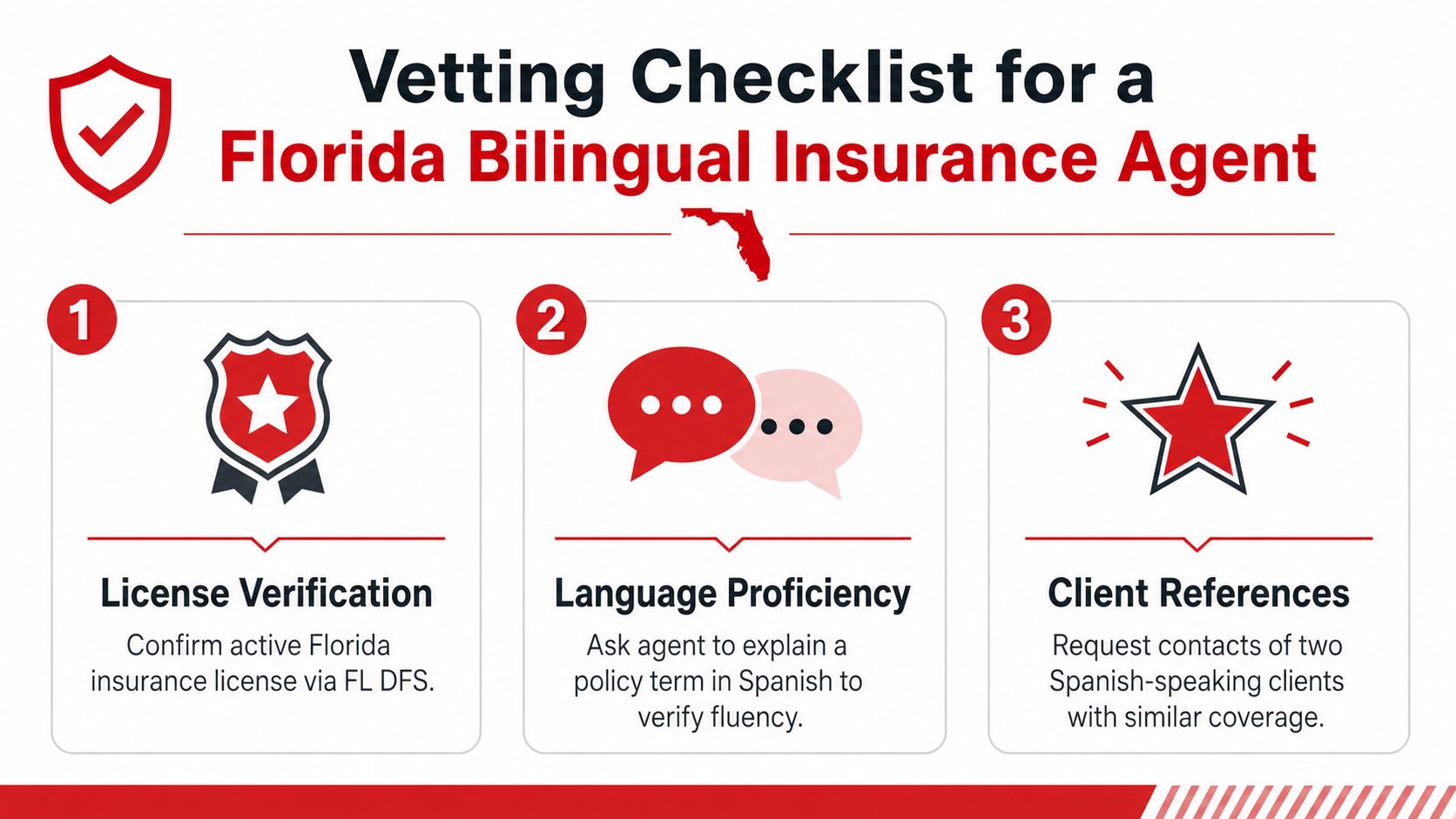
The first rule is simple. Don't hand over personal information until you know who you're dealing with. A Spanish-speaking caller should verify the person on the other end is both licensed and capable of advising on the line of coverage they need.
Compare licensed advice with simple translation
A bilingual receptionist, CSR, or intake specialist can be useful. That person can collect documents, explain office hours, and help you start the process. But if you need advice on a homeowners exclusion, a business auto question, or a policy change, you need a licensed agent who can legally handle that conversation.
Use this side-by-side standard:
-
Do this: Ask for the agent's Florida license status and whether they can quote the line you need.
-
Not that: Assume anyone who speaks Spanish can explain coverage correctly.
-
Do this: Confirm they can handle quoting, policy changes, and claims support in Spanish.
-
Not that: Settle for Spanish only during intake and English only afterward.
-
Do this: Ask whether they're appointed with multiple carriers or limited to one.
-
Not that: Confuse a captive product pitch with a comparison.
Look for process, not just friendliness
The stronger bilingual agencies build Spanish service into training, QA, and monitoring. That matches what a Florida MGA focused on the Hispanic market says about using a hands-on fully bilingual approach to training, monitoring, and servicing agents, which is the right model because the job includes more than small talk and translation. The agent has to explain policy terms, handle service issues, and keep compliance tight.
A simple quality check is to ask the agent to explain one policy term in Spanish, then listen for clarity. If they stumble over basic coverage language, don't rationalize it away. A few minutes of honest testing beats months of confusion later.
You can also ask for proof of how the agency supports client service after the sale. This independent insurance agent resource is one example of the kind of local agency presence shoppers usually want when they need real follow-through.
Questions to Ask on the First Call
The first five minutes tell you almost everything. Don't waste them on generic comfort questions. Ask direct questions that force a real answer, because vague language usually means weak service.
Ask these questions in Spanish or English
- Which carriers do you compare for my type of coverage? A strong answer names categories of carriers or explains the comparison process. A weak answer says “we'll find something that works.”
- Who handles claims support in Spanish? Strong answer, a named person or a clear workflow. Weak answer, “someone will help.”
- How are policy changes sent to me in writing? Strong answer, email, portal, or mailed notice with a follow-up. Weak answer, “we'll let you know.”
- Can I upload documents and make payments in Spanish-friendly systems? Strong answer, yes, with a defined process. Weak answer, “just send it over.”
- What happens if my assigned agent is out? Strong answer, a backup person or team. Weak answer, “call back later.”
Demand specificity: If the answer sounds like a slogan, keep asking. If it sounds like a process, you're probably talking to a real agency.
Read the room fast
A good office answers with names, steps, and timelines. That's what you want. If they dodge basic questions about response channels, physical location, or who handles your file, move on. You're not being difficult. You're protecting yourself from avoidable delays.
I also like asking whether the office regularly handles auto, home, renters, and commercial accounts in Florida. The reason is simple, insurance service gets messier when a team only knows one slice of the market. If they can't describe how they handle different lines, they probably can't keep your file clean when your needs change.
Coverage Considerations for Auto, Home, and Business
Language matters most when the policy gets technical. That's where a bilingual agent earns the fee, because a customer who understands the coverage is less likely to buy the wrong thing or miss the one detail that later causes pain.
Auto and home are where misunderstandings get expensive
Florida drivers often misunderstand personal auto terms, especially when a policy is used for work, rideshare, or multiple household drivers. If an agent doesn't explain those boundaries clearly, the customer can buy a policy that doesn't match reality. The same goes for homeowners and renters coverage, where exclusions and deductibles need to be understood in plain language, not softened into marketing talk.
Flood coverage deserves separate attention in Florida because many families assume their homeowners policy handles weather-related water damage. It often doesn't work that way. A bilingual agent who knows the difference between standard homeowners language and separate flood protection can save a family from a very ugly surprise after a storm.
Business owners need even tighter wording
Small business clients need more than translation. They need someone who can explain how a personal policy differs from a commercial one, when a business-use exclusion matters, and why a general liability policy doesn't solve every problem by itself. A bilingual commercial client also needs the agent to think about certificates, endorsements, and who is listed as an additional insured when contracts require it.
That's where independent agencies have a real advantage. They can compare across multiple carriers instead of forcing the client into a single option, and that matters when coverage details vary by location, property type, and business use.
One more point for owners who like practical budgeting. A bilingual agent should help you match the policy to the risk, not just the monthly payment. Cheap coverage that doesn't fit the business is expensive later.
Bottom line: The right bilingual agent doesn't just translate the quote. They translate the risk.
How Bilingual Service Improves Real Insurance Outcomes
People often treat bilingual service like customer comfort. That's too small. The value shows up when the policy gets used, because that's when misunderstanding becomes costly.
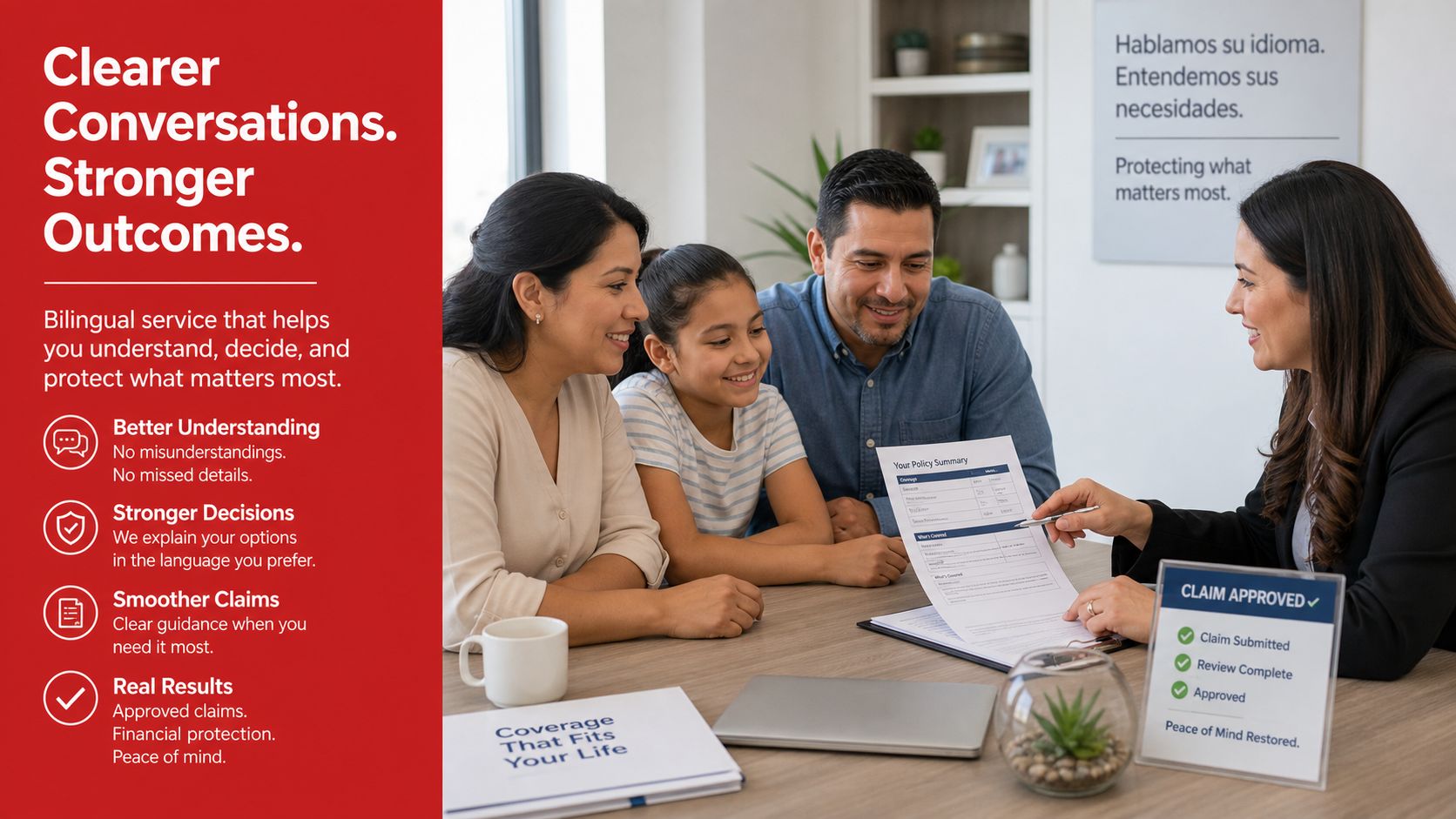
The difference shows up in claim filing and renewals
If a Spanish-speaking customer doesn't fully understand what's covered, the claim conversation gets messy fast. Missing details, wrong assumptions about exclusions, and incomplete explanations all slow things down. A licensed bilingual agent can reduce that friction because they're not just passing information along, they're checking comprehension.
Renewals are another pressure point. Insurance contracts don't get simpler over time, and families often keep policies for years without revisiting what changed. When someone can explain the renewal in the customer's preferred language, the household is far more likely to spot a gap before it becomes a problem.
Fluency alone is not the win
A bilingual conversation is only useful if it's tied to the right license and the right process. That's the part the market still gets wrong. A person can speak Spanish well and still not be authorized to advise on the exact product you're asking about, which is why the licensing question matters as much as the language question.
A good example is the difference between a customer-service interaction and a policy decision. One person can answer the phone. Another can explain whether the customer needs a different limit, endorsement, or line of coverage. Those are not the same job.
If you want a useful standard, ask whether the agent can explain the policy in Spanish, document the change correctly, and follow up when something goes wrong. That's real service. Everything else is just a pleasant first impression.
Get a Free Quote from Select Insurance Group
If you want a straightforward bilingual insurance conversation in Florida, reach out to Select Insurance Group, Inc.. They're an independent agency, so they can compare options across multiple carriers, and their team works across personal and commercial lines with bilingual support throughout quoting, policy changes, and claims.
You can contact them by phone, text, online form, or by visiting a Central Florida office. If you prefer Spanish, say that at the start. A good office will move with you, not make you adapt to them.
They serve Florida and nearby states, and their model fits what most shoppers need: fast comparisons, clear explanations, and a real person who can answer follow-up questions without making you start over. If you're tired of guessing whether you're talking to a translator or a licensed advisor, that distinction alone is worth resolving today.
A CTA for Select Insurance Group, Inc..