
You're probably staring at a renewal notice, a closing checklist, or a new business permit and wondering why insurance still feels harder than it should. In the Southeast, that feeling is normal. You're dealing with different state rules, weather exposure, heavy vehicle traffic, and a market where one quote rarely tells the whole story.
A southeast insurance agency should make that mess simpler, not more confusing. The right independent agency compares options across multiple carriers, explains what each policy does, and helps you separate the part an agency handles from the part a carrier handles when a claim or complaint comes up. That difference matters a lot more than people realize.
Table of Contents
- Why a Southeast Insurance Agency Is Your Best Bet
- Understanding the Independent Agency Advantage
- Coverage Options for Personal and Business Needs
- Navigating Insurance Requirements Across the Southeast
- The Power of Local Service and Bilingual Support
- Your Checklist for Choosing the Right Agency
- Claims and Complaints Who to Call and When
- Get Your Free Southeast Insurance Quote Today
Why a Southeast Insurance Agency Is Your Best Bet
A family that just moved to Florida, Georgia, or North Carolina usually starts with the same question, what do I need here? A business owner asks the same thing after opening a shop, adding vehicles, or hiring employees. The Southeast is not one uniform market. It is a region with fast-changing communities, different state expectations, and real exposure to storm, wind, flood, traffic, and business liability risks.
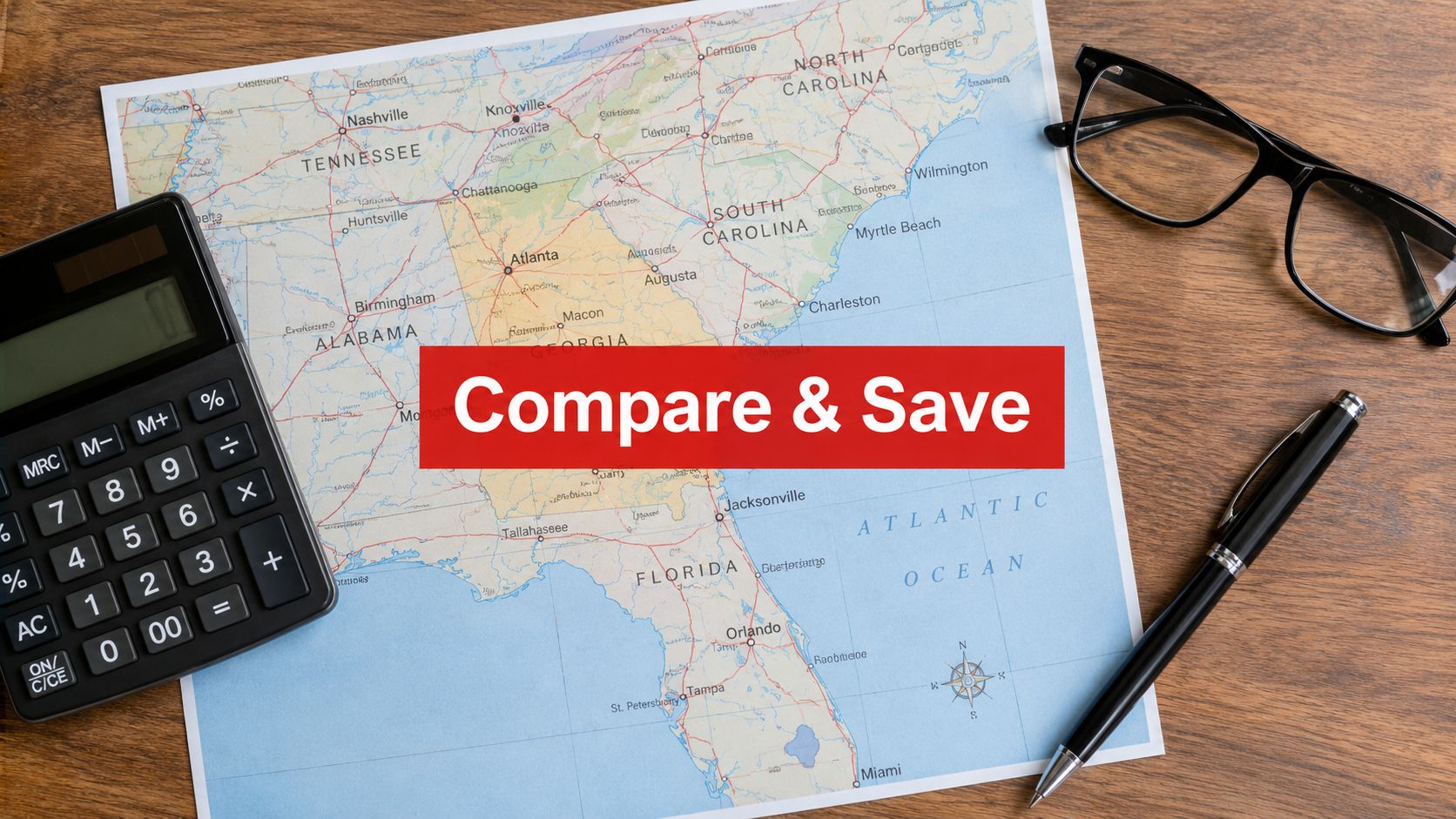
That is why an independent southeast insurance agency usually makes more sense than trying to force every need into one carrier's product set. Select Insurance Group says it serves Alabama, Florida, Georgia, North Carolina, South Carolina, Tennessee, and Virginia, and its materials state it compares quotes from 20–40 carriers while drawing on over 30 years of experience (Select Insurance Group). That kind of reach matters because a growing region creates more insurance demand, and the agency can match the need to the market instead of making the customer fit one insurer's rules.
Practical rule: if your life or business spans more than one exposure, home, auto, property, liability, trucking, employees, or renters, you usually need more than one style of policy thinking.
If you want a clearer picture of how an independent agency works, this explanation of an independent insurance agency is a helpful place to start. The agency role is to compare options, explain trade-offs, and help you understand where one policy fits better than another.
For people who want a quick technical reference on how public information is structured online, OGP namespaces documentation is useful. It is not an insurance guide, but it is a solid example of how metadata and public-facing information can support clearer communication.
The best agency relationship feels less like shopping and more like having a guide who already knows which routes waste time. That saves you from getting stuck in a one-size-fits-all proposal that looks convenient but leaves gaps. It also matters later, because when a claim or complaint comes up, the agency helps you sort out whether the issue belongs with the carrier, the policy, or the next step in the process.
Understanding the Independent Agency Advantage
The clearest way to think about an independent agency is this, it's like asking one experienced shopper to compare several stores for you instead of walking into only one store and hoping the price is fair. A captive agent works inside one company's system. An independent agent can compare multiple companies, which gives you more room to balance cost, coverage, and underwriting fit.
Select Insurance Group's public materials say independent agencies that compare multiple carriers can reduce search friction because they aren't tied to one insurer's pricing or underwriting rules. That matters because the same applicant can look very different to different carriers. One company may like the risk, another may want tighter terms, and another may offer a more workable structure for a driver, homeowner, contractor, or trucking account.
What that looks like in practice
You don't just want “a quote.” You want the right quote for the right risk. If you have two vehicles, a home, and a small business, a single carrier may be strong in one area and weak in another. An independent agency can shop the full package across different carriers and product forms, then explain which option lines up with your actual exposure.
The same idea applies to families and business owners who are crossing state lines or juggling different property types. A person buying a primary home, a rental, and auto coverage may need different underwriting conversations for each piece. A business owner with vehicles and employee exposure needs the policy structure to follow the loss driver, not the sales script.
If you want a plain-English definition of how this model works, the internal guide at what is an independent insurance agency is worth reading before you start comparing quotes.
A good independent agency doesn't force a quick yes. It helps you understand why one carrier is a better fit than another, and where the trade-offs actually are.
That's the clear advantage, choice with interpretation. Without that, quotes are just numbers on a page.
Coverage Options for Personal and Business Needs
A full-service agency should be able to handle both the household side and the operating side of your life. For many clients, that means one point of contact for a car, a rental, a home, and a business. The value is not just convenience. It is having one place that can compare each policy structure against the actual exposure you are trying to protect.
Personal lines and what they protect
Personal coverage usually starts with auto, homeowners, and renters insurance. Auto helps address vehicle-related losses and liability, homeowners protects the structure and related personal property, and renters focuses on belongings and liability where you do not own the building. Depending on your lifestyle, you may also need motorcycle or RV coverage, especially if your household uses multiple vehicles or travels seasonally.
A family example is easy to see in the Southeast. A household may need a homeowners policy for the house, auto for the daily commute, and renters coverage for a college student or a second residence. That bundle is often easier to manage when one agency sees the whole picture and can point out what is duplicated, what is missing, and where the gaps live.
Commercial lines and how they work together
Business coverage is more technical because each policy responds to a different loss driver. General liability addresses third-party bodily injury and property damage, commercial property insures physical assets, workers' compensation handles statutory employee injury claims, and commercial auto or trucking addresses vehicle liability and physical damage for mobile exposures. If those pieces are not aligned, a cheap quote can turn into a painful gap.
For vehicle-heavy businesses, the policy structure has to match how the vehicles are used. A closer look at commercial insurance for Southeast businesses can help a business owner sort out where general liability ends and auto or trucking coverage begins. If you need to compare fleet insurance categories, the useful lesson is the same. Fleet and commercial auto need a structure that matches actual operations.
| Coverage Type | Protects… | Ideal For |
|---|---|---|
| Auto | Vehicles, liability, and related losses | Families, commuters, multi-car households |
| Homeowners | Home structure and personal property | Homeowners in storm-prone areas |
| Renters | Belongings and personal liability | Tenants, students, apartment dwellers |
| General Liability | Third-party injury and property damage claims | Contractors, retailers, service businesses |
| Commercial Property | Buildings, equipment, and business property | Shops, offices, warehouses |
| Workers' Compensation | Employee injury claims under state rules | Employers with staff |
| Commercial Auto and Trucking | Business vehicle liability and physical damage | Fleets, haulers, contractors |
Navigating Insurance Requirements Across the Southeast
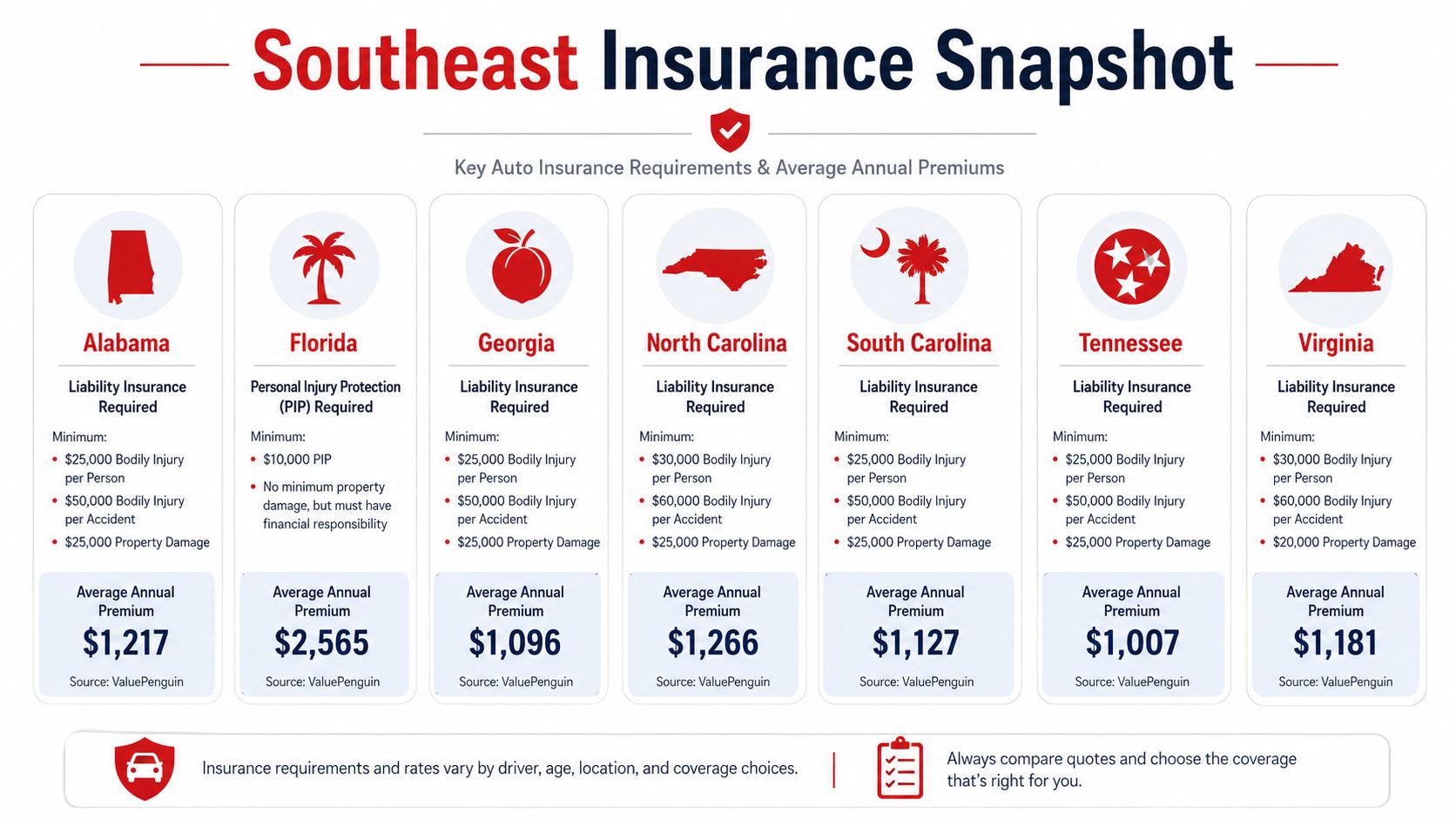
Insurance in the Southeast isn't just a formality. It changes with local risk, local industries, and local habits. A driver in one state, a coastal homeowner in another, and a trucking operation in a different metro area can all need very different conversations even when the policy names look similar.
State-by-state priorities
Alabama often calls for a careful look at auto and home pairing, especially when a household wants one agency to keep both lines organized.
Florida demands special attention to storm exposure, flood risk, and property placement, which is why a local read on risk matters so much.
Georgia often brings commercial vehicles and contractor work into the conversation, so the policy structure has to match how the business runs.
North Carolina customers often need a blend of personal and commercial guidance because growing metro areas can mean more vehicles, more commuting, and more small-business activity.
South Carolina has a strong need for coordinated home and auto planning, especially when coastal exposure enters the picture.
Tennessee often brings trucking, fleet, and business vehicle needs to the front of the conversation.
Virginia can require a careful review of commuting patterns, business use, and property exposure, especially for clients crossing between metro and suburban markets.
The key point is simple, state lines change the risk conversation. That's why commercial insurance Southeast matters as a practical search term and a real service category for businesses trying to get the structure right.
What a local agency adds
A strong agency looks at whether your exposure is mostly home, auto, rental, or business operations, then works outward from there. It's not about selling the most policies. It's about matching the right policy to the right state-specific risk. That's especially useful when one household or company operates across multiple Southeast states.
A quote that ignores local exposure can look fine on the surface and still leave the wrong edge uncovered.
The Power of Local Service and Bilingual Support
Insurance gets messy when you're trying to explain damage, a missed payment, a policy change, or a claim delay in language that doesn't feel natural. The problem gets worse when the person helping you doesn't understand the street, the storm pattern, the neighborhood, or the way local customers talk about a loss. Local service solves part of that. Bilingual service solves another part of it.
Select Insurance Group's bilingual support is especially relevant for Southeast customers who want clear, accurate conversations in English or Spanish, and its regional office model reflects that local-service approach (Select Insurance Group bilingual service). In practice, that means a customer can ask a direct question, get a direct answer, and avoid the kind of misunderstanding that creates claim headaches later.
Why language access changes outcomes
A simple example helps. A homeowner notices water intrusion after a storm and assumes the damage is “just roof damage.” A local agent who understands the area may ask the right follow-up questions about wind, roof age, and interior impact, then help the customer describe the loss correctly. If the conversation happens in the customer's preferred language, the details are more likely to be accurate, and accuracy matters when a file moves from quote to claim.
That's also where modern communication helps. Text updates, secure document upload, and policy change support reduce the back-and-forth that wastes time. A customer shouldn't have to chase basic status updates by phone all day.
Practical rule: the right local agency should make it easier to tell the story of the loss, not harder.
Local knowledge also helps with community patterns that outsiders miss, like traffic flow, business corridors, or neighborhoods with repeated weather exposure. Those details affect how a risk should be described and placed. A policy that fits the local pattern is easier to maintain, easier to explain, and usually easier to service when something goes wrong.
Your Checklist for Choosing the Right Agency
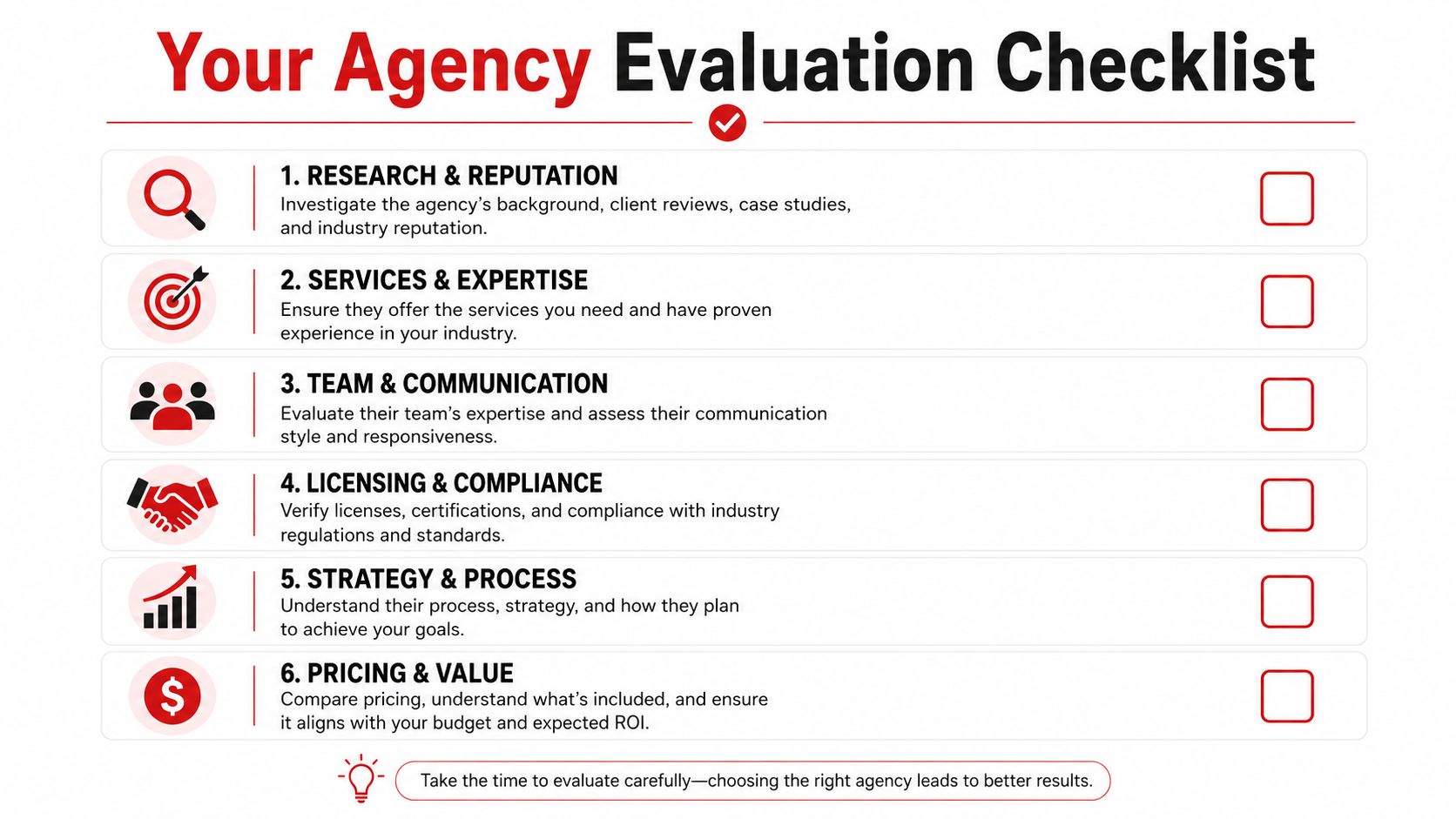
Choosing an agency should feel like interviewing a partner, not ordering takeout. If the first conversation is vague, rushed, or overly generic, that's a warning sign. A good Southeast agency should be able to explain how it works, what it can place, and what support you get after the sale.
Questions worth asking
- How many carriers do you represent? More carriers usually means more ways to fit a risk, especially if your situation isn't standard.
- What personal and commercial lines do you handle? You want one agency that can follow your needs as they change.
- Have you worked with my type of risk before? A contractor, driver, landlord, and homeowner all need different detail in the application.
- How do you handle policy changes and renewals? Service matters after the quote, not just during it.
- What happens if I need help with a claim or complaint? The answer should be clear, not vague.
- Do you offer text, portal access, or document upload? Simple communication tools save a lot of time.
The big thing to listen for is how the agency answers, not just what it claims. If it can't explain the difference between placement, service, and claims support, keep looking. If it can explain why one carrier is better for your home, another for your business auto, and a third for liability, you're in better hands.
That's where Select Insurance Group, Inc. fits naturally as one option in the Southeast market. It publishes a regional service footprint, compares quotes from multiple carriers, and pairs that with bilingual support and free, no-obligation quotes.
Claims and Complaints Who to Call and When
The part that confuses many people is simple once it's broken down. Your agency helps place the policy, explain the policy, and often helps you through the first conversation. The carrier is the company that issues the policy and processes the claim. Those are related jobs, but they are not the same job.
The first call after a loss
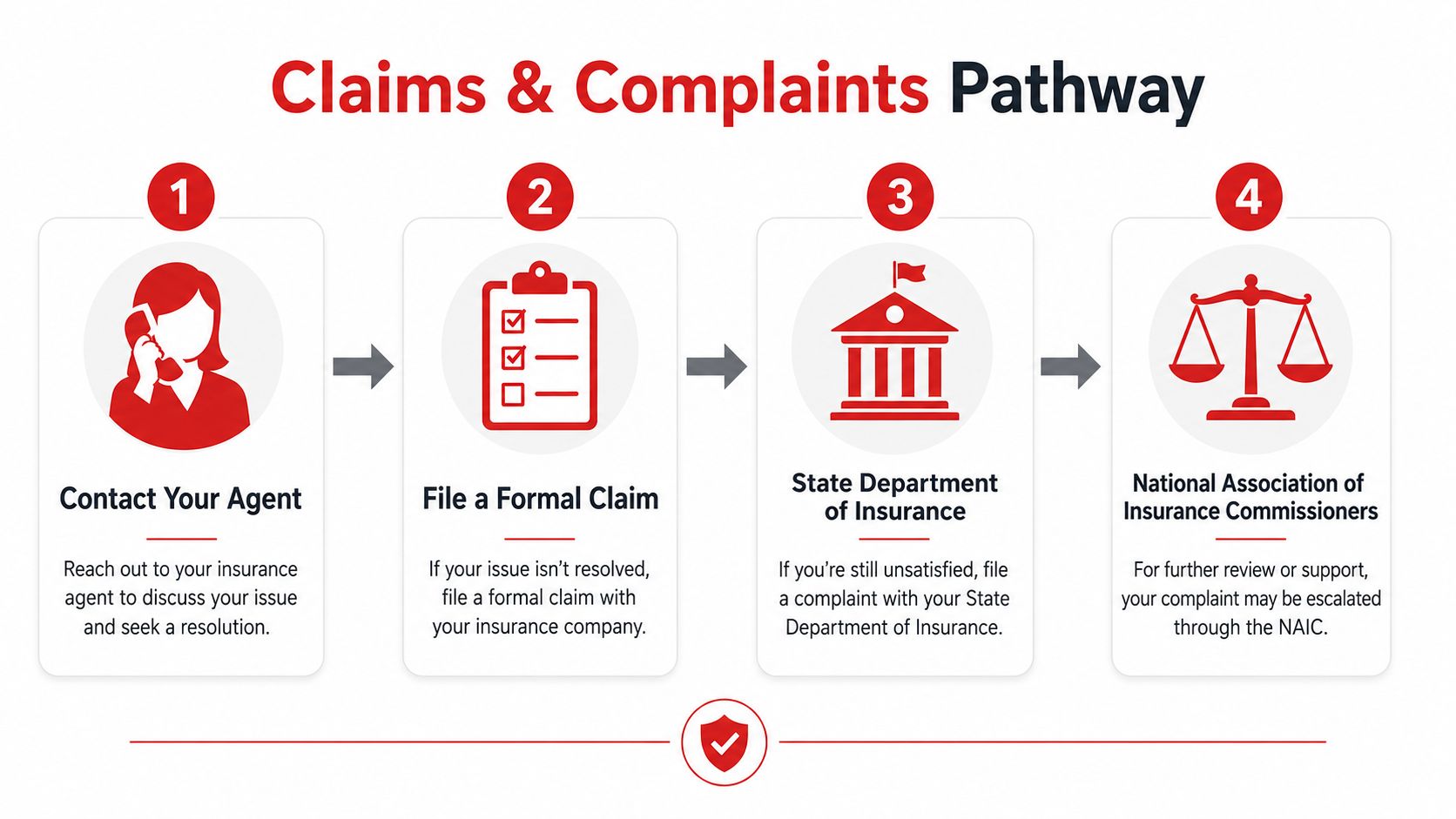
If something happens, start by documenting everything. Take photos, save receipts, keep repair estimates, and write down dates while the details are fresh. Then contact your agent so they can tell you which company should receive the notice and what the next step should be. The carrier usually handles the claim file, adjuster assignment, and settlement process.
The National Association of Insurance Commissioners explains that consumers may need to contact the company or agent first, keep records, and then escalate to the state Department of Insurance if the issue isn't resolved, and it notes that complaint processes require exact company names, policy numbers, and documentation (NAIC complaint guidance). That makes preparation part of the process, not an afterthought.
When to escalate
Escalation makes sense when the carrier hasn't responded, the claim is stalled, or the issue turns into a formal dispute. The Department of Insurance wants specifics, not frustration. Keep the policy number, claim number, photos, emails, letters, adjuster names, and a timeline of events.
Keep your records before you need them. After a loss, missing documents slow everything down.
The agency can still help at this stage by clarifying policy language and pointing you to the right complaint channel, but it doesn't replace the carrier's claim function. If the problem is with how the policy was sold, the agency is part of that conversation. If the problem is with how the claim is handled, the carrier is usually the first stop, followed by state escalation if needed.
That distinction is the piece most never get clearly explained until they're already under stress. A good agency explains it upfront.
Get Your Free Southeast Insurance Quote Today
If you want fewer surprises and clearer answers, start with an independent southeast insurance agency that knows how to compare carriers, explain trade-offs, and support you after the sale. Select Insurance Group offers regional coverage in the Southeast, compares quotes from multiple carriers, and helps with personal and commercial lines, including auto, homeowners, renters, general liability, workers' compensation, commercial auto, and trucking.
The value is simple, you get more choice, clearer guidance, and a smoother path when you need service or claims help. If you're ready to review your coverage, ask for a free, no-obligation quote and see how the right agency can make the process easier.
If you're ready to compare coverage with a team that serves the Southeast every day, visit Select Insurance Group, Inc. and request a free quote. You'll get help sorting out personal or commercial coverage, plus guidance on what to do if a claim or complaint ever comes up.