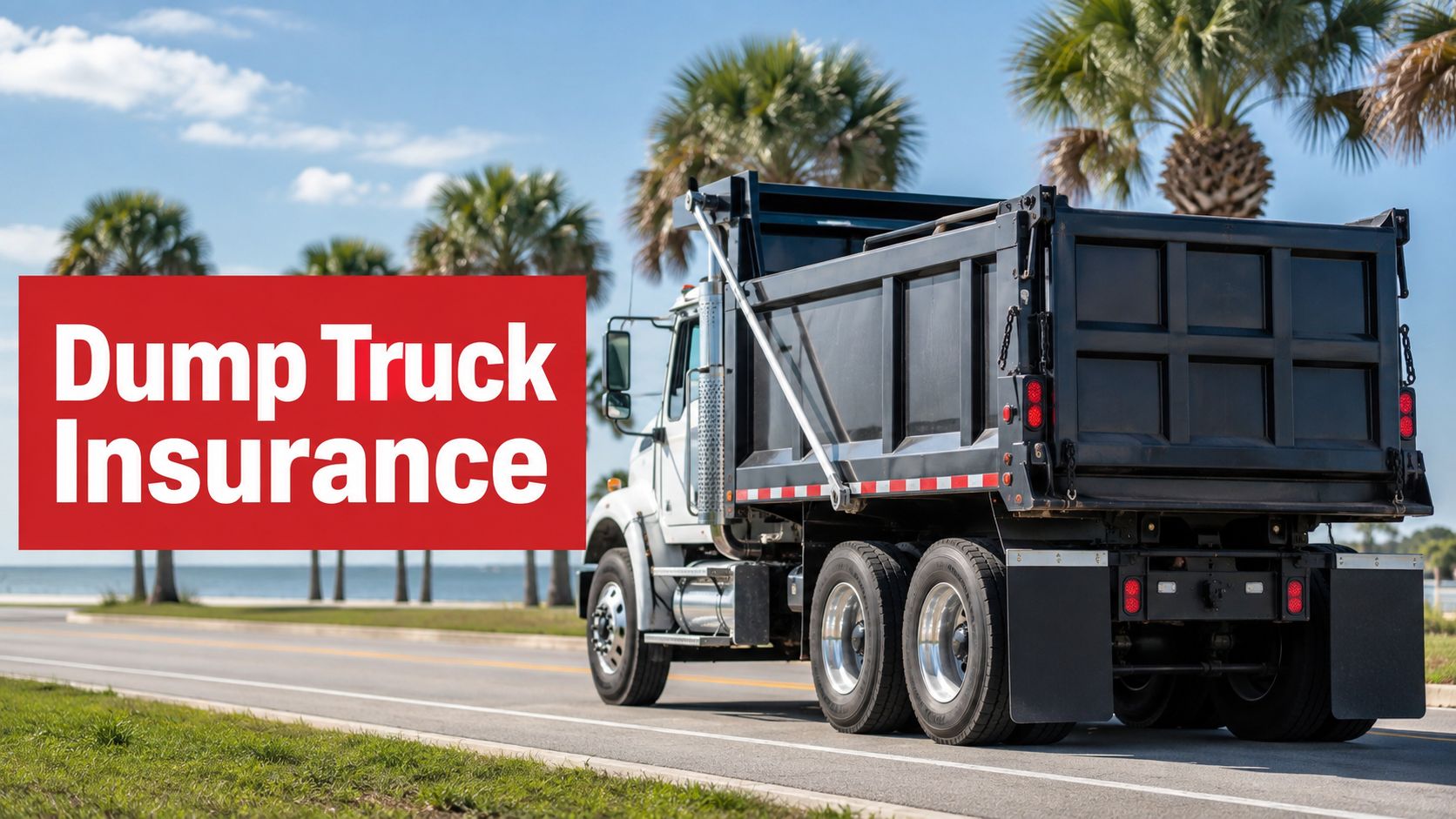

You've got the truck, the routes, and the work. Then renewal lands on your desk and the number is higher than last year, even though nobody's filed a claim. That's normal in Florida, and if you treat dump truck insurance Florida like a standard auto policy, you'll overpay in some places and underinsure in others.
Florida punishes guesswork. The state's commercial auto market is shaped by heavy traffic, uninsured drivers, hurricane exposure, and tight underwriting on dump trucks that spend their day on jobsites, county roads, and sometimes interstate lanes. The right policy isn't just about finding a lower premium, it's about matching the limit, the route, and the filing to the way you operate.
Table of Contents
- Why Florida Dump Truck Insurance Costs More Than You Expect
- Florida Liability Minimums by Weight Class and Operation Type
- Required Coverages and Smart Optional Add-Ons
- What Drives Your Premium in Florida
- Filings and Documentation You Cannot Skip
- How to Get Competitive Quotes from an Independent Agent
- Your Coverage Verification Checklist
Why Florida Dump Truck Insurance Costs More Than You Expect
A Tampa aggregate hauler can post a clean loss run and still see renewal climb. Carriers do not price Florida dump truck coverage off past claims alone. They start with where the truck runs, where it is parked, and how ugly the next loss could be.
Florida sits in a costly trucking market because the risk stack is heavy. Carriers price for dense traffic, high claim severity, hurricane exposure, and the fact that many Florida drivers carry no insurance. That pushes more loss back onto your policy, especially on the liability side.
Why the same truck gets a different quote in Florida
Two identical trucks can still land in different rating buckets. South Florida usually gets hit harder because of congestion, tighter parking, theft pressure, fraud exposure, and heavier jobsite activity. North Florida and the Panhandle often price differently because the territory is different, not because the truck suddenly changed.
The carrier is also looking at your operating footprint. If a unit spends part of the month in a tougher area, that exposure follows the policy. A truck that hauls locally, parks in a dense metro area, or sits on unsecured job sites will not price like a light-use local unit.
Here is the part owners miss. The cheapest compliant premium is often the wrong target. If your liability limit does not match your contracts, or your physical damage value is stale, you pay for it later. Before renewal, document your diesel truck's value so you can support the number you want carried on the policy.
That matters even more in Florida because uninsured motorist exposure is real. If another driver cannot pay, your insurer is the one left handling the claim. For a fleet owner, that means the correct limit and the correct territory rating matter more than chasing a statewide average that never fit your operation in the first place.
Florida Liability Minimums by Weight Class and Operation Type
Florida dump truck liability is not a single floor. It turns on weight class and whether the truck runs intrastate or interstate, and that is where many operators get caught short. The legal minimum may satisfy the state, but your contract, lender, or jobsite can demand more.
For intrastate Florida-only operations, Florida Statutes § 627.7415 sets weight-based minimums at $50,000 for 26,000 to 34,999 lbs, $100,000 for 35,000 to 43,999 lbs, and $300,000 for 44,000 lbs and above. If you cross state lines hauling nonhazardous property, FMCSA Part 387 generally pushes the minimum to $750,000, and oil or hazmat can require $1,000,000. That gap is why “sometimes interstate” is a serious underwriting issue, not a minor detail.
Where owners make the wrong assumption
A 30,000-pound single-axle truck doing local Florida work may fit the state tier, but that does not mean the limit is enough for the deal you signed. A 60,000-pound tandem-axle rig that crosses into Georgia sits under a different filing and liability structure, and the minimum changes with it.
The mistake is simple. An owner buys the cheapest compliant limit, then finds out the shipper, general contractor, or site owner wants more than the legal floor. Compliance keeps the truck on the road. It does not protect the balance sheet by itself.
| Weight Class (GVWR) | Intrastate Minimum | Interstate Minimum | Typical Recommended Limit |
|---|---|---|---|
| Under 26,000 lbs | Depends on operation and contract terms, not the dump-truck tiers above | Federal rules can still apply if the truck is used in interstate commerce | Carry what your contract requires, not just the floor |
| 26,001 to 34,999 lbs | $50,000 | $750,000 generally for nonhazardous interstate hauling | Often higher than the legal minimum |
| 35,000 to 43,999 lbs | $100,000 | $750,000 generally for nonhazardous interstate hauling | Often higher than the legal minimum |
| 44,000 lbs and above | $300,000 | $750,000 generally for nonhazardous interstate hauling, higher for oil or hazmat | Contract-driven, usually above the floor |
The filing side matters too. Intrastate carriers often need proof filings such as Form E. Interstate carriers need the right federal endorsement structure, and Florida's Department of Financial Services will still expect the paperwork to match the authority you hold. An independent agent can clarify which authority tier applies before you submit a bid.
Required Coverages and Smart Optional Add-Ons
A dump truck that only carries the legal floor is exposed the moment a job goes sideways. Florida owners need to separate compliance from protection. Compliance keeps the unit legal. Coverage keeps one loss from draining cash.
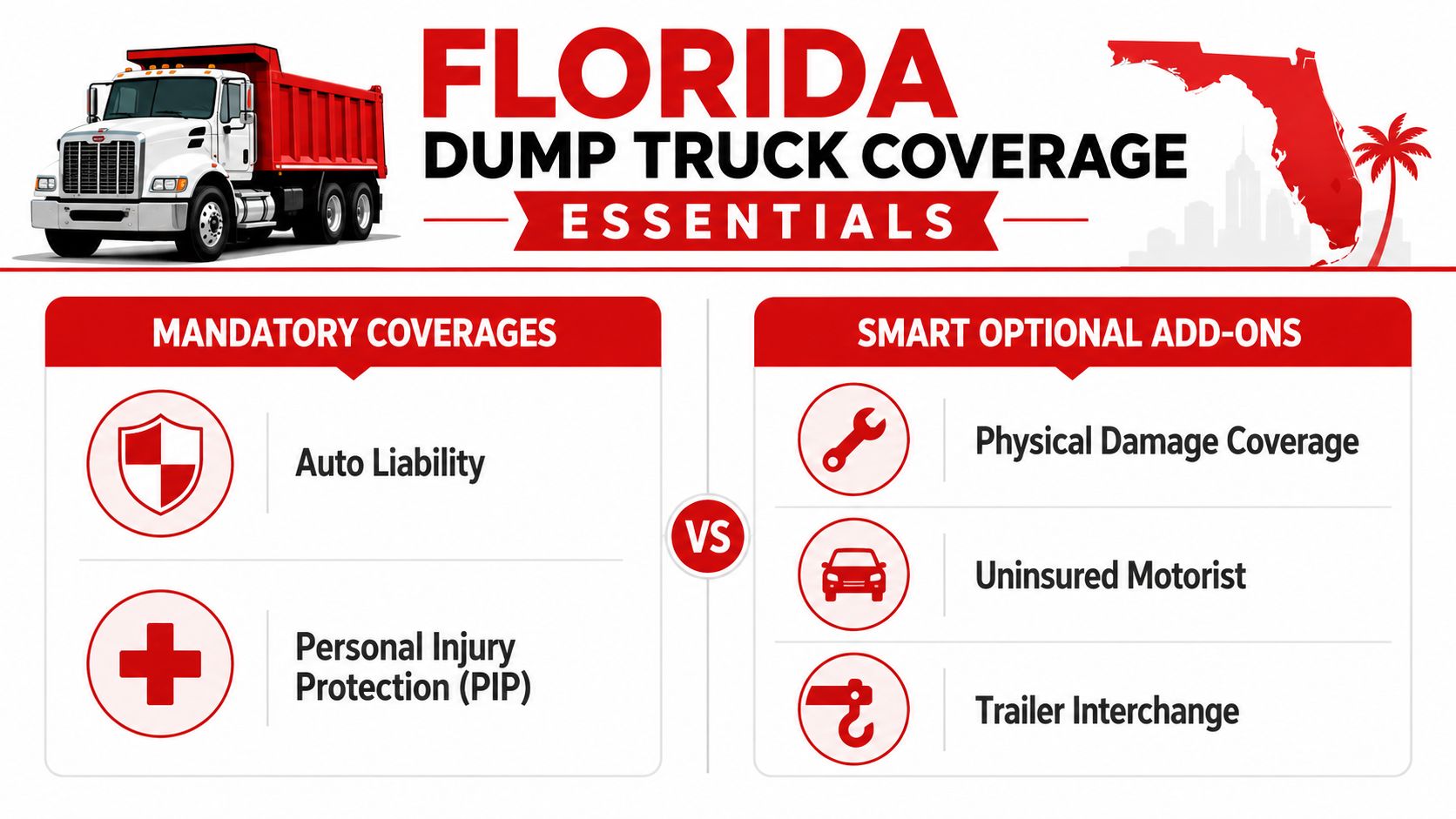
Auto liability and PIP sit at the core for registered vehicles. That is the starting point, not the finish line. In Florida, physical damage, motor truck cargo, and uninsured/underinsured motorist coverage deserve real attention because the state's risk mix pushes claims into the insurer's pocket fast.
What belongs in the core package
Put liability first. It protects other people's injury and property damage, and it is the coverage that keeps you contract-ready. Put physical damage right behind it, because dump trucks in Florida face collision, theft, vandalism, and weather loss as routine underwriting concerns.
Motor truck cargo matters more than owners expect. If you haul aggregates, debris, or equipment for someone else, a cargo claim can interrupt payment and trigger a dispute over who owes what. For a broader look at cargo placement and exposure, review an overview of how cargo insurance is structured for truckers.
Uninsured motorist coverage is where many Florida fleets get thin without realizing it. The state's driver mix makes it hard to assume the other party will pay cleanly after a crash. If you run mixed work, borrowed units, or rented equipment, hired and non-owned auto liability closes another gap a standard policy can leave open.
| Coverage | What It Protects | State Required | Why It Matters in Florida |
|---|---|---|---|
| Auto liability | Other people's injury and property damage | Yes | Keeps you compliant and contract-ready |
| PIP | Medical benefits for covered Florida vehicles | Yes | Required layer for registered vehicles |
| Physical damage | Your truck and trailer equipment | No | Important for storm and collision exposure |
| Motor truck cargo | The load you're carrying | No | Helps when a load claim stops payment |
| Uninsured motorist | Your business when the other driver cannot pay | No | Smart in a state with heavy uninsured exposure |
| Hired and non-owned auto | Borrowed, rented, or non-owned units | No | Useful for contractors and mixed equipment setups |
If you haul for one contractor and pull a rented unit on the next job, your liability setup changes quickly. A policy built for one operation will not fit every haul.
Some fleets also need a separate discussion for site-support work. oilfield insurance for service contractors is a useful comparison because it shows how layered operational risk gets priced when hauling is only part of the job.
What Drives Your Premium in Florida
Florida pricing is not random. Underwriters look at the same truck and price it through a different lens based on where it lives, where it runs, and how much loss they expect from that route mix. Two identical dump trucks can sit in different premium bands because the operation around them is not identical.
The biggest levers underwriters pull
Territory is the first driver. South Florida, Central Florida, North Florida, and the Panhandle do not price the same because congestion, theft pressure, claim frequency, and parking conditions vary by region. That is why your ZIP code can move the quote more than the truck itself.
Uninsured motorist exposure is another hidden cost driver. Florida fleets absorb more uncertainty when the other driver cannot pay cleanly after a crash, so carriers price that exposure into the policy. Owners who ignore that factor end up underinsured in the one place where the loss hits hardest.
Weight class changes the liability profile. A heavier dump truck creates a larger claim event when something goes wrong, so the carrier treats it differently from a lighter unit. Radius of operation matters too. A truck that stays local is easier to rate than one that covers a wider area or shifts across multiple territory bands.
Parking and storage also matter. A unit kept in a secure yard usually prices better than the same truck parked in an exposed lot or an area with storm risk. That is why two fleets with the same equipment can get very different quotes.
| Region | Annual Premium Range | Key Cost Factor |
|---|---|---|
| South Florida | $12,000 to $22,000 for fuller coverage, or $7,500 to $14,000 liability-only | Congestion, theft and fraud pressure, parking conditions |
| North Florida | $9,000 to $17,500 | Lower territorial pressure |
| Panhandle | $9,000 to $17,500 | Lower territorial pressure |
| Tampa, Orlando, Jacksonville corridor | Qualitatively higher than rural markets | Metro exposure and route density |
A disciplined fleet can still control cost. Clean MVRs help. So does a written safety program and tight driver screening. But those controls do not erase bad territory or a wide operating radius.
If you are quoting multiple units, an independent commercial team such as Select Insurance Group, Inc. can compare options across trucking markets instead of forcing one carrier's appetite onto your whole fleet. For a closer look at carrier selection and territory fit, review trucking insurance in Florida.
Filings and Documentation You Cannot Skip
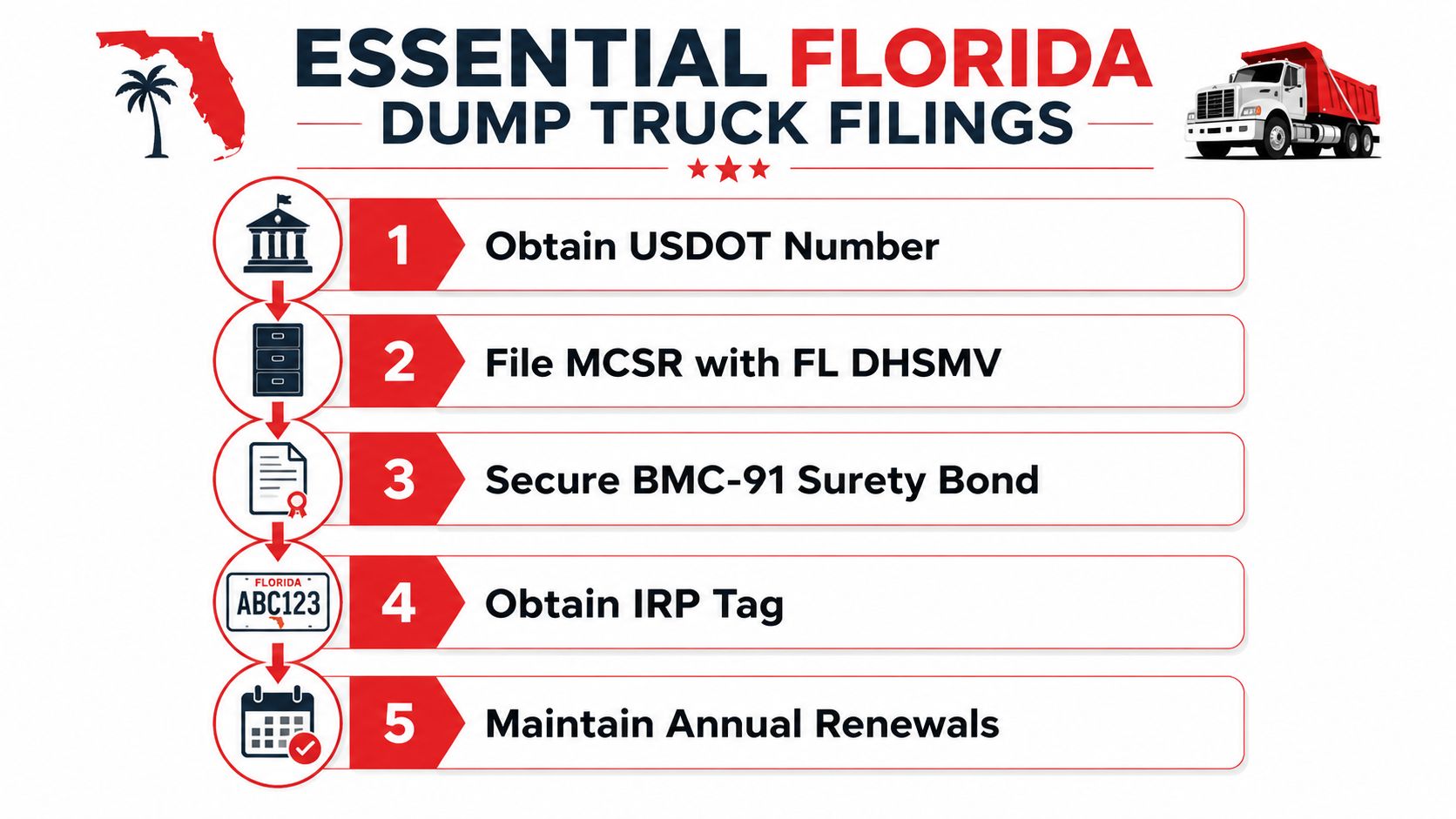
You can have the right policy and still be out of compliance if the filing isn't right. That's the part owners miss. A certificate of insurance proves you bought coverage, but it does not always prove the state or regulator has received the filing it needs.
The filings that matter
For intrastate Florida-only carriers, Form E is the key proof filing referenced in the state framework. For interstate operations, the carrier needs the federal endorsement structure, and the policy has to support that authority. If you're moving under state or federal construction requirements, the customer may also ask for project-specific certificates before you ever roll onto the site.
Keep the paperwork clean and current:
- Match the authority to the route. If the truck crosses state lines, don't pretend it's a Florida-only problem.
- Verify the filing, not just the quote. A quote is not proof of compliance.
- Check effective dates before renewal. Gaps happen when a policy changes carriers or the broker waits too long.
- Save the proof in more than one place. Dispatch, office, and owner copies should all match.
- Confirm driver and unit schedules stay current. A missed unit can create a real coverage dispute.
A policy that sits in the file without the right filing is a weak policy. It may look fine until a stop, a claim, or a contract audit exposes the gap.
For operators who want to verify they're using the right authority structure, the practical workflow in Florida usually starts with the filing side before the vehicle leaves the yard. That's why the difference between a certificate of insurance and an actual filing matters. One is a document. The other is what keeps your authority intact.
How to Get Competitive Quotes from an Independent Agent
The cheapest quote is rarely the right quote. In Florida trucking, the smarter play is to shop the market with complete information so the carrier prices the account accurately instead of padding it for missing details.
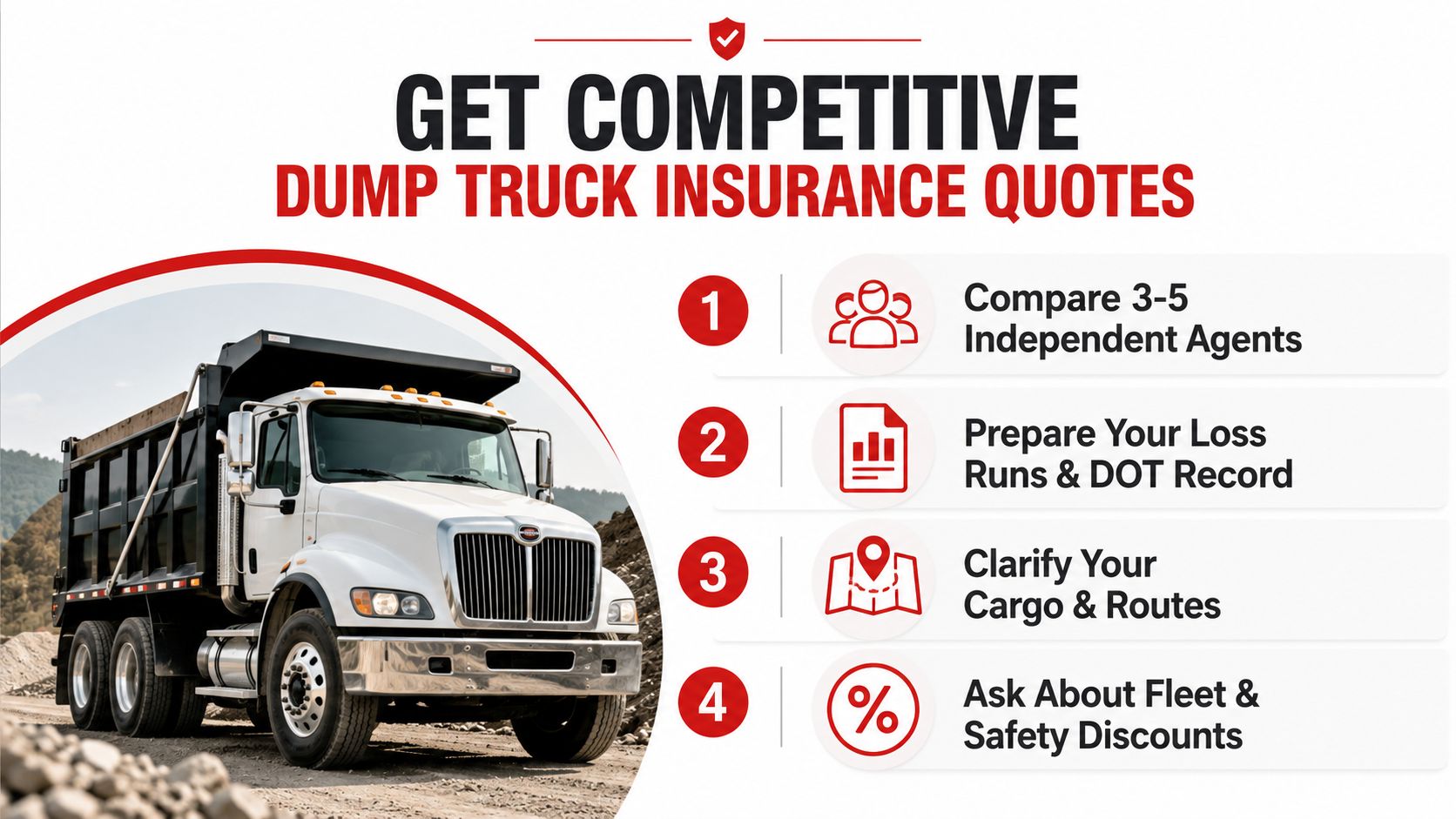
Start with the facts an underwriter needs. Bring your DOT number, loss runs, vehicle schedule, driver MVRs, and a clear breakdown of what each truck hauls and where it runs. If you hide route changes or cargo changes, the quote you get may look attractive and then blow up at audit or renewal.
What separates a trucking specialist from a generalist
A real commercial trucking agent knows how to talk about radius, authority, cargo, and driver profile without guessing. They also know when the market needs to be split, with liability on one side and physical damage on another, because one carrier may be strong on one piece and weak on the other.
Renew early. I'd push renewal conversations 45 to 60 days ahead of the expiration date so the market has time to react. Last-minute submissions usually land in tighter pricing and fewer options because the underwriter has less time to digest your file.
- Compare multiple submissions: Send the same clean application to more than one agent so you're comparing like for like.
- Show your route reality: If a truck really stays local, say so. If it doesn't, don't dress it up.
- Ask about admitted and surplus options: Some risks need broader market access than a single standard carrier can offer.
- Use competing terms intelligently: Don't just shop price, shop deductibles, filings, and claim support.
If you want a Florida-focused workflow, use this independent agent resource as a practical starting point for understanding how an independent placement process works. The right agent won't just quote your truck, they'll help structure the coverage so the policy matches the job.
Your Coverage Verification Checklist
Before you renew, run the policy like an audit. If any answer is fuzzy, fix it before the truck moves. Florida dump truck coverage gets expensive when owners discover the gap after a claim, a stop, or a contract review.
Check these items every time
- Confirm liability matches the truck's actual weight class. Don't assume the limit lines up just because the policy was renewed automatically.
- Verify the authority type. Intrastate and interstate operations are priced and filed differently.
- Check that filing evidence is active. If you need a filing such as Form E or a federal endorsement, make sure it's not expired.
- Review physical damage values and deductibles. Storm exposure, parking risk, and replacement value should all be reflected.
- Match uninsured motorist limits to your exposure. In Florida, that part of the policy shouldn't be an afterthought.
- Align cargo coverage with what you haul. Aggregates, debris, and equipment don't carry the same risk profile.
- Confirm every driver is scheduled. A driver outside the policy schedule can become a coverage fight.
- Recheck the policy after fleet changes. New trucks, route expansions, or new drivers should trigger a review.
Keep this checklist with your renewal file and use it before any new contract starts. If the answers are clean, you're buying coverage. If they're not, you're gambling.
Select Insurance Group, Inc. helps Florida trucking owners compare commercial auto and trucking options with the filings, limits, and coverage structure tied to the way they run. If you need a sharper read on your dump truck policy, visit Select Insurance Group, Inc. and ask for a quote review before your next renewal hits.