
You're standing beside your Chattanooga driveway with a damaged awning, water inside the coach, and a trip already paid for. The storm moved through quickly, but the repair bill won't. Your first call may be to an insurer, only to discover that the policy treats your RV like a car, a trailer, or personal property when your loss involves all three.
That's why Chattanooga recreational vehicle insurance needs to match the way you own and use the vehicle. A motorhome traveling through town, a fifth wheel parked seasonally, and a travel trailer crossing the region behind a pickup don't face the same insurance questions. The right policy starts with the RV's structure, then accounts for Tennessee requirements, weather exposure, storage, travel, belongings, and the financial consequences of a total loss.
Table of Contents
- Why Your RV Needs Specialized Coverage in Chattanooga
- Understanding Tennessee Legal Requirements
- Navigating Key Coverage Types
- Local Risks and Road Conditions
- Full-Timer and Seasonal Use
- Getting Affordable Quotes Locally
- Final Steps to Secure Your Policy
Why Your RV Needs Specialized Coverage in Chattanooga
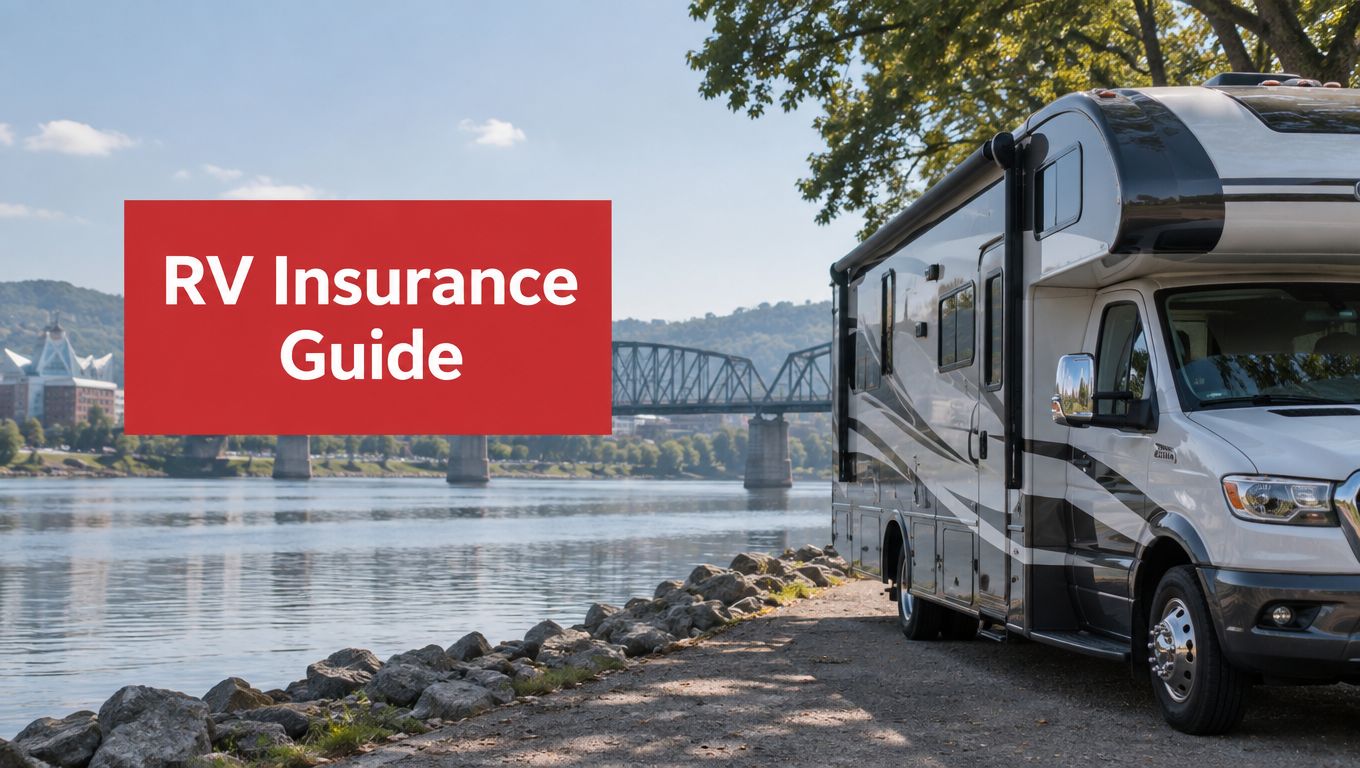
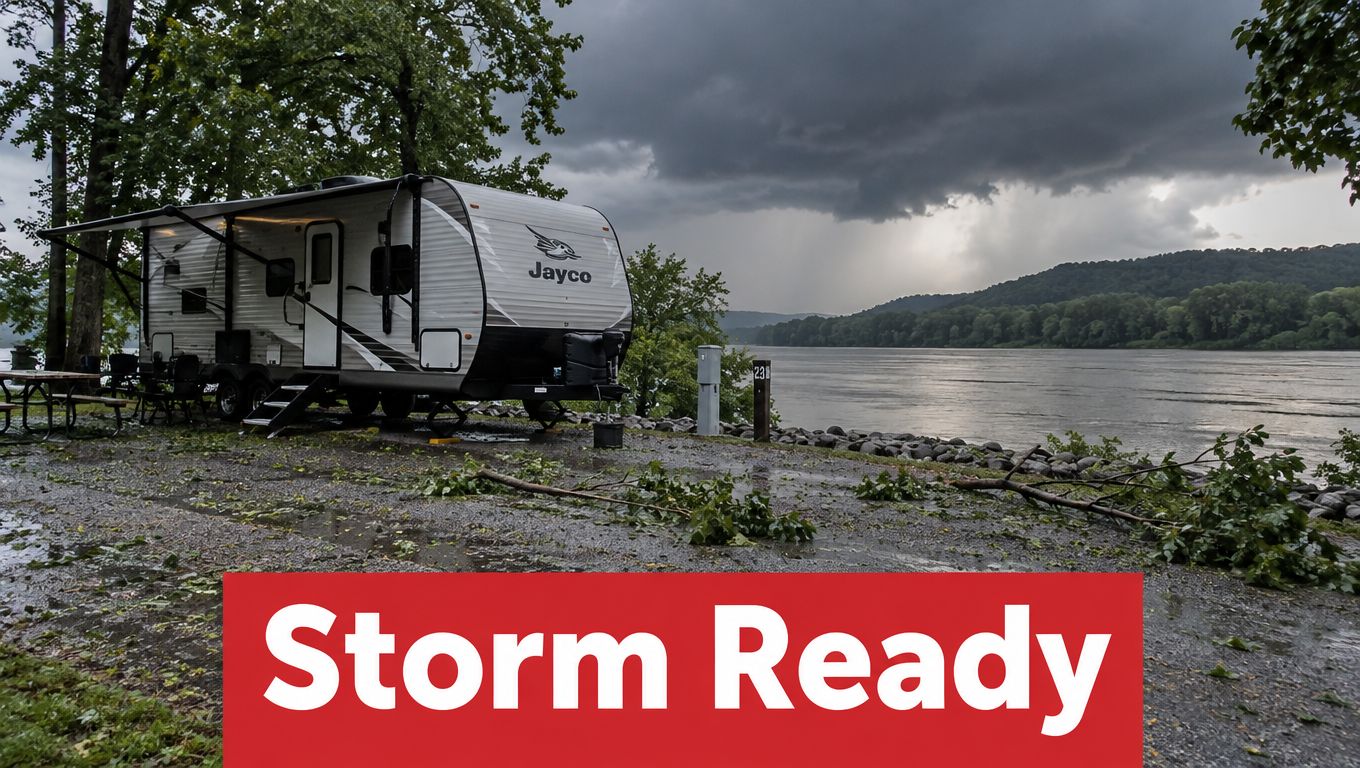
A Chattanooga owner parks a motorhome near the Tennessee River before a weekend trip. A storm brings heavy rain and wind, the awning tears loose, and water reaches the interior. The motorhome also has solar equipment, camping gear, and upgraded electronics that weren't part of the original factory configuration.
A basic auto policy may focus on liability while the vehicle is moving. A homeowners policy may offer limited protection for belongings away from the home, but it usually isn't designed to insure a motorized vehicle, its built-in systems, its attached equipment, or the costs that arise when the vehicle becomes uninhabitable during travel. The owner needs a policy written for the RV itself.
The vehicle is more than transportation
An RV combines several exposures in one asset:
- Road liability: A motorhome can cause bodily injury or property damage while it's being driven.
- Physical damage: The coach can suffer collision, weather, theft, fire, flooding, or animal-impact losses.
- Living contents: Clothing, kitchen items, outdoor equipment, electronics, and other personal effects travel with you.
- Built-in systems: Plumbing, appliances, generators, slide-outs, awnings, and specialty equipment can make repairs more complex than ordinary auto work.
- Travel disruption: A serious loss may require towing, lodging, transportation, or emergency expenses while the RV is unavailable.
Treating the RV as a regular car creates two common mistakes. The first is buying too little physical-damage protection. The second is assuming that every item inside the RV automatically has the same limit and settlement terms as the vehicle.
Chattanooga use changes the risk
Regional driving patterns matter. A motorhome used on interstate trips, mountain routes, and rural roads accumulates a different exposure from a trailer that stays at one campground. Seasonal storage creates another concern because an unattended RV still faces weather, theft, fire, water, and animal damage.
Industry guidance describes RV premiums as sensitive to vehicle class, size, mileage, use pattern, custom features, travel geography, claims history, and deductible choice. That means there isn't one meaningful “Chattanooga RV insurance price” without knowing what you own and how you use it. A small trailer and a large motorhome can require very different policy structures.
Practical rule: Insure the RV for its real role, not for the label on the registration. If it functions as transportation, accommodation, storage, or a mobile office, tell the agent.
Understanding Tennessee Legal Requirements
Start by identifying what you own. Tennessee's legal and practical insurance requirements differ sharply between a self-propelled motorhome and a towable trailer, and that distinction matters on Chattanooga roads.
A motorhome has its own engine and operates as a motor vehicle on public roads. Tennessee's published minimum liability limits for motorhomes are $25,000 per person, $50,000 per accident, and $25,000 for property damage, as outlined in a Tennessee insurance coverage overview. These limits satisfy the legal floor, not the full financial exposure created by a serious crash near Chattanooga, on an interstate, or along a mountain route.
A travel trailer or fifth wheel has no engine of its own. It connects to a towing vehicle, and that vehicle's auto policy may extend liability protection while the trailer is attached. Get the insurer's answer in writing. A hitch connection does not automatically cover every trailer-related loss, especially after the trailer is detached at a campsite or stored at home.
Use this three-step check
- Identify the RV class. Confirm whether you are insuring a motorhome, travel trailer, fifth wheel, or another recreational vehicle. Registration paperwork alone does not explain how the policy should be structured.
- Ask how liability applies. For a motorhome, request coverage written for the self-propelled RV. For a towable, ask exactly how the towing vehicle's policy responds while the trailer is connected, parked, stored, and detached.
- Separate legal compliance from financial protection. Liability minimums may permit legal operation, but they do not repair your RV, replace belongings, or pay every expense after a major loss.
Trailer owners need the clearest answer. Even if towing liability applies, the trailer may require separate protection for collision, theft, fire, weather, and other covered losses. A lender can also require physical-damage coverage while the trailer is financed.
Why the state floor is not a sensible target
An RV can create greater property-damage and repair costs than a standard passenger vehicle. Specialized towing, difficult-to-source components, and longer repairs can increase the financial impact of a claim. Chattanooga's changing weather and frequent travel through rural or mountainous areas make relying on minimum liability limits a poor choice.
The legal minimum answers whether you can drive. It doesn't answer whether you can recover financially.
Ask for liability limits above the state floor. Then confirm how the policy handles your RV while it is parked, stored, detached, or occupied. Rescue service and emergency-expense protection should also match the distances and trips you regularly take.
Navigating Key Coverage Types
RV insurance works best when you understand what each protection does and how the policy settles a loss. A low premium can be misleading if it comes with a high deductible, narrow contents coverage, or an actual-cash-value settlement that leaves you short after a total loss.
Start with the three core protections
Liability coverage responds when you're legally responsible for injuries or property damage to another person. It's central for motorhomes because the RV is itself a road-going vehicle. For towables, confirm how the towing vehicle's policy handles liability and whether separate protection applies in each operating situation.
Collision coverage addresses damage from an impact, regardless of whether the RV hits another vehicle, an object, or another covered obstacle. Collision deductibles deserve close attention. A higher deductible can reduce premium, but you'll pay more out of pocket before the policy contributes.
Coverage for covered non-collision losses addresses theft, fire, flooding, hail, and animal impacts. It matters even when the RV is parked in storage because weather and theft don't require the vehicle to be moving.
ACV can change the result of a total loss
The loss-settlement basis deserves more attention than it usually gets. Standard RV policies often use actual cash value, or ACV. The insurer calculates the RV's depreciated market value at the time of the loss, rather than paying what you originally paid.
Agreed-value or replacement-cost structures work differently. An agreed-value policy uses a fixed insured amount accepted when the policy is written, while replacement-cost terms may provide stronger protection for qualifying newer units under their specific conditions. These structures can materially reduce depreciation risk, but they may cost more and include eligibility requirements.
For older RVs, depreciation can dominate the settlement. Two owners can pay similar premiums and receive very different total-loss outcomes because one policy uses ACV and the other uses an agreed amount. If the RV has custom cabinetry, upgraded electronics, solar equipment, special wheels, or other additions, ask whether those features are included in the insured value.
Add the protections that reflect real travel
Personal-effects coverage helps protect belongings inside the RV, but limits and exclusions vary. Create an inventory of the items you routinely carry, especially electronics, tools, outdoor equipment, and business-related property.
Roadside assistance should be designed for the RV's size and weight. A motorhome may require heavy-duty towing rather than ordinary passenger-vehicle service. Emergency-expense coverage can help with lodging, transportation, or similar costs when a covered breakdown or loss interrupts a trip.
If you need repairs after a collision, a specialized repair resource such as Class A RV Repairs collision work can help you understand the practical complexity of restoring a larger recreational vehicle.
Local Risks and Road Conditions
Chattanooga owners should choose full coverage with the vehicle's storage and travel environment in mind. An RV can be damaged while parked, traveling, or sitting unused for months. The right question isn't whether a loss is convenient to imagine. It's whether your policy responds to the hazards your RV encounters.
Hail can damage roofs, vents, awnings, and exterior panels. Wind can affect attached equipment and create openings for water intrusion. Flooding and rising water require careful policy review because not every water-related event is treated the same way. Theft and fire can occur at a storage location or campsite, while animal impacts are a concern on rural and wooded routes.
Match each hazard to the right protection
- Hail and wind: Review broad coverage, roof-related exclusions, and the deductible that applies to weather losses.
- Flooding: Ask exactly how the policy treats water entering the RV, rising water, drainage issues, and storage-area damage.
- Theft and fire: Confirm the covered value of the RV, permanently installed equipment, and personal belongings.
- Animal impacts: Verify that broad collision coverage applies to a collision with an animal.
- Roadside breakdowns: Select assistance that can handle the RV's dimensions and arrange suitable towing.
Humidity and temperature changes also make storage conditions important. Inspect seals, roof penetrations, plumbing, batteries, and ventilation before and after storage. Insurance doesn't replace maintenance, and a policy may distinguish sudden covered damage from deterioration, neglect, or wear.
Road grime creates a smaller but practical ownership issue. Bugs and debris can remain on painted surfaces after long drives, particularly on routes through wooded or rural areas. Regular cleaning helps you spot chips, cracks, seal failures, and other damage early. For an exterior-care reference, see how to remove bugs from RV paint.
Your storage address and travel routine belong in the quote conversation. A coach parked beside a river, stored outdoors, or driven through rural corridors deserves a different review from a trailer kept indoors and used only occasionally.
Full-Timer and Seasonal Use
A seasonal owner uses the RV for trips, then returns it to a home or storage location. A full-timer uses it as a residence. Those lifestyles create different liability, contents, and interruption exposures, even when the underlying RV is identical.
A seasonal recreational policy may be appropriate when the RV is used for vacations and occasional travel. It should still protect the unit during storage and address a wide range of losses while the vehicle isn't moving. Don't cancel coverage during the off-season without understanding what disappears. Storage does not eliminate theft, fire, weather, or water risks.
Full-time use requires a more deliberate conversation. Someone living in the RV may carry substantially more personal property, receive mail there, work from the coach, host guests, and depend on the vehicle as a primary residence. A policy written only for occasional recreation may not provide the homeowners-like liability or contents protection that full-time living demands.
Compare the two use patterns
| Use pattern | Main insurance question | Coverage focus |
|---|---|---|
| Seasonal recreation | Is protection active during both travel and storage? | Physical damage, contents, roadside assistance, and emergency expenses |
| Full-time living | Does the policy recognize the RV as a residence? | Personal liability, personal property, loss-of-use needs, and broader living exposures |
| Hybrid use | Does the policy permit extended stays or work use? | Clear disclosure of occupancy, equipment, belongings, and travel frequency |
Mobile-office use deserves specific disclosure. Computers, cameras, tools, and other work equipment may have different treatment from ordinary personal belongings. Off-grid electronics and upgraded power systems should also be identified rather than left to assumption.
Owners who spend part of the year traveling between regions can review full-coverage RV insurance for seasonal travelers as a useful comparison point for the questions an extended-use policy should answer. The important issue is not the label applied to the policy. It's whether the insurer understands where you sleep, how often you move, and what the RV means to your household.
Getting Affordable Quotes Locally
Affordable Chattanooga recreational vehicle insurance starts with accurate information. An incomplete quote can look cheap because it omits equipment, understates mileage, uses the wrong vehicle class, or assumes recreational use when you live in the RV.
Gather the core details before contacting an independent agent. Have the vehicle identification number, year, make, model, purchase information, financing details, storage address, driver information, estimated mileage, and intended use available. List major upgrades, permanently installed accessories, and the approximate value of personal belongings you carry.
Follow a disciplined quote process
First, describe the RV precisely. Say whether it's a motorhome, travel trailer, or fifth wheel. For a motorhome, identify the class and explain how it's driven. For a towable, provide both the trailer details and the towing vehicle information.
Next, explain the use pattern. Vacation use, seasonal travel, full-time residence, mobile-office use, and extended stays can lead to different underwriting questions. Be direct about where the RV is stored and whether it stays outdoors.
Then, request matching coverage options. Ask the agent to quote liability, collision, full physical damage, roadside assistance, emergency expenses, personal effects, and accessory coverage together. Request a clear explanation of the deductible for each major coverage, not just one combined premium.
Finally, compare settlement terms. Put ACV, agreed value, and replacement-cost options side by side where available. The cheapest premium isn't necessarily the lowest-cost choice after a total loss.
An independent agency can compare options across multiple carriers instead of presenting only one underwriting approach. Select Insurance Group, Inc. is one agency that provides Tennessee RV insurance quotes and discusses coverage for motorhomes, travel trailers, fifth wheels, personal belongings, accessories, and roadside assistance. You can begin with Tennessee insurance quotes and use the conversation to identify missing information before selecting a policy.
Ask for the declarations page and endorsements, not just the premium. The declarations page shows the limits and deductibles. The endorsements reveal the special terms that often determine whether a claim meets your expectations.
Final Steps to Secure Your Policy
Before binding Chattanooga recreational vehicle insurance, read the policy as if you're already reporting a claim. Confirm the insured vehicle, garaging location, listed drivers, use classification, liability limits, other-than-collision deductible, collision deductible, and settlement basis.
Check the items that are easiest to overlook:
- Vehicle value: Make sure the insured amount reflects the RV's current condition and documented upgrades.
- Contents: Ask whether personal effects have a separate limit and whether expensive electronics or equipment need special treatment.
- Roadside service: Confirm that assistance can arrange appropriate towing for the RV.
- Emergency expenses: Verify what happens if a covered loss interrupts a trip.
- Financing: If there's a loan, ask whether gap-style protection is needed when ACV could fall below the loan payoff.
- Trailer liability: If the RV is towable, obtain written clarification about coverage through the towing vehicle.
- Storage: Confirm that coverage remains active at the storage location and during seasonal inactivity.
Keep photographs, receipts, serial numbers, maintenance records, and upgrade documentation in a secure place. Those records can help establish ownership and value when a claim involves the RV, contents, or custom equipment.
The owner who asks these questions before a storm, collision, or theft has far more control over the outcome than the owner who compares premiums alone. Local knowledge matters because the agent needs to understand Tennessee requirements, Chattanooga travel patterns, storage conditions, and the difference between a motorhome and a towable.
Select Insurance Group, Inc. offers Tennessee RV insurance options for motorhomes, travel trailers, and fifth wheels, including liability, collision, personal belongings, accessory, and roadside assistance coverage. Visit Select Insurance Group, Inc. to request a no-obligation quote and review a policy built around your Chattanooga RV and the way you use it.