
You're merging onto I-24 near the I-65 split when a sudden cloudburst turns every lane into a test of patience. Out-of-state plates box you in, spray cuts visibility, and the driver ahead brakes hard. In that moment, the important question isn't whether your Nashville auto insurance is cheap. It's whether your limits, deductibles, and physical-damage coverage can handle what happens next.
Nashville drivers need practical answers: How much coverage is enough? Why do rates feel high here? Which factors move a quote? This guide focuses on those decisions. You'll find Tennessee's legal minimums, the coverage options that matter locally, realistic Nashville pricing ranges, the factors insurers use, ways to compare quotes properly, and the point at which an independent agency can save you time without reducing protection.
Table of Contents
- Driving in Nashville and What This Guide Covers
- Tennessee Minimum Coverage Requirements Explained
- Coverage Options Every Nashville Driver Should Know
- What Nashville Drivers Pay and Why
- Smart Ways to Save and How to Compare Quotes
- How Select Insurance Group Helps Nashville Drivers
- Your Next Steps Toward the Right Nashville Policy
Driving in Nashville and What This Guide Covers
Nashville combines dense urban traffic, major interstates, fast-changing weather, commuters from surrounding communities, and drivers passing through from other states. A policy that looks adequate on a quiet suburban route can feel very different after a collision during rush hour, a hailstorm, or a hit-and-run.
The first task is separating legal compliance from financial protection. Tennessee sets a liability floor, but that floor doesn't tell you whether your assets, income, vehicle, or household could withstand a serious claim. The right policy starts with the risk you're carrying, then uses price comparisons to find a workable premium.
Practical rule: Compare quotes only after you've decided what protection you're willing to keep. Otherwise, the cheapest quote may simply be the one that leaves out important coverage.
The next section breaks down Tennessee's liability requirements and explains why minimum-only insurance is a weak strategy for many Nashville households. After that, you'll see how liability, collision, full coverage, uninsured motorist, medical payments, rental reimbursement, and SR-22 filings work in real driving situations.
Pricing also deserves a closer look. Nashville averages vary by source and methodology, so a single “typical” premium can mislead you. The guide uses the available city and state figures as a range, then explains how location, vehicle, driving history, credit-based insurance scoring, commute, and claims exposure affect the quote.
Finally, you'll get a repeatable shopping process, a discount checklist, and a practical explanation of how an independent agency can help. The goal isn't to buy every available option. It's to avoid paying for weak protection while finding a rate that fits your budget.
Tennessee Minimum Coverage Requirements Explained
A low-limit policy can satisfy Tennessee law and still leave a Nashville driver exposed after one serious crash. The state's statutory minimum is 25/50/15, meaning $25,000 for bodily injury per person, $50,000 for bodily injury per accident, and $15,000 for property damage, according to this Tennessee insurance overview.
Those figures are legal thresholds, not a sound protection target. Liability coverage pays for injuries or property damage you cause to other people. It does not repair your vehicle after an at-fault collision, and it cannot prevent a claimant from pursuing you when the loss exceeds your policy limits.
A rear-end collision on Murfreesboro Pike can involve bumper damage, sensors, paint matching, structural inspection, and rental transportation. A crash involving several vehicles on I-440 can push bodily injury claims beyond minimum limits quickly. Once coverage runs out, the injured parties may pursue the remaining amount from you.
Uninsured motorist protection deserves attention
Tennessee's thin minimum limits make uninsured and underinsured motorist protection a priority. A driver who causes a crash may carry no insurance or limits that cannot cover your injuries and vehicle damage. UM/UIM coverage can help protect you and your passengers, subject to policy terms and applicable rules.
Property damage is another clear weakness. $15,000 may not cover repairs to a newer vehicle, much less damage involving multiple cars. Nashville drivers should treat the statutory minimum as a legal baseline, not a complete policy.
| Coverage Type | TN Minimum | Recommended for Nashville |
|---|---|---|
| Bodily injury per person | $25,000 | Consider $100,000 |
| Bodily injury per accident | $50,000 | Consider $300,000 |
| Property damage | $15,000 | Consider $100,000 |
| Uninsured and underinsured motorist | Review carefully with your agent | Match strong bodily injury limits |
For many Nashville drivers, 50/100/50 is the sensible upgrade from minimum coverage. Drivers with meaningful assets, higher incomes, newer vehicles, or household financial responsibilities should ask about 100/300 liability limits and strong property-damage protection.
Review those choices with a licensed agent and compare available Tennessee auto insurance coverage options. The right decision is not the lowest legal limit. It is the limit that keeps one Nashville crash from becoming a personal financial crisis.
Coverage Options Every Nashville Driver Should Know
Liability is only the starting point. A useful Nashville policy should reflect how you drive, what you own, where the vehicle is parked, and how exposed you'd be if another driver caused the loss.
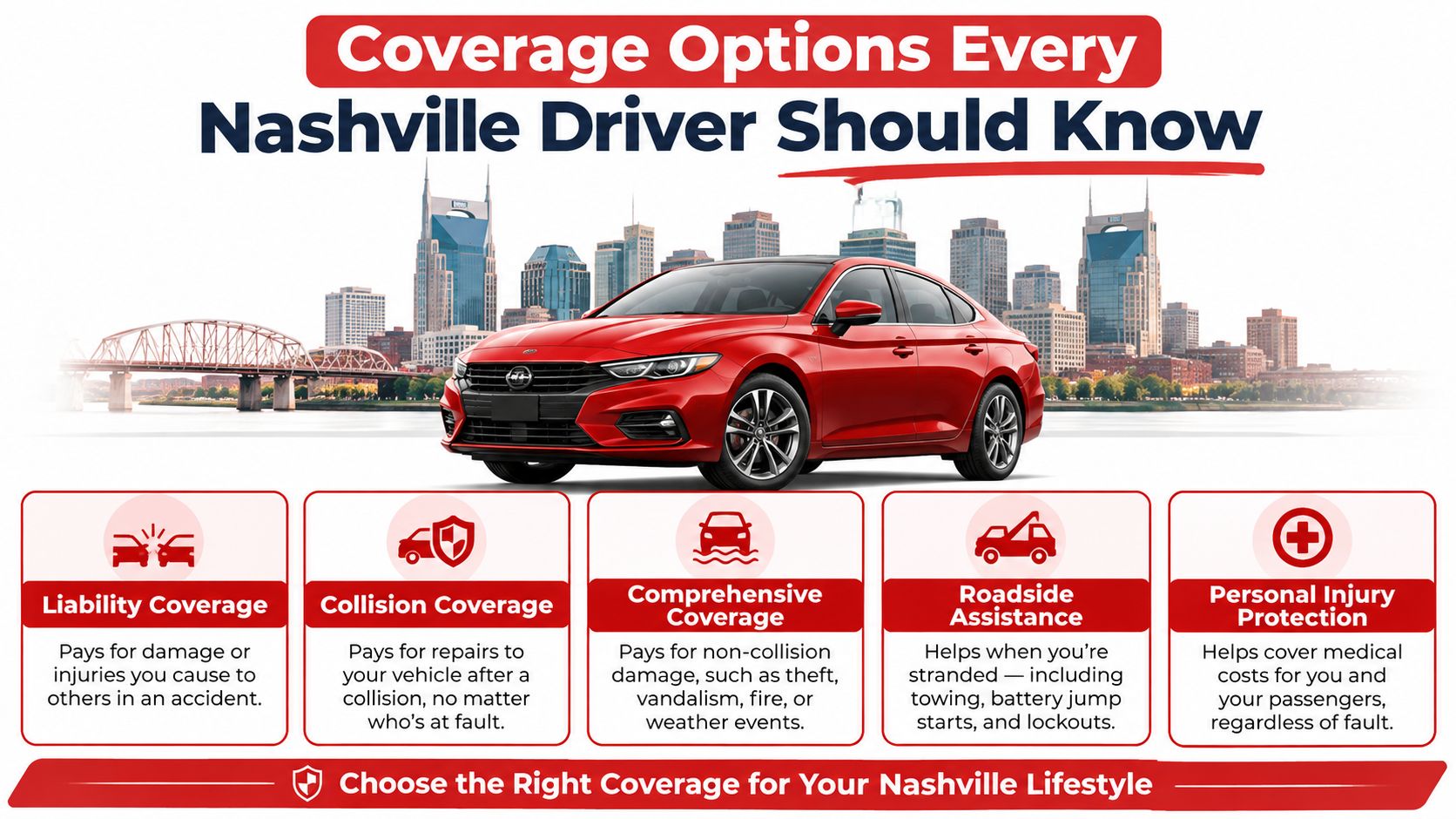
Match coverage to the loss you're trying to prevent
Liability coverage pays for bodily injury and property damage you cause to others. It protects your finances when you're responsible for a crash, but it doesn't cover damage to your own vehicle.
Collision coverage pays for damage to your vehicle after a crash, whether you hit another car, a fixed object, or another covered collision hazard. Lenders and leasing companies generally require physical-damage protection, and owners of newer vehicles often need it because replacing or repairing the car would be financially difficult.
Full coverage handles non-collision losses. In Nashville, that can include hail, falling tree limbs after a Middle Tennessee storm, theft, animal strikes, and certain flood-related losses, subject to the policy's terms and exclusions. The documented Nashville hail event on May 9, 2025 produced insurer catastrophe-response messaging, a useful reminder that weather exposure belongs in the coverage conversation. You can review that event through Nashville hail response information.
A driver who carries both collision and full-coverage generally has broader physical-damage protection than someone carrying liability alone. For a direct comparison of those structures, review full coverage versus liability.
Don't overlook protection from other drivers
Uninsured and underinsured motorist coverage can respond when the at-fault driver has no insurance or insufficient limits. It also matters after certain hit-and-run situations, depending on the policy and claim facts. Don't automatically reject or reduce it to shave the premium.
Medical payments coverage can help with covered medical expenses after an accident, regardless of fault, subject to the selected limit and policy conditions. It may complement health insurance by helping with deductibles or immediate treatment costs.
Rental reimbursement helps pay for temporary transportation while a covered claim keeps your vehicle out of service. Ask exactly when the benefit begins, what daily allowance applies, and how long it lasts. If a carrier delays or disputes the benefit, understanding how to file a loss of use claim can help you organize the documentation.
SR-22 isn't coverage. It's a filing used to demonstrate financial responsibility after certain driving violations, such as a suspended license or DUI. The filing requirement can make shopping more important because the underlying driving record affects the premium.
What Nashville Drivers Pay and Why
A Nashville driver can see a very different premium from a neighbor with the same vehicle. Recent market analysis places the city's average full-coverage premium around $2,024 to $2,438 per year, while Tennessee-wide full coverage ranges from approximately $1,233 to $2,130, depending on the methodology used. Review the Nashville car insurance pricing analysis for that pricing context.
One analysis reports Nashville's average full-coverage rate at $2,024 annually, with the least expensive major carrier near $1,578 per year and the lowest ZIP code approximately 4% below the city average. State minimum coverage is reported around $595 per year in Nashville. A separate city comparison reports an average driver paying about $125.99 per month, compared with a national average of $168.32 per month. The gap shows why coverage type, driver profile, location, and rating methods matter when comparing averages.
| Driver Profile | Minimum Coverage (25/50/25) | Standard Coverage (100/300/100) | Full Coverage with UM/UIM |
|---|---|---|---|
| Clean record, established vehicle | Around reported Nashville minimum average | Varies by profile and carrier | Often materially above minimum coverage |
| Recent at-fault accident | Higher than clean-record pricing | Higher because liability exposure rises | Higher because both liability and vehicle protection apply |
| Newer or financed vehicle | May still be near minimum-only pricing | Depends on selected limits | Usually the relevant comparison because physical damage is required |
Use these figures as shopping context, not as a personal quote. Traffic around I-24, I-40, and I-65, your garaging ZIP code, daily mileage, theft exposure, and storm risk can all affect underwriting. Nashville drivers should pay particular attention to hail damage and uninsured or underinsured motorists. A low premium can leave you exposed if the policy carries thin minimum limits or weak protection from an at-fault driver.
The details behind the quote
Insurers commonly review your driving record, vehicle, claims history, garaging address, mileage, commute pattern, and credit-based insurance information where permitted. An at-fault accident can raise the price substantially. Low-mileage use or a qualifying household discount may reduce it.
Vehicle history matters before you buy. Damage records, prior losses, and repair history can change the insurance discussion, so check insurance impacts before buying.
A quote far below the local full-coverage range requires inspection. Check the liability limits, deductibles, UM/UIM protection, collision status, and rental reimbursement before calling it a bargain. In Nashville, the cheapest policy is often the one that leaves the largest gap after hail, theft, or an accident with an uninsured driver.
Smart Ways to Save and How to Compare Quotes
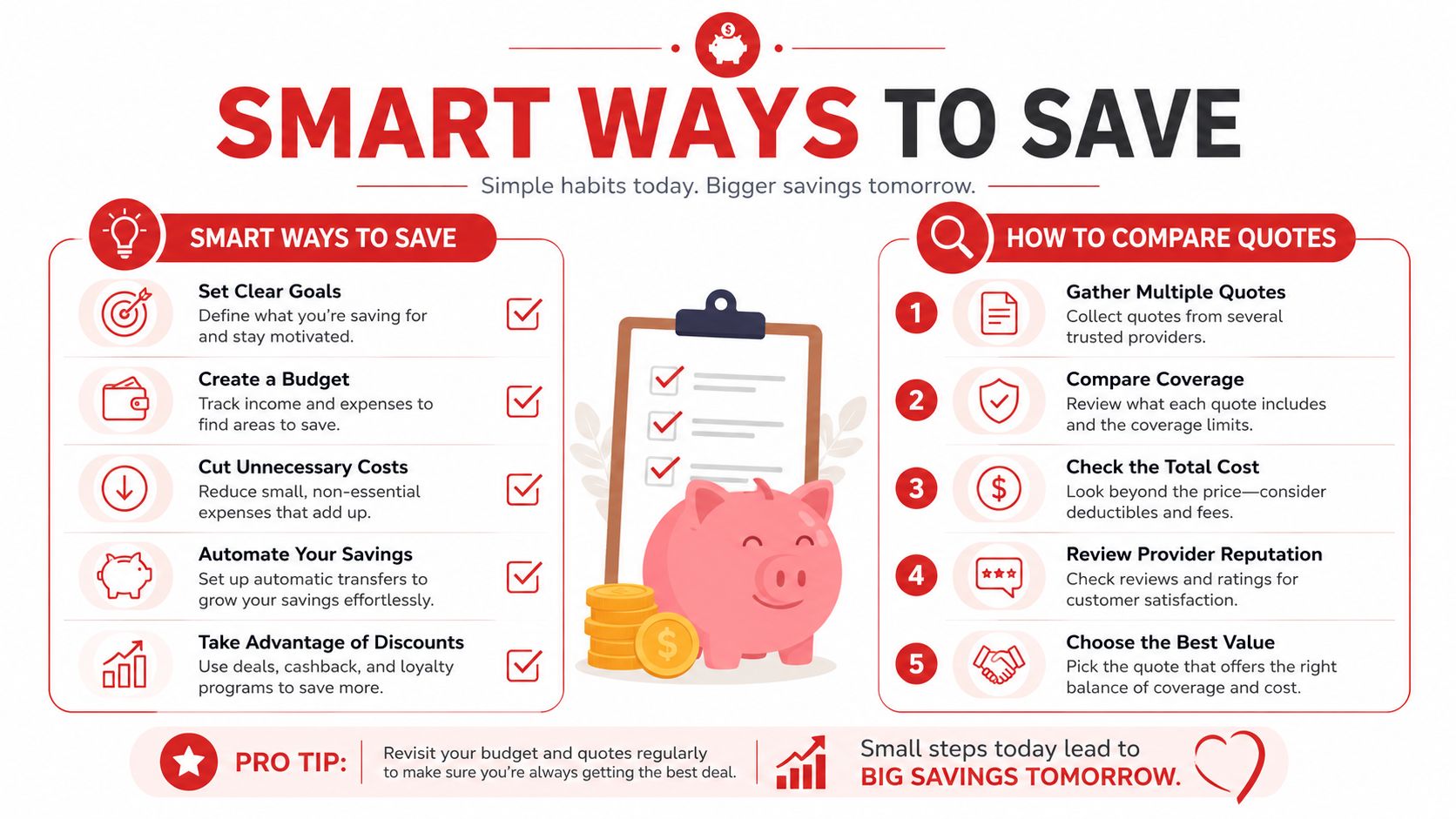
The fastest way to waste money is to compare mismatched policies. One quote may look cheaper because it uses lower liability limits, a higher deductible, weaker UM/UIM protection, or no rental reimbursement.
Build identical quote requests
Start with your current declarations page. Confirm every vehicle, driver, VIN, garaging address, commute description, annual mileage, lienholder, and coverage limit before requesting new pricing.
Then follow this order:
- Choose limits first: Decide whether you're comparing minimum coverage, 50/100/50, or 100/300-level protection.
- Request matching quotes: Ask at least three carriers or an independent agent for the same liability, UM/UIM, collision, and rental settings.
- Match deductibles: A lower premium may reflect a deductible you couldn't comfortably pay after a claim.
- Verify vehicle details: A wrong VIN, mileage figure, or garaging address can make a quote unreliable.
- Review exclusions: Confirm how the policy handles rideshare use, business driving, permissive use, and rental transportation.
Use Tennessee insurance quote assistance when you want a structured comparison rather than repeating the same information across multiple calls.
Ask for every discount that fits
Multi-car discounts can help households insuring several vehicles. Make sure every driver and vehicle is listed accurately.
Multi-policy bundling may reduce the combined household cost when auto is written with renters or homeowners coverage. Compare the total package, not only the auto line.
Safe-driver and defensive-driver discounts are worth requesting, including credits connected to an approved Tennessee course when you qualify.
Good-student discounts can help households adding a qualifying young driver. Ask what documentation the insurer requires.
Paid-in-full, paperless, and telematics options may change the premium or payment structure. Telematics can be useful for drivers comfortable sharing driving data, but understand the program rules before enrolling.
Affinity groups may offer another rating opportunity through an employer, organization, or association.
Don't lower liability limits as your first savings move. Reduce unnecessary extras, adjust deductibles only to an amount you can afford, and shop the market before weakening protection. Also, don't let a renewal continue automatically without checking whether your vehicle, household, commute, or address has changed.
How Select Insurance Group Helps Nashville Drivers
Calling multiple insurers yourself takes time, and it makes coverage comparisons harder when each conversation uses different assumptions. An independent agency can collect the same driver and vehicle information once, then present options from multiple rated carriers for review.
Select Insurance Group, Inc. offers auto insurance support in Tennessee, including liability, collision, full coverage, uninsured and underinsured motorist, and personal injury protection options. Its process can be useful for Nashville households comparing more than one vehicle, drivers who need Spanish-language assistance, and business owners or gig drivers asking about commercial auto needs.
The value isn't only the initial premium. A local agency conversation can help identify whether your limits fit your assets, whether your deductibles are realistic, and whether a financed vehicle needs full physical-damage coverage. It can also give you a contact when a household adds a teen driver, replaces a car, changes its garaging address, or needs to review coverage at renewal.
Ask the agent to show the differences line by line. You should be able to see the liability limits, UM/UIM limits, deductibles, rental benefit, exclusions, and total premium without guessing what changed between options.
Advisor's view: An independent comparison is worthwhile when it preserves the coverage design you want. A lower price that quietly removes protection isn't a successful comparison.
Your Next Steps Toward the Right Nashville Policy
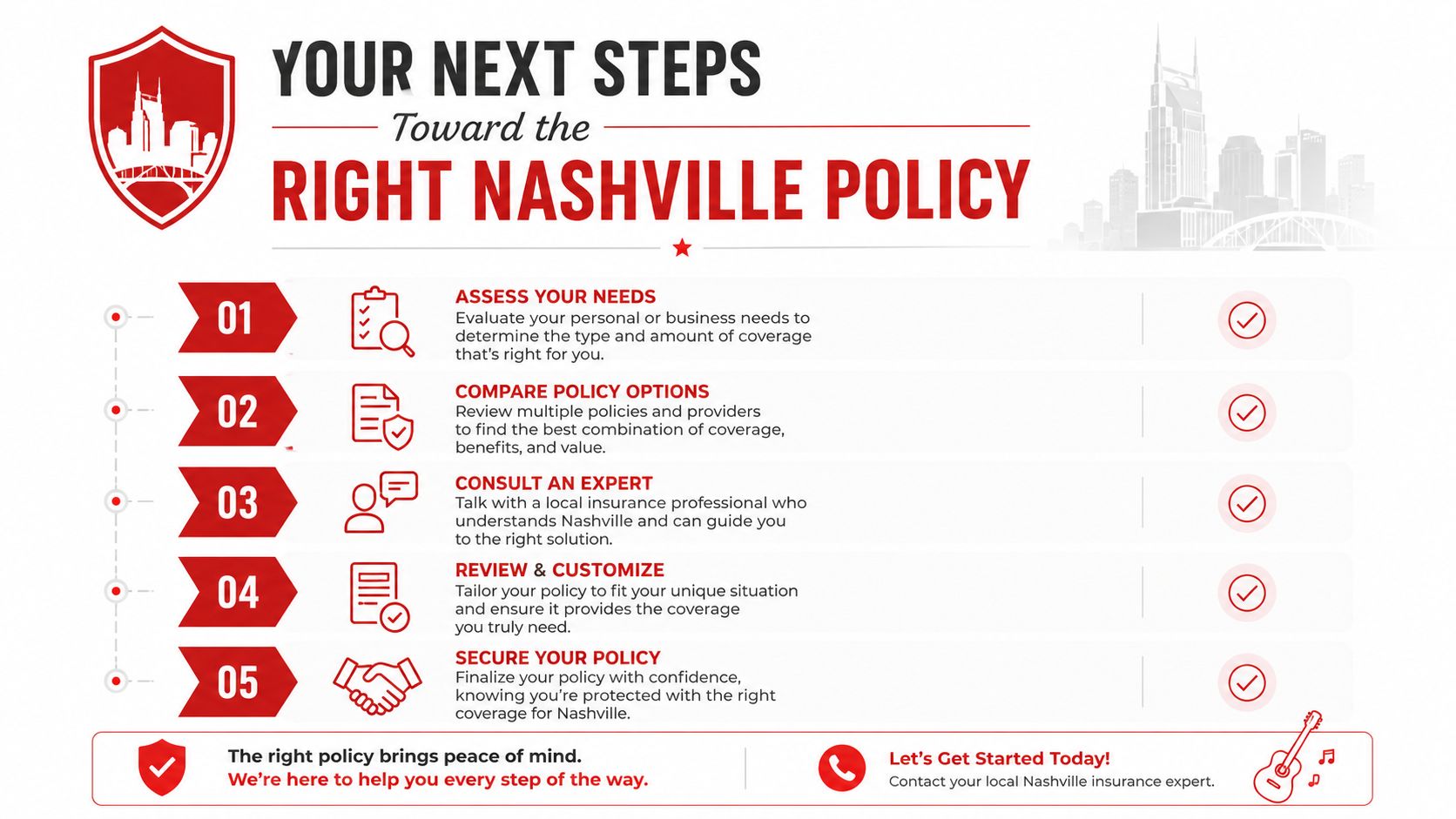
A sound Nashville policy comes down to five decisions:
- Move beyond the legal floor when your household couldn't comfortably absorb a serious claim.
- Keep meaningful UM/UIM protection instead of assuming every other driver has enough insurance.
- Choose collision and full coverage based on vehicle value, financing, theft exposure, and storm risk.
- Set deductibles you can comfortably pay after a loss.
- Request every qualifying discount before accepting the final premium.
Gather your declarations page, mileage, VINs, drivers, and garaging address. Request at least three quotes with identical limits and deductibles, then compare coverage line by line. Bind the replacement policy before canceling the existing one so you don't create a coverage gap.
Review the policy at every renewal, especially after a new commute, a teenage driver joining the household, a move, a financed vehicle purchase, or a paid-off loan. Those changes can alter both the coverage you need and the price you should expect.
Select Insurance Group, Inc. can compare Nashville auto insurance options across multiple carriers, including liability, collision, and uninsured motorist protection. Visit Select Insurance Group, Inc. to request a side-by-side comparison customized to your Nashville garaging address and driving profile.